Argentina and the United States are further solidifying their robust partnership of more than two centuries based on shared interests and a commitment to the security of the region, with recent initiatives signaling a stronger defense and security cooperation.
More recently, Argentina’s Joint Special Operations Command and U.S. Special Operations command South (SOCSOUTH) held their first bilateral Special Operations Forces Talks (SOF Talks), seeking to strengthen cooperation and establish a long-term vision for training collaboration between both forces. Similarly, the Argentine Armed Forces celebrated the induction of their first F-16 fighter aircraft, acquired with support from the United States, marking a significant step in the modernization of their air capabilities.
“Argentina has a historic opportunity to redefine its role on the global stage. A strategic alliance with the United States can, not only modernize our military and technological capabilities, but also change the international perception of our country,” Roberto Lafforgue, a career diplomat and former Argentine Navy officer, told Diálogo.
SOF Talks
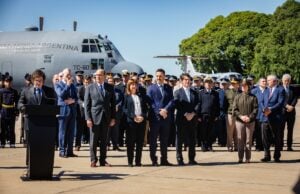
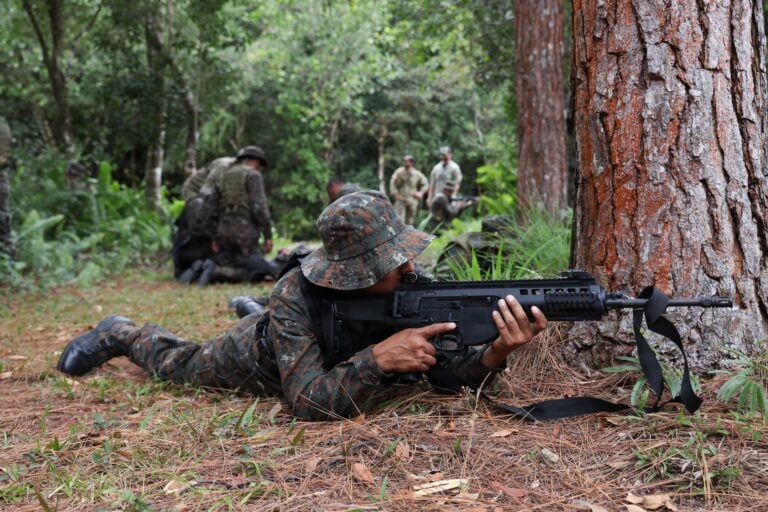
In mid-March, Argentina’s Joint Special Operations Command and SOCSOUTH paved the way for stronger collaboration with the first SOF Talks. The strategic forum aims at raising the level of military preparedness and strengthen regional security through combined exercises, knowledge exchange between special forces, and the adoption of common operating procedures. The SOF Talks culminated in the signing of a memorandum of understanding, bearing the signatures of Argentine Army Brigadier General Cristian Pablo Pafundi, Argentine Armed Forces’ Joint Chiefs of Staff Operational commander, and U.S. Navy Rear Admiral Mark Schafer, SOCSOUTH commander, formalizing the long-term training of Argentine special forces troops.
Argentina’s Joint Special Operations Command, created in 2018, is a relatively young structure that has been strengthening capabilities and resources for the complex challenges in the Special Operations field. The collaboration is a decisive step toward improving interoperability and the forces’ capability to face common threats.
Among the exercises planned as part of the cooperation is Atlantic Dagger, projected for February 2026 in Argentina’s Patagonia region. Although still in the planning phase, the exercise, set to take place in locations such as Tierra del Fuego, Santa Cruz, and Islas de los Estados, known for their extreme weather and terrain conditions, is generating great anticipation and will involve simultaneous operations in highly demanding scenarios. This training will follow the same logistics to the maneuvers carried out by the U.S. Special Forces in Alaska, characterized by icy and rugged terrain. In addition, the exercise will represent a key opportunity for Argentina to strengthen its preparedness for possible challenges in the Strait of Magellan, a strategic passageway connecting it to the Antarctic region.
New aircraft
In a significant milestone for Argentina and its transformative journey to upgrade its Armed Forces, the Argentine Air Force (FAA) unveiled with great fanfare its first Lockheed Martin F-16 Fighting Falcon, during a late February ceremony at the 6th Air Brigade in Tandil, Buenos Aires. According to defense publication Janes, 24 additional F-16 are to be transferred to Argentina starting in December 2025.
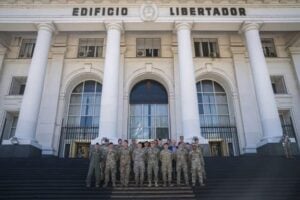
“One of the best aircraft in the world is now part of the [FAA] fleet to strengthen the defense of our sovereignty throughout the entire territory,” the Argentine Ministry of Defense said in a statement. “We are recovering supersonic capacity, projecting our Armed Forces into a new era.”
In April 2024, Argentina signed an agreement to purchase 24 U.S.-made F-16s from Denmark, a $300 million deal supported with $40 million in U.S. Foreign Military Financing, the first such funding to Argentina since 2003. The agreement is one of several acquisitions of U.S.-made aircraft Argentina has recently pursued, including an agreement with Norway to purchase four Lockheed P-3 Orion to increase maritime patrol and surveillance and a proposed agreement with the United States to purchase a Basler BT-67 aircraft for airdrop and airlift operations to service Antarctica. In April 2024, the U.S. government transferred a C-130H Hercules transport aircraft to the FAA, valued at some $30 million, as part of a U.S.-funded security assistance donation.
Cybersecurity
Argentina and the United States also made progress on a key agenda for the Ministry of Defense, promoting cyber defense cooperation. In late March 2024, Argentine Defense Minister Luis Petri and then U.S. Ambassador to Argentina Marc Stanley signed a cybersecurity cooperation agreement. As part of this agreement for mutual support, Argentine service members and their U.S. counterparts planned to increase training and exercises as well as technological support in that area.
“We signed a cyber defense memorandum with the U.S. We have taken a fundamental step toward strengthening our cyber defense thanks to the collaboration and technological support of the United States, Argentina’s strategic partner. This signing reflects the close relationship between our countries and demonstrates the shared commitment to work together,” Minister Petri wrote on his X account.
For Lafforgue, the deeper strategic alliance is encouraging news. “Conducting joint operations in the South Atlantic, developing joint Antarctic projects, and strengthening cybersecurity are fundamental steps in confronting the current threats of organized crime, drug trafficking, and the risks of getting closer to powers that do not share our democratic values,” he concluded.