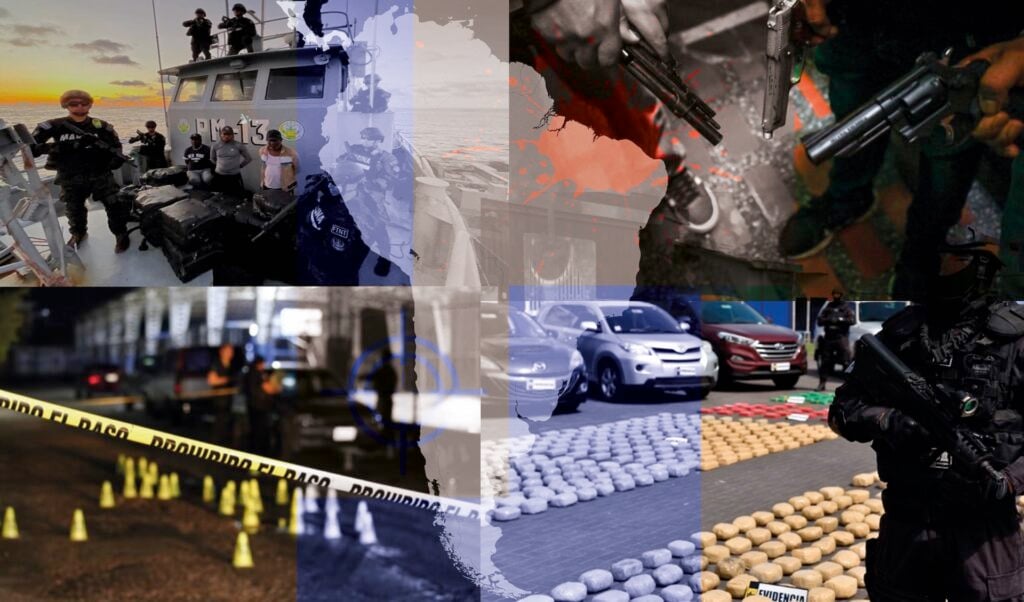

The expansion of organized crime has transformed regional insecurity into a top priority for Latin America, prompting a surge in cross-border cooperation and institutional reform. Recent data from the Organization for Economic Cooperation and Development (OECD) underscores the impact of these criminal networks on governance and economic growth; however, these challenges have also catalyzed a period of heightened public engagement and state response.
An OECD survey on trust in public institutions, conducted between 2023 and 2025, reveals that citizens across Latin America and the Caribbean now prioritize security as their primary concern. On average, 60 percent of those surveyed identified crime or violence among the top three challenges facing their nations. While figures vary — from 45 percent in Paraguay to 75 in Peru — the regional consensus has paved the way for more decisive legislative and law enforcement actions.
Although nearly nine out of 10 people expressed concern regarding violent crime, this collective demand for safety is driving a new wave of institutional mobilization. This is exemplified by the recent legal formalization of AMERIPOL and the expansion of the Latin American Committee for Internal Security (CLASI). Together, these bodies bridge the gap between national policy and regional police action, creating a unified front against transnational criminal networks.
In an interview with Diálogo, Yadira Gálvez, a security specialist and academic at the National Autonomous University of Mexico, noted that “the expansion of organized crime in the region is sustained by structures that combine operational capacity with mechanisms of corruption and collusion […].”
While Gálvez explained that institutional weaknesses allow organizations to operate through both violence and corruption, the persistent concern of citizens is also acting as a catalyst for reform. Governments are increasingly focused on closing the gaps in law enforcement and territorial control that have historically allowed criminal infiltration.
Strategic resilience
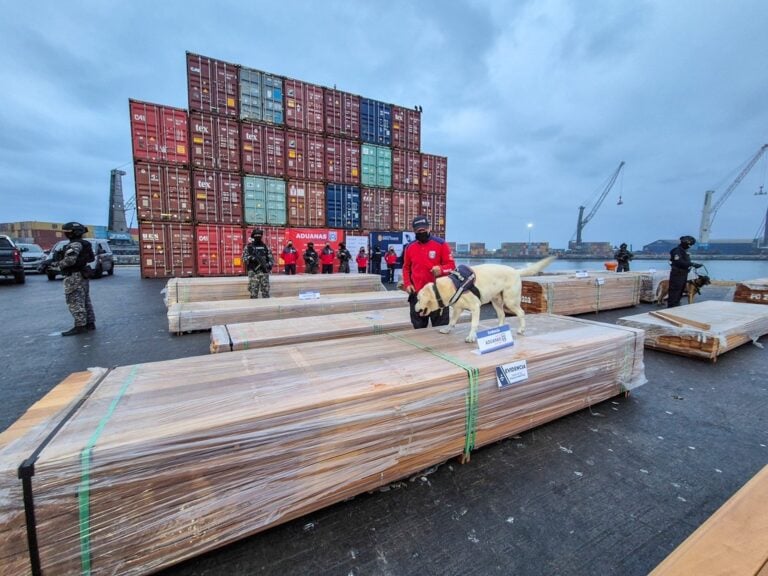
The complexity of violence in Latin America stems from a convergence of drug trafficking, gang activity, and social inequality, among other factors. A report by Spain-based Carolina Foundation, an organization that promotes relations between Spain and Latin America, highlights how these dynamics are exacerbated by global financial flows and a lack of multilateral coordination. The region, however, is responding by modernizing its defense and judicial frameworks to meet these threats head-on. An example of this shift is Paraguay’s Operation A Ultranza PY. Launched in February 2022 with support of the DEA and Europol, the operation evolved into a landmark multi-year effort to dismantle a massive cocaine-trafficking and money-laundering network. To date, it remains the largest operation in Paraguay’s history, resulting in over $100 million in asset seizures, the extradition of high-level cartel leaders, and establishing a new regional blueprint for international judicial cooperation.
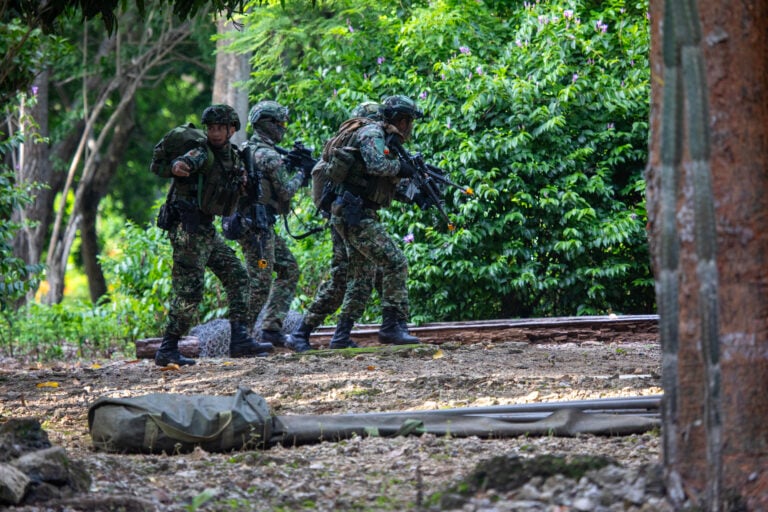
While Latin America remains the primary global source for cocaine cultivation, the regional focus has evolved far beyond traditional interdiction. Partner nations are now engaged in a comprehensive all-fronts strategy to annihilate these networks. Throughout 2025, a decisive shift occurred as several nations transitioned from treating gangs as criminals to designating them as terrorist entities. This movement gained momentum following Ecuador’s 2024 declaration of an internal armed conflict and was solidified in February 2025 when the United States designated several major groups — including the Sinaloa Cartel, Tren de Aragua (TdA), and MS-13 — as Foreign Terrorist Organizations.
This sparked a regional domino effect with Argentina, Trinidad and Tobago, and Peru’s Congress, among others, to designate TdA a terrorist group. These legal reclassifications unlock specialized resources, enabling military and elite police units to carry out targeted operations, freeze global financial assets, and expand intelligence sharing with U.S. and international partners.
With at least 75 percent of violent deaths in the Americas involving firearms, regional leaders are also intensifying efforts to track illicit arms flows. An example is the February 2025 Central America and Dominican Republic Firearms Roadmap, which leverages the Bureau of Alcohol, Tobacco, Firearms and Explosives (ATF) e-Trace technology to help Caribbean and Central American partners track and intercept the flow of illegal weapons, directly targeting the tools of violence of these networks.
“The intensity of the violence responds to a large extent to the fragmentation of criminal organizations and competition for territorial control,” Gálvez added. “These dynamics are expressed in increasingly visible and lethal forms of violence, which are not limited to homicides but also include disappearances, forced recruitment, and internal displacement, phenomena that represent a direct challenge to governance in several countries.”
These challenges manifest distinctly across the hemisphere. According to the Global Organized Crime Index 2025, compiled by the Global Initiative Against Transnational Organized Crime, South America and Central America remain highly affected, with countries like Colombia, Mexico, Paraguay, and Ecuador ranking among the most challenged globally due to their role in international logistics and production.
A unified path forward
Looking ahead, the emphasis is on collective action. Gálvez stressed that “confronting transnational organized crime networks requires going beyond isolated actions. The central challenge is to strengthen intelligence capabilities to dismantle these structures, identifying and attacking the strategic nodes that sustain them, such as intermediaries, financial flows, and money laundering mechanisms, particularly in illicit economies linked to synthetic drugs.”
Partner nations are already refining these regional cooperation schemes, moving toward specialized training and real-time coordination to face threats that affect the entire hemisphere.
Finally, while Gálvez warned that political polarization and democratic pressures remain risks, the current trend toward regional alignment suggests that the hemisphere is moving toward a more sustained and unified defense to reinforce the stability of the region.