
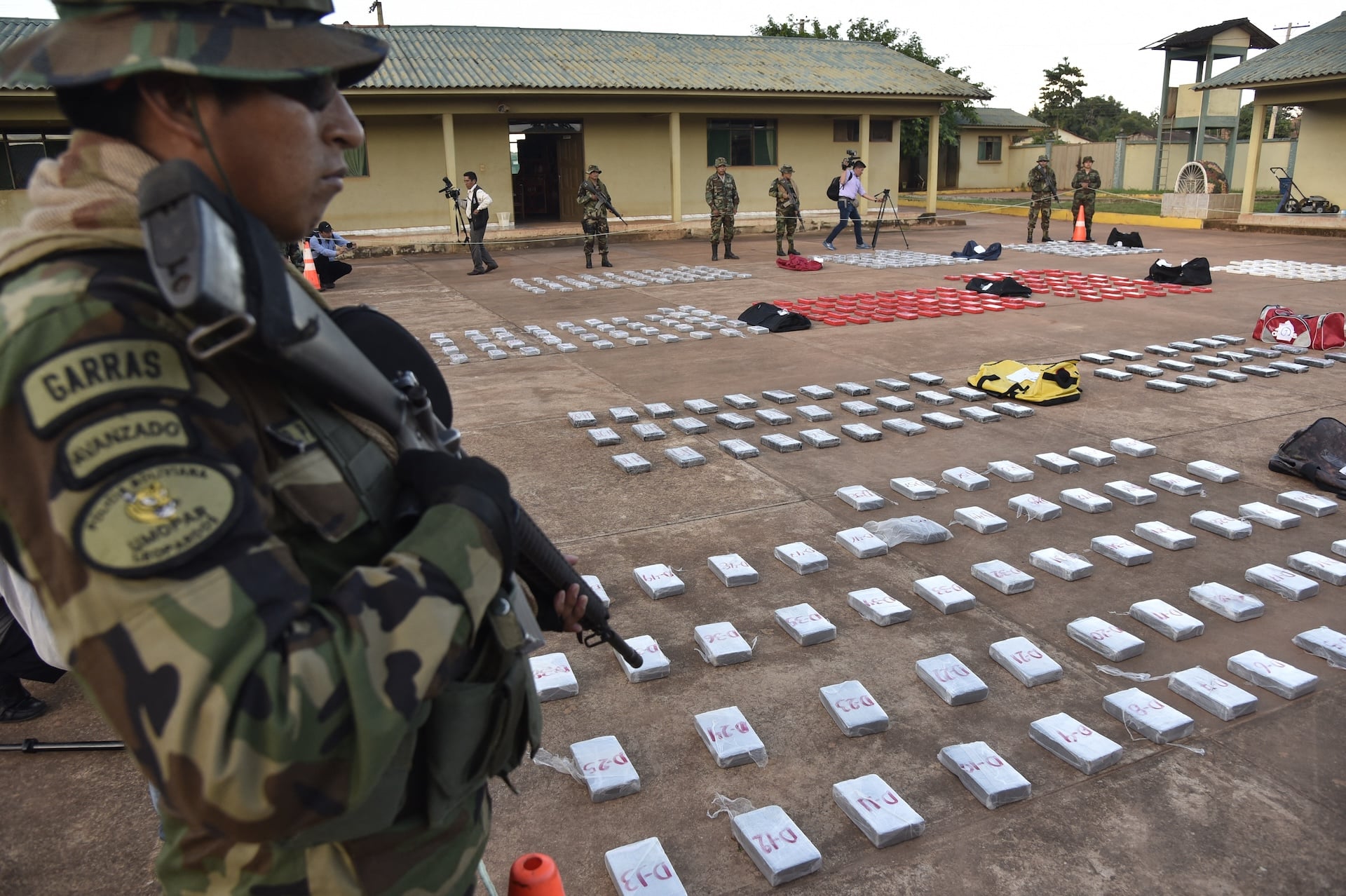
In recent years, the geography of Brazilian drug trafficking has undergone a profound transformation, reshaping the map of organized crime across Latin America. While Paraguay served for decades as the principal operational rear base for the First Capital Command (PCC) and the Red Command (CV), the center of gravity of their operations is increasingly shifting toward Bolivia.
According to investigators, this shift reflects Brazilian criminal organizations’ strategy to exert more direct control over the early stages of the cocaine production chain and the principal export routes. “Bolivia offers what Paraguay can no longer provide to the same extent: proximity to cocaine-producing areas, access to the Peruvian cocaine corridor, and a more than 3,400-kilometer border with Brazil, much of it running through remote riverine and Amazonian terrain,” Carlos Eduardo da Silva, former senior investigator with the São Paulo Civil Police and expert in transnational organized crime, told Diálogo.
Bolivia’s growing importance reflects the increasing internationalization of the PCC and CV, which have strengthened alliances with producers, logistics networks, and financial operators, becoming increasingly integrated transnational criminal organizations. One sign of this evolution was the arrest in Santa Cruz de la Sierra in May of Gerson Palermo, one of the PCC’s top leaders. Sentenced to 126 years in prison and a fugitive since 2020, Palermo allegedly managed an international network that moved cocaine from Bolivia into Brazil before channeling it into global trafficking routes.
From corridor to operational platform
From a simple trafficking corridor, Bolivia has evolved into a true regional operational platform for Brazilian criminal groups. According to Brazilian prosecutor Lincoln Gakiya, the ease of corrupting local officials and living under false identities has helped drive this transformation. According to security authorities in the Brazilian state of Bahia, six leaders of criminal factions active in that state were arrested in Bolivian territory in 2026 alone.
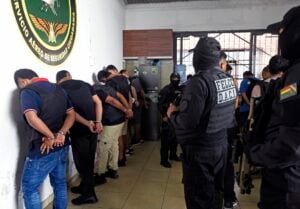
Investigations indicate that Bolivia is being used not only as a refuge for fugitives, but increasingly as a coordination center for criminal activity. According to Brazilian investigators, the CV has developed a command structure specifically geared toward coordinating its activities in Bolivia.
The concentration of criminal activity is particularly evident in the eastern departments of Santa Cruz and Beni. Santa Cruz de la Sierra has become a key logistical and financial hub thanks to its commercial ties with Brazil, transportation infrastructure, and high volume of goods and capital flows. The city facilitates money laundering, the concealment of fugitives, and the coordination of transnational operations.
“The risk is that Bolivia becomes a connecting platform between Brazilian criminal groups and regional criminal networks,” da Silva said.
According to the expert, the increasingly prominent presence of Brazilian organizations could accelerate integration with the Andean groups that control cocaine production in Peru and Bolivia. “Proximity to coca-growing areas and cocaine-processing laboratories allows Brazilian criminal organizations to reduce intermediaries, increase profit margins, and gain greater logistical autonomy,” da Silva added.
He also warned that the PCC and CV could move beyond their traditional role as buyers and distributors, occupying increasingly deeper positions within the cocaine production chain and moving closer to becoming producers themselves.
Shifting routes
The expansion of the PCC and CV in Bolivia has transformed the country into a strategic hub for regional drug trafficking, supporting new routes to international markets. Among the most important is the Amazon corridor that runs through Rondônia and Mato Grosso to Marajó Island in the Brazilian state of Pará. From there, cocaine is shipped to West Africa and subsequently to Europe.
At the same time, criminal organizations are increasingly exploiting the Paraguay-Argentina route, using the Paraguay-Paraná waterway system to reach Atlantic ports. Another growing route passes through Chile, where cocaine originating in Bolivia reaches Pacific ports before being shipped to Europe and Asia.
These corridors allow criminal organizations to diversify routes, reduce the risk of seizures, and strengthen control over the entire cocaine trafficking chain, from production to export. At the same time, the strengthening of criminal organizations in Bolivia has fostered growing integration with regional criminal networks.
A prominent example is Uruguayan drug trafficker Sebastián Marset, who was widely considered one of the continent’s most wanted criminals. Following his arrest in Santa Cruz on March 13, Marset was transferred to U.S. custody.
Investigations into Marset’s network illustrate how criminal circuits in Bolivia, Paraguay, and Brazil are becoming increasingly interconnected, combining Bolivian suppliers, forged Brazilian documents, clandestine airstrips in Paraguay, and logistical operators distributed across several countries. According to investigators, this type of structure reflects the transnational environment in which organizations such as the PCC and CV operate, characterized by flexible alliances, shared logistics networks, and a growing capacity to coordinate activities across multiple jurisdictions.
Regional cooperation
The international nature of the alliances formed by the PCC and CV, combined with their ability to rapidly alter routes and operating methods, has made it increasingly difficult to effectively disrupt cocaine trafficking to international markets. In response, countries across the region are strengthening cooperation through intelligence sharing, coordinated operations, and new judicial collaboration mechanisms.
One of the most significant signs of this shift is the agreement reached between INTERPOL and Brazil in 2026 to strengthen regional cooperation against organized crime in South America. Coordinated by the Brazilian Federal Police through INTERPOL’s Regional Bureau in Buenos Aires, the initiative seeks to improve coordination among regional security forces and target criminal networks operating across national borders.
The Americas Counter Cartel Coalition reinforces that broader regional effort by bringing together partner nations to improve intelligence sharing, operational coordination, and joint action against cartels and narcoterrorist organizations operating across the hemisphere. For countries confronting increasingly interconnected criminal groups such as the PCC and CV, the initiative provides an additional framework to strengthen cooperation against networks that routinely exploit national borders.
The growing regional reach of these organizations has also drawn increased international attention. In May 2026, the United States designated the PCC and CV as Foreign Terrorist Organizations and Specially Designated Global Terrorists, arguing that both groups pose a significant threat to regional security due to their involvement in drug trafficking, money laundering, and other transnational criminal activities. The move reflects growing international concern over the expansion and increasing sophistication of these organizations beyond Brazil’s borders.
That same month, Brazil and Bolivia signed a bilateral agreement providing for expanded information sharing, coordinated investigations, joint operations along the border, and closer cooperation against money laundering and drug trafficking.
On the operational level, cooperation between the Brazilian Federal Police and Bolivia’s Special Counternarcotics Force (FELCN) has already produced tangible results, as demonstrated by the arrest of Gerson Palermo.
Developments in Bolivia reflect a broader challenge facing the region: criminal organizations that no longer operate within clearly defined national borders, but through transnational logistical chains linking production zones, transit corridors, financial centers, and international markets. This reality requires greater intelligence sharing, operational coordination, and judicial cooperation among countries to disrupt networks capable of rapidly adapting to law enforcement pressure.
However, according to da Silva, success on the ground must be accompanied by a broader strategy.
“What sustains these groups is the flow of capital, not territory alone,” the expert said, underscoring the importance of transnational financial intelligence to track illicit funds moved through fintech platforms, cryptocurrencies, and shell companies.
The true strategic challenge, da Silva concluded, remains strengthening judicial cooperation and adopting faster, more effective extradition procedures to prevent criminal leaders from exploiting differences between national legal systems.