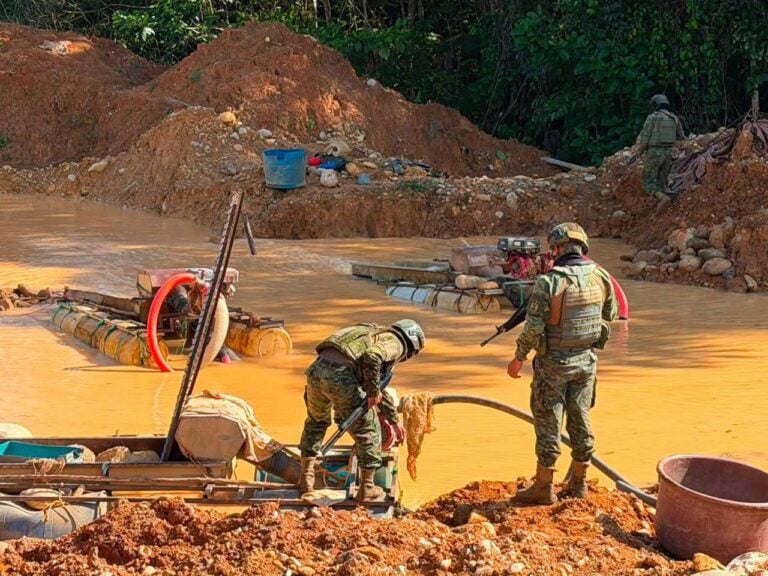


Cocaine production has surged to unprecedented levels across Latin America, fueled by a simultaneous expansion of illicit crops in Colombia, Peru, and Bolivia. This phenomenon is further exacerbated by the expansion of complex transnational trafficking corridors that facilitate the movement of narcotics across the hemisphere. This escalating output has empowered criminal organizations, allowing them to rapidly adapt their operations and presenting increasingly complex security challenges for the region.
Alarming surge in production
In early December 2025, Martín Verrier, secretary for the Fight Against Drug Trafficking and Organized Crime at Argentina’s Ministry of National Security, told defense news site Pucará Defensa that regional “cocaine production has increased by 500 percent in the last 10 years”. This figure reflects a decade of uninterrupted growth; according to the United Nations Office on Drugs and Crime (UNODC), land used for coca cultivation in Colombia alone expanded by over 400 percent between 2013 and 2023, while improved laboratory efficiency has further multiplied the final output.
According to Verrier, the most dramatic spike had been observed in Colombia over the last three years, generating a surplus that has shifted traditional trafficking dynamics. Shipments continue to flow from the region toward North America and Europe, which has emerged as the second-largest market after the United States, Argentine news site Infobae reported.
Factors driving Colombian production
Daniel Potón, dean of the School of Security and Defense at the State Graduate University in Ecuador, told Diálogo that the acceleration of cocaine production in Colombia began in 2013, coinciding with the start of peace negotiations with the Revolutionary Armed Forces of Colombia (FARC). The group’s withdrawal from various coca-growing areas upended existing territorial control, paving the way for a more fragmented landscape, dominated by dissident factions and emerging criminal enterprises.
This destabilization was compounded by the suspension of aerial glyphosate spraying, initially in border areas and subsequently nationwide. Potón emphasized that “manual eradication and crop substitution strategies failed to compensate for this loss of capacity,” while the global pandemic further eroded the state’s presence in rural areas and worsened economic conditions, fostering the expansion of illicit crops.
“Since 2021, production has been concentrated in specific enclaves, with greater technification and specialization of drug trafficking chains. This scenario generated unprecedented surpluses, altered routes and operating times, and strengthened the transnational projection of criminal organizations,” Potón said. “Colombian cocaine is the preferred choice in the most important consumer markets.”
The regional drug trafficking infrastructure
According to the report Fighting Drug Trafficking in Latin America, by the American Police Community (AMERIPOL), trafficking networks tailor their operations to the specific geographical advantages of each nation. Ecuador and Panama serve as key logistics hubs, primarily used for maritime transit and container contamination. Across the Caribbean and the Pacific, the use of speedboats, coastal smuggling routes, and temporary storage facilities facilitates the movement of South American cocaine, while major ports such as Colón, Esmeraldas, and Guayaquil function as hubs for criminal coordination.
In Colombia, illicit cultivation remains anchored in historical enclaves tethered to transnational networks that unify production, logistics, and global markets. In Peru, trafficking operations exploit remote, inaccessible terrain and the vast Amazon river network to move shipments toward Bolivia and Brazil. Additionally, Peruvian ports and airports are used for export to Europe, the United States, and Asia via human couriers and postal services, AMERIPOL indicated.
The dominant actors with a robust international footprint include Mexican cartels (such as the Sinaloa and Jalisco New Generation cartels), Colombia’s Clan del Golfo, and Brazil’s First Capital Command (PCC) and the Red Command (CV). These organizations, often working in tandem with regional groups like the Tren de Aragua and local gangs who provide territorial security and retail distribution. AMERIPOL notes that these groups constantly refine their logistics, employing speedboats, semi-submersibles, hull-attached torpedoes, cargo vessels, and aircraft to bridge the gap between production zones and consumer markets.
Furthermore, they have integrated drone technology to survey transit routes, monitor security forces, and manage the transport of smaller payloads, particularly in sensitive border areas.
State response and international collaboration
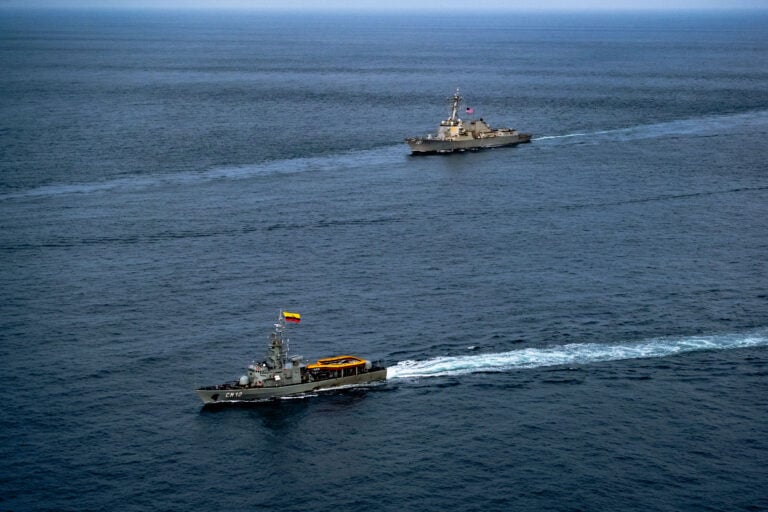
In response to these evolving threats, Latin American nations have ramped up operational cooperation and intelligence sharing. A cornerstone of this effort is the Joint Interagency Task Force South (JIATF-South), a component of U.S. Southern Command (SOUTHCOM), which coordinates multilateral detection and interdiction efforts across maritime and air domains to seize illicit cargoes and dismantle transnational criminal organizations.
Building on this foundation, SOUTHCOM-led Operation Southern Spear was launched as a collaborative initiative to counter narcotrafficking organizations and augment regional security. This framework emphasizes a partnership-first approach, focusing on the seamless integration of intelligence and the strengthening of maritime domain awareness.
Complementing these efforts are multinational operations such as Orion, led by the Colombian Navy. The campaign has evolved into a periodic operation that involves over 40 countries across the Americas, Europe, and Africa. Recent results from the Orion XV and XVI phases demonstrated unprecedented success, with forces seizing nearly 4,000 metric tons of illicit substances and interdicting some 80 semi-submersibles.
At the regional level, the Organization of American States (OAS) continues to foster cooperation among member states. These efforts focus on the exchange of best practices, technical assistance, and expert groups on maritime, riverine, and port security, aimed at bolstering national interdiction capabilities and hemispheric coordination.
Strengthening regional resilience and strategic coordination
The future of Latin American security is increasingly defined by the ability of partner nations to integrate their defensive capabilities and modernize their institutions. While the production surge presents a significant challenge, it has also served as a catalyst for unprecedented levels of strategic coordination across the hemisphere.
“If the cocaine boom is not reversed in the short term, the region could enter a phase of profound reconfiguration of drug trafficking, marked by new forms of production and distribution, as well as by the displacement of the centers of gravity of the illicit business,” Potón warned. “This process would be accompanied by increased political tensions and greater pressure on countries.”
As Potón concluded, the priority remains the fortification of institutional integrity: “The proximity between drug trafficking and political power remains a latent risk, and criminal infiltration into politics could deepen if institutional capacities and control mechanisms are not strengthened.” Through ongoing collective efforts, the region strives to continue to build the very capacities needed to mitigate these risks and ensure long-term stability.