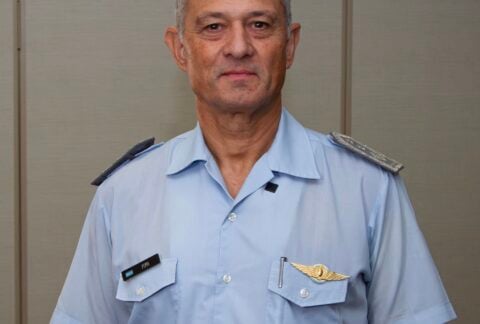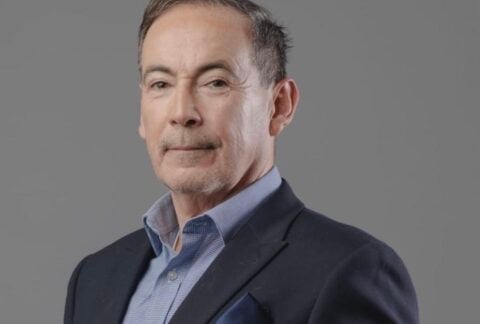



Responsible for protecting and defending Panama’s airspace, territorial waters, and the Panama Canal, Commander Luis Antonio De Gracia, director general of Panama’s National Air and Naval Service (SENAN), plays a key role in the Central American country’s security. With more than two decades of experience and solid training, evidenced by specialized courses in leadership, border security, riverine operations, and surface combat, among many others, many of them conducted with the U.S. military, Cmdr. De Gracia focuses primarily on optimizing SENAN’s operational capabilities and increasing intercommunication and operations with Panama’s security forces to more effectively combat threats and protect and defend the national territory.
Diálogo had the opportunity to talk with Cmdr. De Gracia about his objectives and other topics, during the Central American Security Conference (CENTSEC) 2025, held in Panama, April 8-10.
Diálogo: You are leading Panama’s National Air and Naval Service since July 2024. What have been your greatest challenges and achievements so far?
Commander Luis Antonio De Gracia, director general of Panama’s National Air and Naval Service: I think it would be very presumptuous to attribute successes or achievements to myself alone. I believe that the group of men and women who surround us in the National Air and Naval Service has been a perfect complement to our ability to achieve certain goals. For example, we took over the SENAN with our operational resources at 54 percent. So far during this administration, we have already reached 71 percent, with a projection of 80 percent by the end of the year. So, for us in the National Air and Naval Service, increasing the operational capacity of our resources in this short period has become our first achievement.
Diálogo: What are your main objectives as director general of SENAN?
Cmdr. De Gracia: SENAN’s objectives are to meet the security and defense expectations for our territory. To that end, we are aligning our strategic plan with the plan of the administration of President José Raúl Mulino’s administration, together with Panama’s Minister of Public Security Frank Ábrego. Therefore, our first challenge is to align our plans to achieve the national objective, in this case the security and defense of our territory and our sovereignty.
Diálogo: What new capabilities and technologies do you have to strengthen Panama’s maritime and air security and curb transnational organized crime?
Cmdr. De Gracia: In accordance with the proposals of the president and the minister, we are supporting efforts to expand electronic capabilities and capabilities with new technologies, such as communication and intercommunication between the different security agencies, namely the National Police (PNP), the National Border Service (SENAFRONT), and SENAN, since we are called upon to preserve peace and social security in this country.
The challenges we face in combating and countering the actions of transnational organized crime are to be able to communicate with each other through technology, but also to share information not only internally, but also with our allies in the hemisphere.
Diálogo: In June 2024, SENAN received eight Bell helicopters from the United States. What types of missions have these helicopters been used for, and how have they strengthened SENAN’s mission?
Cmdr. De Gracia: With these aircraft, which were provided through the U.S. Department of State Bureau of International Narcotics and Law Enforcement Affairs aviation program, SENAN has complemented or reinforced operations focused on the border with Colombia to support the operations carried out by the SENAFRONT in this region of the country. That’s how we are using these aircraft, which have become a complement to SENAN in supporting our nation’s security efforts.
Diálogo: What agreements do you have in place with the United States, and more specifically with U.S. Southern Command (SOUTHCOM), to strengthen regional security?
Cmdr. De Gracia: Within the framework of the agreements that have been signed throughout history, this administration has strengthened relations and our ambitions to fortify our security, defense, protection, training, and interoperability capabilities with other forces, in this case with SOUTHCOM, with our allies and friends. As such, the agreements reached during this period have been aimed precisely at strengthening the strategy of sharing knowledge, sharing capabilities, and transferring the knowledge learned in other parts of the world to Panama, so that we can confront this common evil — transnational organized crime. Also, what we are seeing a little more these days is cybercrime. So, it’s important to be able to strengthen these relationships through these agreements.
Diálogo: How does SENAN work with the U.S. Coast Guard and Joint Interagency Task Force South to protect the seas and curb transnational crime?
Cmdr. De Gracia: We work closely with the U.S. Coast Guard. We communicate with them daily because they help us protect our jurisdictional areas and the maritime domain where we do not yet have the capacity to reach. But I must say that we are planning to acquire surface vessels that will allow us to reach those places where the Coast Guard currently assists us. We work closely together, collaborating and conducting training exercises.
Diálogo: What types of training do you have planned with SOUTHCOM teams as part of Exercise PANAMAX Alpha to strengthen security in the Panama Canal?
Cmdr. De Gracia: PANAMAX Alpha is an instrument that was created for the protection and defense of the Panama Canal. Within that framework, we have training planned, as we do every year, from Phase 0 to Phase II, which is complemented by multilateral and multinational integration. We are training with Special Forces and with the U.S. Marines, and we will continue to do so. We will continue to train and collaborate on PANAMAX Alpha with our friends, partners, allies, and other countries in the region that are participating in this exercise.
Diálogo: What types of training do you have planned with U.S. Special Operations Command South (SOCSOUTH) teams, within the framework of the agreement signed in March with Panama’s Ministry of Public Security?
Cmdr. De Gracia: We have countless documents, treaties, and signed agreements with governments. During this period, we are conducting training at the shooting range with handguns and light weapons. We are also looking at a strategy to establish a jungle survival school with SOUTHCOM in the Atlantic region of our country.
Diálogo: How does SENAN work to counter illegal, unreported, and unregulated (IUU) fishing that is devastating the seas of Latin America?
Cmdr. De Gracia: Panama is a country that has strengthened its laws against the scourge of IUU fishing. In this regard, SENAN is the enforcement arm, reaching those latitudes where the state needs to have oversight. We recently carried out an operation in the Cordillera de Coiba [an underwater mountain range located in the Eastern Tropical Pacific, west of the coast of Panama] and it was very effective because we detected 16 vessels that were in that protected area. As such, Panama complies with and is committed to protecting our jurisdictional areas from illegal fishing. We are making the necessary efforts through our operational capabilities to enforce current regulations and to collaborate with the region in combating this scourge that afflicts us all.