

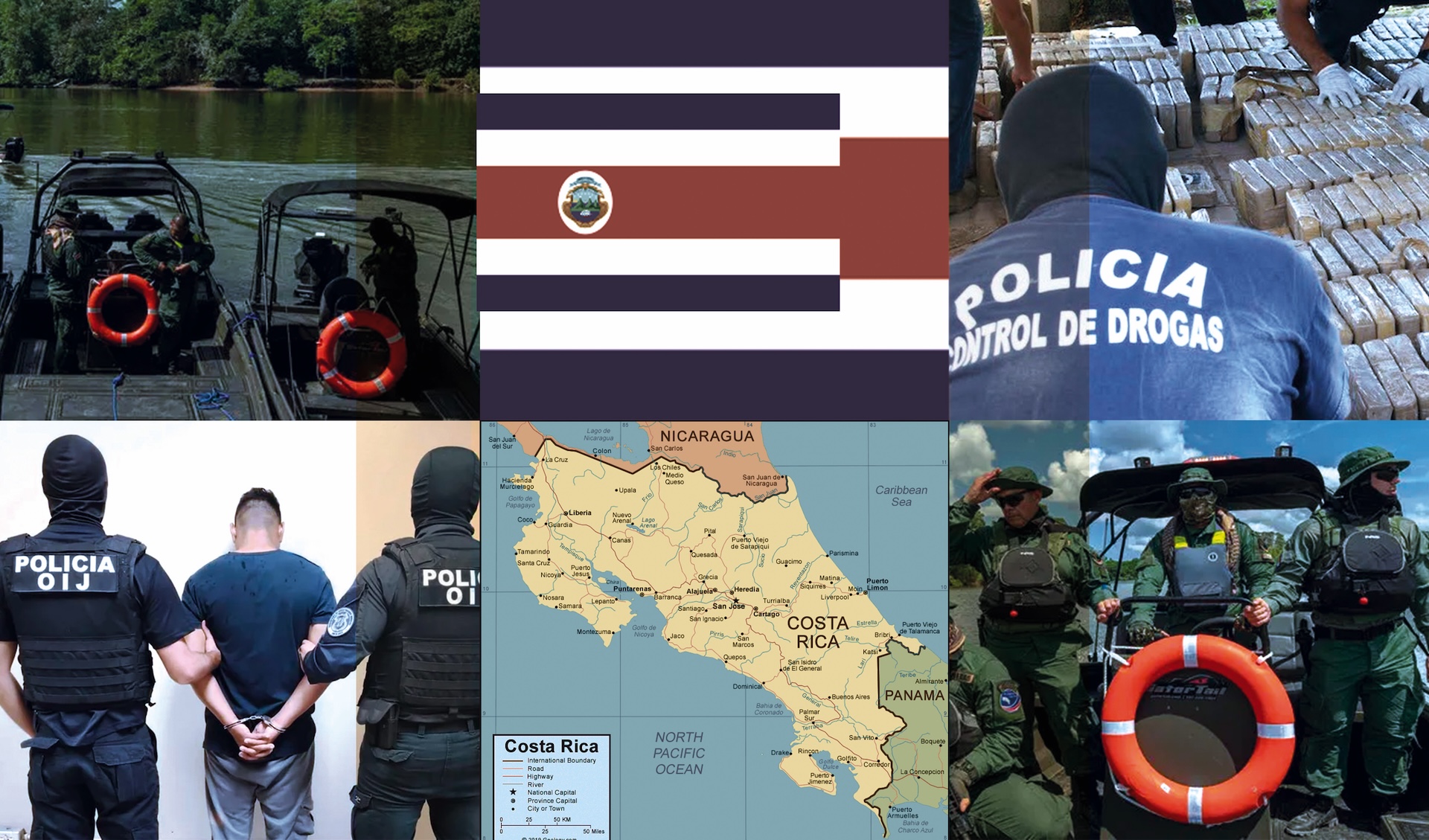
Costa Rican authorities are on high alert following the exposure of the South Caribbean Cartel, the first local group to be officially recognized as a transnational criminal organization. This discovery is driving a decisive shift in the nation’s security policy as the government moves to dismantle the infrastructure of organized crime.
The investigation reached a critical milestone on November 4, 2025, during Operation Betrayal (Operación Traición), the largest police mobilization in Costa Rica’s history. The mega-operation resulted in the arrest of nearly 30 individuals and the seizure of 14 tons of narcotics, primarily cocaine, alongside 68 high-caliber weapons, 40 properties, seven luxury condominiums, and 73 vehicles and boats.
The organization allegedly maintained a network of high-ranking government associates and operational cells stretching across Latin America, the United States, and Europe. According to official statements from Costa Rica’s Judicial Investigation Agency (OIJ), Operation Betrayal mobilized 1,200 agents and was fueled by a sophisticated intelligence-sharing network including the National Police of Colombia and Panama, European counterparts in Spain, the United Kingdom, and France, and the DEA.
The criminal structure was allegedly spearheaded by brothers Luis Manuel Picado Grijalba, known as “Shock,” and Jordie Kevin Picado Grijalba, known as “Noni.” Their capture highlights a coordinated international pursuit: “Shock” was apprehended in London in December 2024 following an international arrest warrant issued by the Eastern District Court of Texas. His brother, “Noni,” was captured months later, in August 2025, near Curridabat, Costa Rica.
Both remain in custody as they await extradition to the United States on drug trafficking charges. In a further blow to the network, the U.S. Treasury Department issued sweeping financial sanctions against the brothers and their associates in early 2026, freezing assets tied to their logistics and front businesses.
The OIJ reports that the South Caribbean Cartel has all the hallmarks of a transnational criminal entity: an integrated cartel structure, independent maritime logistics, sophisticated money laundering operations, a dedicated legal support wing, and advanced communication technology. The group did not merely facilitate transit; it managed a complete supply chain, receiving bulk shipments for domestic redistribution and maintaining its own proprietary export routes to the U.S. and European markets.
Once celebrated as the “Switzerland of Central America,” Costa Rica is now aggressively countering a spike in violence driven by territorial disputes between rival gangs. OIJ records indicate that of the 746 homicides registered between January and November 2025, nearly 500 were directly linked to narcotics and professionalized “settling of scores.”
“The security landscape in Costa Rica has undergone a profound transformation,” explains Valeria Vásquez, associate director of Control Risks, a security and strategic intelligence company based in Mexico City. “Although the country has historically served as a strategic point due to its geographical location and maritime connectivity, in recent years this role has evolved into greater interaction between local actors and transnational criminal groups. What was once primarily a transit territory for drug trafficking has become a much more complex dynamic, in which local structures have taken on a significantly more prominent role.”
Vásquez notes that the fierce competition for control of ports and rural routes has caused a visible deterioration in safety indicators, exacerbated by a fragmentation of criminal groups that creates volatile scenarios for law enforcement. “The statistics not only reflects an increase in homicides linked to settling of scores but also shows a growing impact on people outside these structures, including passersby and residents caught in crossfire or incidents associated with criminal disputes,” Vásquez said.
In response, Costa Rica has launched an aggressive counter-initiative, heavily supported by the United States. In late 2025, the Legislative Assembly approved the entry of up to 195 U.S. Coast Guard vessels for 2026 to conduct joint maritime patrols, a critical move for a nation without a standing navy.
The longstanding partnership with the United States has already proven highly effective: Joint operations through October 31, 2025, resulted in the seizure of more than 26 tons of cocaine and 12 tons of marijuana, the interception of 19 vessels, and the arrest of 59 suspects. The defense extends to the nation’s ports. With a $20 million donation of AI-powered scanners from the United States, Costa Rica now maintains superior inspection capabilities at its major terminals in Caldera and Moín, severing a primary export artery for narcotics.
This maritime shield is supported by a significant increase in U.S. security assistance to strengthen and modernize Costa Rica’s security forces. For the 2026 fiscal cycle, bilateral and regional security aid is designated at approximately $50 million. Among the critical initiatives is the state-of-the-art Cybersecurity Operations Center, a collaboration launched in 2023 and slated to be operational by the first quarter of 2026.
On the legislative front, the nation has enacted landmark reforms, including a 2025 constitutional amendment allowing the extradition of Costa Rican nationals for drug trafficking and the criminalization of sicariato (contract killing) in January 2026, with penalties reaching 40 years.
Costa Rica is also looking to its neighbors to overhaul its internal containment strategy. In January 2026, Costa Rican authorities broke ground for the Center for High Containment of Organized Crime (CACCO) in Alajuela. Modeled after El Salvador’s maximum security prisons, this facility is designed to isolate the country’s most dangerous criminals. This collaboration is part of the newly signed Shield of the Americas alliance, a security pact between San José and San Salvador focused on intelligence sharing and regional stability.
“The increase in violence erodes Costa Rica’s historical perception as a pura vida country, a safe and stable territory. This reputation has been a central element of its national identity and a key asset for strategic sectors such as tourism, foreign investment, and business activity,” Vásquez said.
Despite these challenges, the dismantling of the South Caribbean Cartel and the record-breaking maritime seizures signal a new era of resilience. By integrating international intelligence with sweeping legislative updates and enhanced naval cooperation, Costa Rica is reinforcing its role as a key security partner in the Western Hemisphere, ensuring that the nation remains a proactive force for stability and the rule of law.