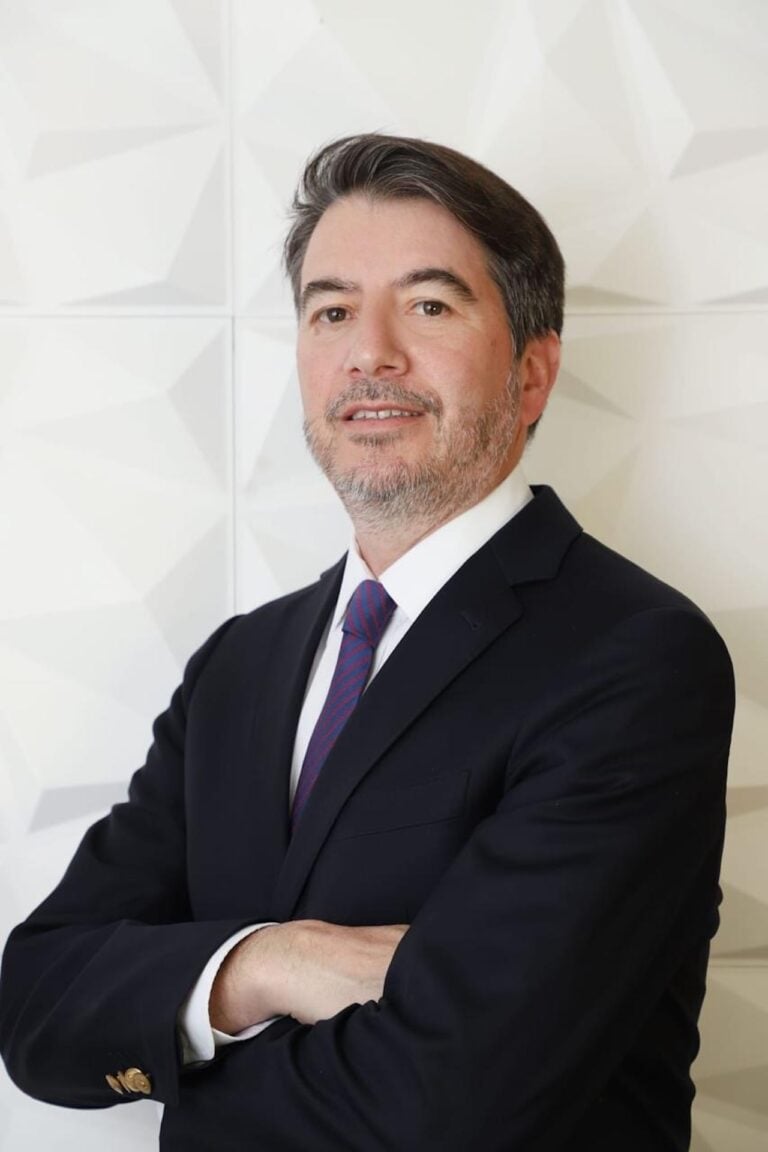


Army Colonel Lorenzo Agustín Cabrera Burgos is a senior officer in the Paraguayan Armed Forces with extensive experience in international operations, military education, and multinational cooperation. A graduate of the Royal Military Academy Sandhurst in the United Kingdom, he has developed a career marked by operational leadership and institutional strengthening, including United Nations peacekeeping missions in Cyprus and roles as an instructor and academic director in the military field. He currently serves as a liaison officer at U.S. Southern Command (SOUTHCOM), where he contributes to strengthening interoperability, regional cooperation, and strategic coordination between Paraguay and its hemispheric partners.
In this exclusive interview with Diálogo, Col. Cabrera reflects on the strategic value of this role, the progress in the modernization of the Paraguayan Armed Forces, and the fundamental role of international cooperation in countering transnational threats and strengthening regional security.
Diálogo: Could you explain the strategic importance of your role as a foreign liaison officer at U.S. Southern Command (SOUTHCOM), and how your presence in Miami facilitates cooperation between the Paraguayan Armed Forces and their U.S. counterparts?
Army Colonel Lorenzo Agustín Cabrera Burgos, Paraguay’s liaison officer at U.S. Southern Command: As a liaison officer representing the Paraguayan Armed Forces at SOUTHCOM, I perform technical, operational, and strategic functions aimed at strengthening cooperation, trust, and interoperability among partner nations. My position at SOUTHCOM allows me to directly manage and support the interests of the Paraguayan Armed Forces with the principal command responsible for hemispheric security, as well as with liaison officers from partner nations and strategic allies.
The permanent presence in Miami, Florida, facilitates daily and direct coordination with the entire outstanding SOUTHCOM team, the U.S. Military Group in Paraguay, and the Military Forces Command in coordination with the Defense, Military, Naval, and Air Attaché Offices, streamlining planning and decision-making processes to provide more timely and effective responses to shared security challenges.
Diálogo: The Foreign Liaison Officer Program is often described as a bridge between nations. How has this program specifically benefited the Paraguayan Armed Forces?
Col. Cabrera: The Foreign Liaison Officer Program constitutes a key mechanism to strengthen international military cooperation and strategic trust among partner nations. For the Paraguayan Armed Forces, liaison officers and exchange officers from partner and allied countries contribute to strengthening institutional capacity in the short, medium, and long term, improving planning processes, interoperability, and doctrinal understanding with allied forces, which translates into greater shared operational trust.
On a personal level, this experience has broadened my strategic vision, strengthened my professional capabilities, and deepened my understanding of working jointly in multinational environments.
Diálogo: Paraguay will host the Fuerzas Comando competition this August. What is the strategic value for Paraguay in leading this multinational competition and its Senior Leadership Seminar?
Col. Cabrera: Fuerzas Comando is an exercise of high strategic value that strengthens regional cooperation and interoperability among special operations forces. For Paraguay, leading this multinational competition goes beyond prestige, as it consolidates its position as a reliable partner and a responsible actor in regional security. The event and the Senior Leadership Seminar strengthen interoperability, promote the exchange of experiences and doctrines, and contribute to building strategic consensus in response to common threats affecting the region.
Diálogo: Paraguay also assumed leadership of the 2026–2027 cycle of the Conference of American Armies (CAA). How does your role help synchronize Paraguay’s priorities, such as the fight against transnational criminal organizations, with regional standards?
Col. Cabrera: The Conference of American Armies is a permanent international military forum, integrated and led by the armies of the American continent, for the coordination and harmonization of military efforts at the hemispheric level. My role facilitates direct coordination between Paraguay’s strategic priorities — such as riverine security and the fight against transnational criminal organizations — and regional doctrinal and operational frameworks.
Diálogo: In December 2025, U.S. Secretary of State Marco Rubio and Paraguay’s Foreign Minister Rubén Ramírez Lezcano signed a modernized Status of Forces Agreement (SOFA). How does this agreement improve interoperability?
Col. Cabrera: The SOFA represents an updated legal and operational framework that strengthens military cooperation between the United States and Paraguay. This agreement improves interoperability by clarifying legal, operational, and logistical aspects, facilitating joint training, coordinated deployments, and mutual support in missions to respond more quickly and effectively to the dynamic threats of transnational organized crime.
Paraguay maintains a sovereign defense policy, complemented by strategic alliances based on cooperation and mutual benefit.
Diálogo: Paraguay recently designated two Brazilian criminal groups as terrorist organizations. How does this new classification change how the Paraguayan Armed Forces can use their special forces and intelligence to combat these organizations?
Col. Cabrera: The designation of the First Capital Command (PCC) and the Red Command (CV) criminal groups as terrorist organizations expands the legal and strategic framework for Armed Forces action, responds to the nature and scope of the threat, and strengthens the State’s legal and operational tools to protect the population. This classification allows for more comprehensive and coordinated employment of special forces and military intelligence to neutralize threats in the fight against these transnational organizations.
Diálogo: The Paraguayan Navy is currently integrating a fleet of 12 fast patrol boats. How do these vessels improve the Navy’s ability to conduct interdictions in high-traffic river corridors such as the Paraná and Paraguay rivers?
Col. Cabrera: The modernization of the Paraguayan Navy with the 12 fast patrol boats donated by the United States strengthens its operational capability and presence in the country’s main river corridors. This significantly increases mobility, coverage, and interdiction capacity in strategic rivers such as the Paraná and Paraguay, improving deterrence against illicit activities and enabling faster responses to security incidents.
Diálogo: The Army is also following a clear modernization roadmap, including new logistics and transport vehicles and the arrival in 2027 of Oshkosh M-ATV armored vehicles transferred from the United States. How does this phased approach strengthen the Army’s ability to maintain a proactive presence in high-risk areas and plan future border security operations?
Col. Cabrera: The progressive modernization of the Army through the acquisition of new logistics and transport vehicles, as well as the 2027 arrival of Oshkosh mine-resistant, ambush-protected armored vehicles, strengthens mobility, protection, and operational autonomy. This enables the Army to maintain a proactive presence in high-risk areas, such as the tri-border region, and remain ready to respond effectively to emerging threats.
Diálogo: Could you provide an update on the Theater Maintenance Partnership Initiative (TMPI) in Paraguay?
Col. Cabrera: TMPI is a regional SOUTHCOM program designed to strengthen maintenance culture and logistical capacity among partner nations. In Paraguay, TMPI continues to advance in sustainable maintenance practices and technical capacity development through educational exchanges and technical cooperation.
Regionally, TMPI has established centers of excellence and training processes that strengthen partner readiness and professionalism in logistics and maintenance, and Paraguay is in the process of integrating into this network of best practices.
Diálogo: What has been the most significant evolution in the relationship between Paraguay and the Massachusetts National Guard?
Col. Cabrera: The partnership with the Massachusetts National Guard is one of the most solid and enduring cooperation relationships of the Paraguayan Armed Forces, now in its 25th year. The most significant evolution has been the transition from basic tactical training cooperation to a mature and strategic relationship.
Today, collaboration includes advanced areas such as cybersecurity, disaster response, and emergency management, reflecting a high level of mutual trust, interoperability, and joint adaptation to contemporary threats and challenges.
Diálogo: How has your experience as a U.N. peacekeeper influence your efforts to unify the region into a more cooperative force, capable of addressing shared security challenges?
Col. Cabrera: Participation in United Nations peacekeeping operations provides a practical and strategic perspective on international cooperation in multinational environments. My experience in Cyprus, both as a member of the contingent and as a U.N. military observer, reinforced the importance of multinational cooperation, especially in personnel management, information and intelligence sharing, planning and execution of operations, logistics management, as well as humanitarian assistance and civil affairs.
Proficiency in foreign languages, especially English, is a powerful tool to facilitate dialogue, strengthen trust, and enhance interoperability.
Diálogo: As your mission nears its end, what is the most important lesson you will take back to Paraguay?
Col. Cabrera: It is for me a great honor, privilege, and above all a great responsibility to represent the Paraguayan Armed Forces before SOUTHCOM. It represents a strategic experience that consolidates Paraguay’s commitment to regional cooperation and hemispheric security. The most important lesson learned is that strategic trust is built through constant work, discipline, professionalism, and commitment to the mission.
Personally, this mission also reaffirms the importance of family support to sustain professional commitment in demanding and prolonged missions, and it forms a silent, but essential, part of the successful fulfillment of this mission at SOUTHCOM, always with the protection and blessing of God.
Paraguay believes in cooperation, in mutual respect, and in responsible leadership to build a safer and more stable region.