

For the past 18 years, Panamanian security forces and their U.S. counterparts have come together in Panama to share experiences and strengthen their operational skills in a series of exercises focused on the security of the Panama Canal. Exercise PANAMAX Alpha, carried out yearly, is a model of international security cooperation for this strategic waterway for global trade.
PANAMAX Alpha also serves as a preparatory phase for the broader biennial, multinational U.S. Southern Command- (SOUTHCOM) sponsored exercise PANAMAX, in which forces from partner nations from all of the Americas gather to put their capabilities to the test and strengthen interoperability for the defense of the Panama Canal.
PANAMAX Alpha not only rehearses responses to possible vulnerabilities, but also refines a series of protocols, strengthens alliances, and optimizes the operational capabilities of local forces to protect one of the region’s most valuable assets, the Panamanian Ministry of Security said in a statement.
“With the support of U.S. Southern Command, we have developed and strengthened a system of exercises, complemented by training in the management of crisis situations and intelligence, and operations and hazardous materials, among others,” Edilberto del Cid, general coordinator of Panama’s National Crisis Coordination Center (CNCC), told Diálogo. “This allows us to evaluate the Public Force, as well as support institutions. We can identify strengths and weaknesses, communicating them to higher levels to improve the coordinated interinstitutional response to these events.”
The CNCC oversees the planning of this annual exercise, which is carried out in three phases with the support of SOUTHCOM teams, members of the Missouri National Guard, Panama’s partner under the State Partnership program, and instructors from the Western Hemisphere Institute for Security Cooperation (WHINSEC), among others. Phase zero, which kicked off in mid-March and known in Panama as Exercise Mercury (ejercicio Mercurio), focuses on humanitarian aid and bringing support to underserved communities. Phase one, set to take place between July and August, emphasizes operations by national forces. Phase two, planned for September, focuses on exercises with the participation of U.S forces.

During the last two phases, which consist of academic events and live exercises, members of the participating forces attend five conferences; 20 training courses on knowledge, capabilities, and skills; carry out seven drills of a single training; and conduct a simulation that combines several trainings.
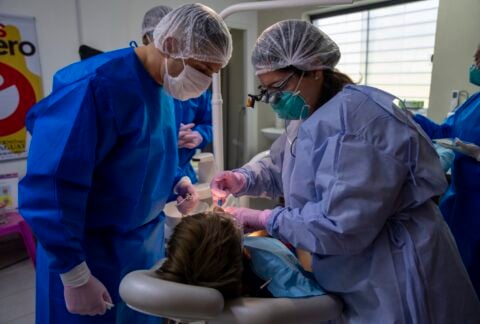
Exercise Mercury, which is ongoing, is seeing the deployment of SOUTHCOM’s Joint Task Force Bravo (JTF-Bravo) units in various humanitarian training missions, delivering supplies to communities, including conducting two Medical Readiness Training Exercises (MEDRETEs), providing medical care to hundreds of people in small towns of the Colón province.
“In the planning of PANAMAX Alpha, they prepare exercises where best practices are put to the test, which participating entities must handle and execute according to the plans at the different levels of security,” Del Cid said. “The objective is to validate the established protocols, plans, and procedures; to highlight current needs; available resources; and legal loopholes that may limit the performance of the different institutions. It’s to offer a comprehensive and organized response to the different events that may arise.”
The Panama Canal is not only a vital waterway for global trade, it’s a critical infrastructure that demands constant vigilance and impeccable coordination, the Panamanian National Air and Naval Service (SENAN) emphasized in a statement. “As such, PANAMAX Alpha trains participants to reach a level of preparedness that allows them to prevent, mitigate, and detect, through combined joint operations, threats to the security of this interoceanic area.”
The evolution and specialization of the exercise reflects the continuous progress of security cooperation between Panama and the United States. An important milestone occurred in 2013, when the Panamanian government authorized simulated bilateral operations; integrating SOUTHCOM’s JTF-Bravo to support security operations of national Task Force Alpha throughout the exercise, the Ministry of Security indicated. Since then, the binational forces have been training yearly, strengthening together their ability to respond to threat scenarios, from violent extremist organizations attempting to take control of the canal to various incidents on land such as toxic substance spills.
“The strategic trajectory of PANAMAX Alpha and the continuous collaboration between Panama and SOUTHCOM are testimonies of the shared commitment to the security and stability of the region,” Del Cid concluded. “Threats evolve, while this alliance strengthens to ensure that the Panama Canal remains secure and operational for global trade.”