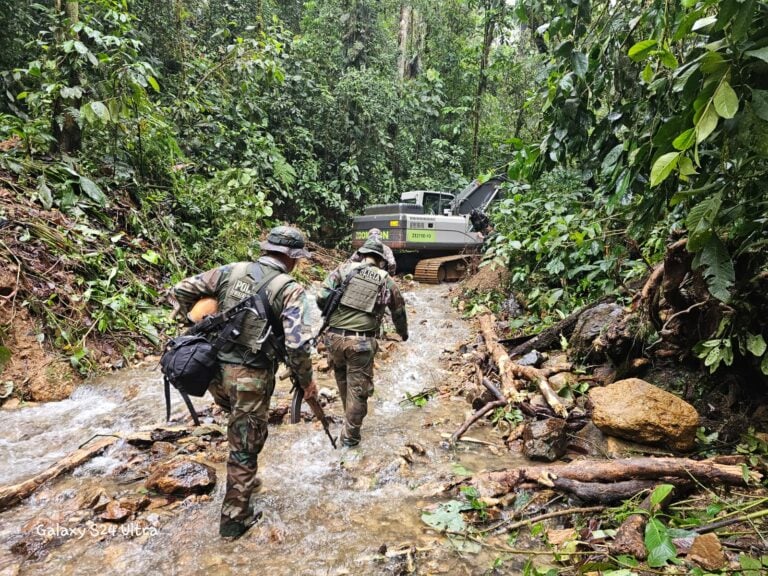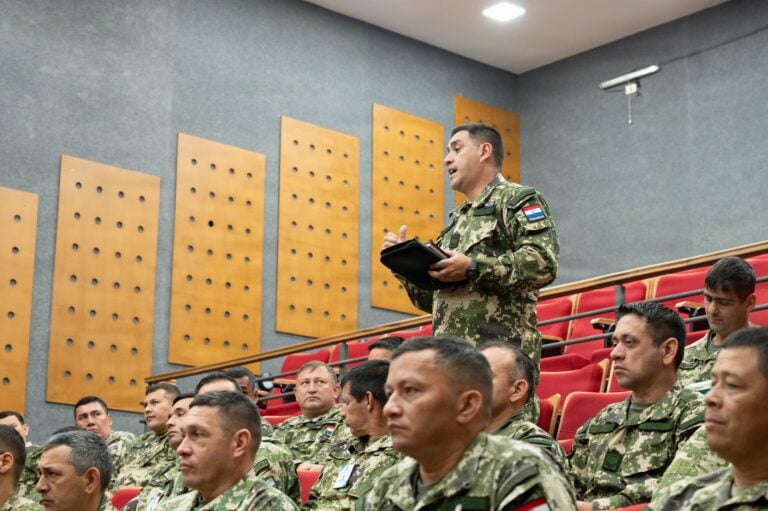


Panama and Costa Rica are deepening their border cooperation through enhanced surveillance, coordinated patrols, and intelligence sharing as transnational criminal organizations (TCOs) continue to adapt their operations along one of Central America’s most important land corridors.
That effort took another step forward in April, when officials from both countries met in the Paso Canoas border area to discuss measures aimed at strengthening border security and expanding cooperation against transnational crime. According to Panama’s Ministry of Public Security, discussions centered on improving coordination to combat drug trafficking, human trafficking, and smuggling.
Among the measures announced were the expansion of surveillance capabilities, strengthened information-sharing mechanisms, and enhanced coordinated patrols along the border corridor. Panama also inaugurated a new National Border Service (SENAFRONT) base in the community of Progreso, near Paso Canoas. The facility is designed to strengthen border monitoring through surveillance technology, including cameras and drones, while facilitating real-time information sharing between the two countries. The initiative also includes the delivery of vehicles to support joint patrols at key locations, enhancing operational response capabilities in the border region.
The importance of Paso Canoas extends well beyond the immediate border region. According to Infobae, it is one of the main principal commercial gateways between Panama and the rest of Central America. Goods entering through the Panama Canal and the Colón Free Zone pass through this customs post, along with regional products destined for Central American markets and international export. The same flow that sustains legitimate commerce can also be exploited by criminal networks.
For Javier Oliva Posadas, an academic at the School of Political and Social Sciences at the National Autonomous University of Mexico, the most significant aspect of these efforts goes beyond the operational resources being deployed. The key, he told Diálogo, “lies not only in the announced operational resources, but in the consolidation of trust-building mechanisms that allow for progress toward more decisive security actions.”
Strategic gateway for regional security
The Panama-Costa Rica border sits astride one of Central America’s busiest commercial and transportation corridors. Beyond the constant movement of people and goods along the Pan-American Highway, the area lies within a region that the United Nations Office on Drugs and Crime (UNODC) identifies as a key route for cocaine trafficking toward North America.
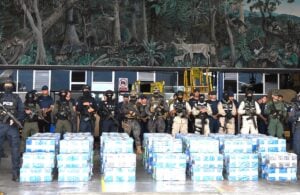
The challenges, however, extend beyond drug trafficking. In late 2024, Costa Rican authorities, with support from Panama and the United States, dismantled an international migrant smuggling and trafficking network operating across several countries in the region. According to Reuters, the organization coordinated the irregular movement of migrants from Panama toward the northern part of the continent.
“Human trafficking has gained greater prominence due to the migratory flows crossing the region and the exploitation of these flows by criminal organizations,” noted Oliva Posadas.
The transnational nature of these activities poses an additional challenge for security forces. UNODC reporting and academic studies published through ScienceDirect indicate that criminal organizations continually adapt their routes and transportation methods in response to enforcement efforts, combining land, maritime, and air corridors to sustain the movement of illicit cargo.
Geography further complicates the task. “Geography, topographical and climatic conditions, and biodiversity unfortunately play into the hands of criminal organizations,” Oliva Posadas said.
Efforts to strengthen coordination are not new. In February 2024, Panama and Costa Rica inaugurated the Paso Canoas Integrated Control Center, a facility that, according to Infobae, was designed to streamline inspections and facilitate the movement of people and goods between the two countries.
Oliva Posadas warned that the challenge is not only the expansion of these criminal structures but also the speed at which they evolve. “The diversification of activities and the speed with which they adjust their operations pose a challenge to any security strategy.”
Cooperation beyond the border
The cross-border nature of these threats is also driving broader cooperation. According to the U.S. Department of State, Washington works closely with Panama on initiatives targeting drug trafficking, smuggling, irregular migration, and money laundering, while also strengthening security and justice institutions. Border security forms part of that cooperation. Recent U.S. security assistance has included equipment and capacity-building support to strengthen Panama’s ability to detect and interdict illicit trafficking and support operations against TCOs.
“This is a geo-territorial problem that no country can tackle on its own; it necessarily requires a regional approach and permanent cooperation mechanisms,” said Oliva Posadas, noting that many of the illicit flows affecting Central America originate farther south and pass through multiple countries before reaching the shared border.
Costa Rica maintains similar cooperation programs with the United States. According to the State Department, that collaboration includes strengthening border security, professionalizing police forces, and reinforcing justice and public safety institutions.
“The effectiveness of these efforts will depend largely on the ability of governments to deepen information exchange, share intelligence, and strengthen permanent coordination mechanisms,” Oliva Posadas concluded.
For the region’s security, defense, and law enforcement forces, Paso Canoas offers a practical case study in how border security increasingly depends on intelligence sharing, interoperability, and sustained bilateral coordination rather than on physical infrastructure alone. A corridor used to facilitate irregular migration and channel contraband cannot be secured with technology deployed on only one side of the border.
As criminal organizations continue to adapt routes, methods, and logistics networks, authorities face the challenge of responding with the same degree of agility. The experience at Paso Canoas underscores a reality increasingly evident across the hemisphere: effective border security depends not only on technology and infrastructure, but on the ability of partner nations to share information, coordinate operations, and respond collectively to threats that do not respect national boundaries.