
Transnational criminal organizations (TCOs) are fueling environmental destruction in Latin America, a threat that is not only devastating ecosystems but also increasing violence in countries like Brazil, Colombia, Peru, and Venezuela, expert warn.
“Extractive economies, such as mining, fishing, and logging (where legal and illegal activities converge), along with criminal activities such as wildlife trafficking and drug trafficking, are some of the main threats to the survival of these ecosystems and their defenders,” international organization InSight Crime, which specializes in organized crime in Latin America, says in a recent report.
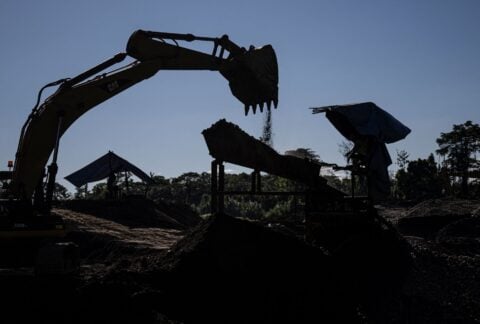
In Peru, a “gold rush” driven by rising prices has escalated both environmental damage and violence. A report by the Peruvian Institute of Economics (IPE) notes that the price of a gram of gold has increased sevenfold since 2000, exceeding $100 in 2025. IPE estimates that 44 percent of the illegal gold exported from South America comes from Peru, surpassing Colombia (25 percent) and Bolivia (12 percent).
“In Peru, we are seeing the beginning of an increasingly adverse situation linked to illegal mining, which includes the murder of workers, kidnapping, and contract killings,” Peruvian lawyer and environmental specialist César A. Ipenza told Diálogo.
In May, 13 workers were found dead in a mine in the Peruvian province of Pataz after being kidnapped. The victims worked for a small mine linked to the Poderosa company, one of the country’s largest gold producers, Reuters reported.
“Poderosa mourns the death of the 13 people who were cruelly murdered by criminals linked to illegal mining,” the company said in a statement. According to the company, criminal gangs had killed 39 people in Pataz as of May.
“In Peru, transnational criminal groups linked to illegal mining are also appearing in the northern Amazon, particularly on the border with Ecuador and Colombia, where dissident groups from the FARC [Revolutionary Armed Forces of Colombia] have even raised a flag on Peruvian territory,” Ipenza said.
The expert warned that TCOs like Los Choneros and Los Lobos are operating in the Amazon, on the border with Ecuador. “This is becoming more complex every day,” said Ipenza. In Ecuador, criminals extort miners in Podocarpus National Park, where deforestation for mining grew by 125 percent between 2023 and 2024, InSight Crime indicated.
Peruvian military supports fight against criminal groups
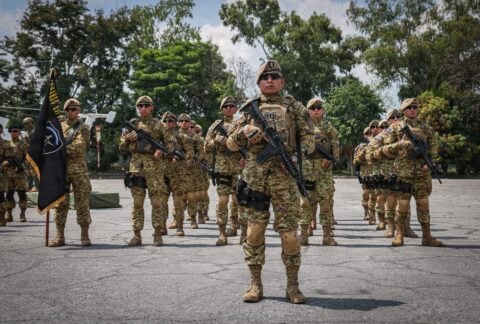
In response to the surge in violence, the Peruvian government enacted a law in late April allowing the military to support the National Police during states of emergency declared to combat illegal mining.
“The Armed Forces already support the National Police in maintaining internal order during states of emergency declared to combat crime in the country, but they had not been able to intervene in areas affected by illegal mining, such as the province of Pataz in the La Libertad region in the country’s north,” Spanish news agency EFE reported.
A state of emergency was declared on September 27, 2024, in 14 districts of Lima and Callao, with an initial duration of 60 days, to address the increase in crimes like extortion and contract killings, Argentine news site Infobae reported. Since then, the measure has been extended several times.
Multinational efforts strengthen the fight against environmental crime
Countries in the region are also conducting joint operations to combat TCOs in the Amazon. In June, a coordinated effort by the Brazilian and Colombian armed forces dismantled eight illegal mining dredgers on the border along the Puruê River. “Around 200 Brazilian and Colombian military personnel participated in actions to combat transnational crime,” the Brazilian Ministry of Defense said in a statement.
Brazil’s military and security forces are working together in the fight against criminal groups in the Amazon. On May 31, for example, the Brazilian Air Force (FAB) played “a decisive role in the unprecedented seizure of a semisubmersible vessel that was be used to transport cocaine to Europe,” the FAB Press Office told Diálogo.
The military acted in conjunction with the Federal Police (PF) in the Marajó Island region. The operation employed artificial intelligence technologies, satellite imagery, and FAB aircraft equipped with special sensors, to map atypical river movements in the Amazon, the FAB said. “The success of the operation reinforced the importance of integrated intelligence and the use of aerospace platforms to anticipate organized crime strategies and protect the national territory,” the FAB said.
Drug trafficking acts as a catalyst for deforestation because the profits are often laundered and used for other activities that lead to forest loss, such as cattle ranching, land grabbing, and illegal mining, InSight Crime indicated.
The geographical isolation of Marajó Island increases the region’s vulnerabilities, “requiring logistical sophistication on the part of criminal organizations and also rapid and precise responses from the Armed Forces,” the FAB added.
In Colombia, the National Army’s Fourth Brigade carried out raids against illegal mining in Antioquia, weakening the illegal economies of armed groups. On June 26, soldiers from the 4th Special Energy and Road Battalion, together with the National Police’s National Unit Against Illegal Mining, dismantled four illegal gold mining operations, Infobae reported.
“In Bolivia and Venezuela, mining often operates with the blessing of the state and its permissive regulations, which blur the lines between legal and illegal,” said InSight Crime. In Bolivia, the cooperative sector controls 94 percent of gold production, but its operations are often associated with illegal actors, who typically operate without environmental licenses and in partnership with dubious companies from China and Colombia, InSight Crime added.
The United States also actively supports Latin American countries in the fight against illegal mining, viewing it as directly linked to TCOs, environmental devastation, and human rights abuses.
U.S. efforts include legislative measures and disrupting illicit financial flows, such as the Legitimate Gold and Mining Partnership Act, which was introduced in February 2025, proposing a multi-year strategy to counter illicit financing and strengthen anti-money laundering efforts in the hemisphere.
Beyond policy, U.S. Southern Command (SOUTHCOM) provides direct support, including training, equipment, and intelligence, to combat illicit mining supply chains. The United States also strengthens judicial and financial institutions by training professionals to investigate and prosecute these crimes. This broad support, which includes historic memoranda of understanding, reflects a long-term commitment to regional cooperation and the promotion of responsible mineral supply chains.
The growing threat of environmental crime, fueled by organized crime networks throughout Latin America, requires sustained and integrated international cooperation. As these complex challenges evolve and deepen, a united regional and global front remains essential to protect the region’s invaluable biodiversity, vulnerable communities, and national sovereignty against widespread illicit activities.