

It has been 70 years since the governments of Honduras and the United States signed the Bilateral Military Assistance Agreement on May 20, 1954. This agreement is part of the Inter-American Treaty of Reciprocal Assistance (TIAR) for the maintenance of peace and security in the Western Hemisphere.
As a result of this alliance, the Honduran Armed Forces and their U.S. counterparts have been learning from one another, through training, exercises, and exchanges, as well as strengthening their common fight against criminal groups, drug, human, and wildlife trafficking.
“We have built a long lasting, trusted partnership with Honduras because of our shared interests in cooperation and interoperability,” U.S. Army General Laura J. Richardson, commander of U.S. Southern Command (SOUTHCOM), said in a statement.
Joint Task Force Bravo (JTF-Bravo), deployed at Honduras’ Soto Cano Air Base in Comayagua for 40 years, expressed its gratitude for the longstanding friendship and support. “We are honored to maintain this strong and prosperous relationship with Honduras, our host nation,” JTF-Bravo said via X.
“What is most important is the relationship between the armed forces of the two countries, which have been allies for many years,” Honduran Air Force Lieutenant Colonel Dulce María Vásquez Amador, commander of Soto Cano Air Base, said. “Among the highlights is the support for air operations during natural disasters and humanitarian aid, as well as the coordination for logistics support, both for security and training.”
Fundamental pillar
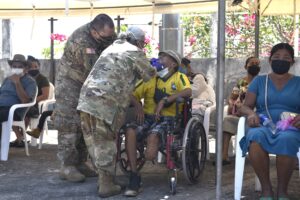
As part of the U.S.-Honduras military alliance, JTF-Bravo is a vital presence for humanitarian cooperation for both nations and the region.
“This closeness results in many benefits for patients who come to the Ministry of Health’s public hospitals throughout Honduras,” Dr. Ricardo Avilés, JTF-Bravo medical liaison officer, told Diálogo on May 27. “We carry out activities with many task forces that include, but are not limited to, general medical care in neglected areas such as dentistry, vaccination campaigns, and specialty missions in public hospitals to perform surgeries in various specialties and reconstruction for traumatic injuries.”
“These teams bring with them medicines, medical supplies, specialized personnel, and mainly the willingness to help low-income patients, and interact with the country’s health personnel,” said Avilés. “As an example of commitment, sustained support is provided to adult emergency rooms, with emergency teams almost every month of the year at the Hospital Escuela in Tegucigalpa; and at the Mario Catarino Rivas Hospital, in San Pedro Sula.”
Constant training
For the past 15 years, the biannual CENTAM SMOKE exercise, led by JTF-Bravo’s 612th Air Squadron Fire Department, has included the participation of military and civilian personnel from Belize, Colombia, Costa Rica, El Salvador, Guatemala, Honduras, Jamaica, and Panama, JTF-Bravo Fire Inspector Herberth Gaekel told Diálogo.
The objective of this exercise is to improve regional emergency capabilities, optimize operational readiness for rapid response, and standardize knowledge for firefighters throughout Latin America in the event of a fire or disaster.
Rebuilding the environment
“The [Honduran] Military policy is not only focused on defense and security. Environmental protection and recovery are of utmost importance and highly supported,” Leonel Herrera, director of Fundación Árbol de Misericordia, a Honduran nongovernmental organization (NGO) focused on reforesting and improving infrastructure for education and health, told Diálogo. “JTF-Bravo’s support allows us, in alliance with the Ministry of Education and the Honduran Armed Forces, to meet the goal of planting 200,000 trees a year.”
“More than 1,000 hectares of forest have been reforested, creating mini biological corridors that establish connectivity. This allows wildlife to move from one area of the forest to another without danger,” Herrera said. “In pasture areas, ‘living barriers’ were planted, a kind of tree boulevard between pastures that link habitats and are safe spaces for biodiversity.”
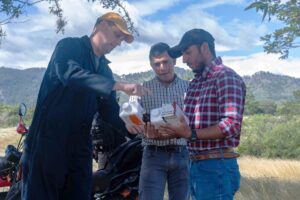
“Those of us who participated in the reforestation of the Lake Yojoa came up with these areas, which now allow the quetzal, which moves at 1,200 meters above sea level, to descend to about 650 meters,” Herrera added. In addition, these areas are used by school children to observe wildlife.
The 1,000 hectares reforested not only preserve biodiversity but are also the source of the most precious resource: water. According to the Canadian NGO Water for People, more than 77 percent of Honduras’ inhabitants (some 7.5 million out of a total of 9.7 million), do not have access to safe water.
“With these 1,000 hectares of reforested area we now have 18 protected water sources, which provides the vital liquid to some 75,000 families. JTF-Bravo also supports the analysis of water sources to determine their possible contamination,” said Herrera.
In one community they were able to determine the cause of several gastrointestinal diseases. The analysis revealed fecal contamination and they solved the problem with water purifiers.
This work is carried out through an alliance between JTF-Bravo personnel, the Tree of Mercy Foundation, and personnel from the Ministry of Health, the Ministry of Education, the Armed Forces, and other NGOs in the area, benefiting the departments of Cortés, Santa Bárbara, and Comayagua.
Stronger together
“The U.S.-Honduras partnership is mutually reinforcing and beneficial in ensuring stability against aggression, building partner-nation capacity and responding side-by-side to natural disasters,” U.S. Air Forces Southern/12th Air Force said in a statement.
“The U.S. military is stronger than ever through collaboration for the past 70 years with Honduras, and together this relationship will continue to build strong partnerships with other nations in the region.”