

Ecuadorian-led operations against transnational criminal organizations (TCOs) have intensified in 2026, supported by expanded training and coordination efforts that are strengthening how national forces plan and execute missions. The effort, described by Daniel Noboa as “a new phase against narcoterrorism and illegal mining,” signals a shift toward more coordinated, intelligence-led operations driven by Ecuador’s own security priorities.
President Noboa, who has framed the country’s strategy in stark terms — “we are at war” — has emphasized the need for coordinated action across military, police, and international partners.
To support these efforts, Ecuador has expanded cooperation with partner nations, including the United States, focusing on training, intelligence-sharing, and operational planning. This collaboration complements Ecuadorian-led operations by enhancing coordination and overall operational effectiveness.
Building capability
Recent operations illustrate how Ecuador is applying these capabilities in practice.
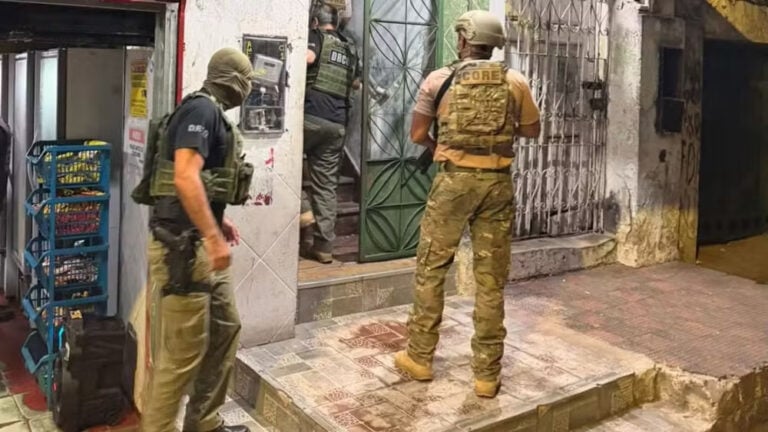
Since launching its internal security campaign in 2024, Ecuador has carried out tens of thousands of military and police operations, leading to more than 20,000 arrests linked to organized crime, along with significant seizures of weapons and narcotics.
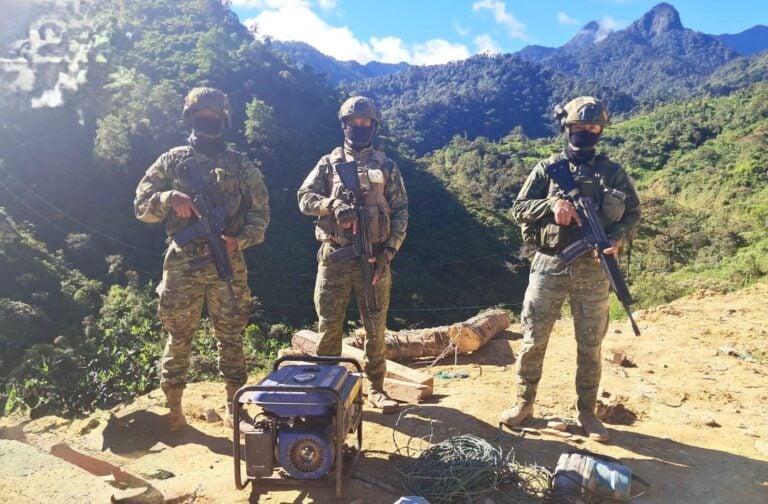
In March 2026, Ecuadorian security forces launched coordinated operations along the northern border with Colombia targeting transnational criminal groups. Authorities increased their presence in key border zones, using aerial surveillance, riverine patrols, and ground forces to disrupt trafficking routes and armed groups operating across both countries.
According to official reporting, joint operations in the border region have led to tangible results, including the dismantling of 45 drug processing labs in just three days, highlighting the scale and intensity of coordinated efforts.
Maritime operations have also produced measurable results. In March 2026, Ecuador and the United States conducted Operation Pulpo, a joint counternarcotics mission in the Eastern Pacific supported by Joint Interagency Task Force South. The operation enabled Ecuadorian forces to conduct interdictions far offshore, resulting in the seizure of more than 2 metric tons of cocaine from three vessels, about 180 nautical miles off the coast. The operation highlighted how combined intelligence, surveillance, and maritime capabilities can extend Ecuador’s operational reach while maintaining national authority over interdictions.
These efforts were supported by broader security measures. In March, the government reported a 28 percent reduction in homicides in areas under curfew, following the deployment of security forces in key trafficking corridors. While localized, the decline reflected immediate effects in targeted zones.
Training that translated into operations
A growing emphasis on structured training and operational coordination is shaping how Ecuadorian forces plan and execute missions.
At sea, training has moved into operational environments. For instance, in April 2026, the Ecuadorian Navy deployed to conduct exercises with the USS Nimitz (CVN-68) as part of Southern Seas 2026. These activities include passing exercises and ship-to-ship coordination, allowing Ecuadorian personnel to operate alongside a carrier strike group and take part in complex maritime operations firsthand.
Following the launch of Ecuador-U.S. joint efforts in March, support has included specialized training for Ecuadorian commandos and other units, alongside intelligence and logistical assistance. These efforts aim to improve how Ecuadorian forces identify targets, coordinate across units, and conduct operations with greater precision.
In February, U.S. Marines and Ecuadorian naval forces conducted Maritime Staff Talks in Quito, a week-long engagement focused on combined operational planning and coordination. The talks brought together planners from both countries to align priorities, assess capabilities, and identify gaps in interoperability. According to the U.S. Marine Corps, the engagement established measurable objectives and future tasks to strengthen maritime security and support regional stability.
Earlier training efforts also contributed to building this foundation. In late 2025, U.S. Army Special Forces, including Green Berets from the 7th Special Forces Group, trained alongside Ecuadorian units in exercises focused on small-unit operations and coordination. These engagements contributed to strengthening interoperability and operational capability at the tactical level.
These engagements build on a long-standing pattern of military cooperation between Ecuador and the United States, which has included both small-unit exchanges and large-scale multinational exercises. Ecuador has participated for years in exercises such as UNITAS and PANAMAX, which bring together regional and international partners to strengthen interoperability, maritime security, and coordinated responses to shared threats.
Ecuador’s leadership has emphasized that these efforts are part of a broader cooperative framework. As Ecuador’s Minister of Defense Gian Carlo Loffredo noted in a recent interview with Diálogo, “regional cooperation is essential to defeat narcoterrorism.”
Minister Loffredo has outlined plans to increase investment in security forces, including training, equipment, and operational readiness to strengthen national capabilities. The strategy also includes modernization efforts focused on maritime operations, intelligence systems, and mobility, areas that are critical to addressing trafficking routes and transnational threats.
Operational activities remain under Ecuadorian command, with international partners’ support focused on planning, training, and technical assistance that contributes to ongoing operations.
Partnership in support of national efforts
Ecuadorian and U.S. officials have emphasized that these efforts are grounded in partnership and shared responsibility. During recent engagements, U.S. Marine Corps General Francis L. Donovan, commander of U.S. Southern Command (SOUTHCOM) stated: “Ecuador is one of the United States’ strongest partners in disrupting and dismantling these organizations.”
He also highlighted Ecuador’s role directly, noting its “commitment through its actions against narcoterrorists on their streets.”
Beyond bilateral cooperation, Ecuador’s efforts are supported by a broader international network. European countries have expanded coordination with Ecuadorian authorities to counter cocaine trafficking routes linking South America to major ports such as Antwerp and Rotterdam. This includes intelligence-sharing initiatives and coordination mechanisms that function as intelligence fusion efforts, improving how authorities track illicit shipments, identify criminal networks, and strengthen port security.
In January 2026, Ecuador and the European Union inaugurated an intelligence fusion center in Guayaquil to strengthen the fight against organized crime. Minister Loffredo said the center allows Ecuador to work with European partners to track the logistics chain through which drugs leave the country, helping identify exporters, transporters, cargo arriving at ports, and shipments after they depart Ecuador. Information provided from Europe, he added, helps authorities build a more complete picture of how these organizations operate.
Regional partners also continue to collaborate on border security and intelligence-sharing, reflecting the cross-border nature of these threats.
Building toward long-term stability
Ecuador’s current approach reflects an understanding that lasting security depends on institutional strength. While operations can disrupt criminal networks in the short term, sustained progress requires forces that can maintain pressure, adapt to evolving threats, and operate with professionalism.
By investing in training and capacity-building, Ecuador is reinforcing those foundations —ensuring that improvements in capability translate into long-term stability.
A model for regional cooperation
As countries across Latin America confront similar threats from TCOs, Ecuador’s experience highlights the role of partnership in supporting national efforts. By combining local leadership with targeted external support, this approach demonstrates how cooperation can enhance effectiveness while maintaining national ownership.