
In a powerful demonstration of shared commitment to regional security, Costa Rican and United States forces successfully executed Operation Blue Marlin, a joint maritime counternarcotics initiative, throughout January 2026. This mission served as a vital pillar of a broader international effort to dismantle drug trafficking networks operating throughout the Caribbean and Eastern Pacific corridors.
Operation Blue Marlin represents the latest chapter in a decades-long partnership between Costa Rica and the United States under the framework of Joint Interagency Task Force South (JIATF-S), headquartered at Naval Air Station (NAS) Key West. Beyond daily collaboration, the two nations engage in joint exercises to refine interoperability, synchronize planning, and ensure the seamless execution of operations. This enduring alliance remains anchored in a mutual dedication to eradicating the flow of illicit narcotics throughout Central and South America.
The JIATF-S Central America Plans Chief praised the partnership, stating, “Our collaboration with Costa Rica is exceptionally close. They are highly skilled partners who have consistently demonstrated professionalism and success in demanding counterdrug missions. Costa Rica’s leadership has been instrumental in strengthening our decades-long fight against illicit trafficking, constantly setting a higher standard of excellence for our joint efforts.”
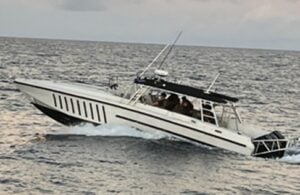
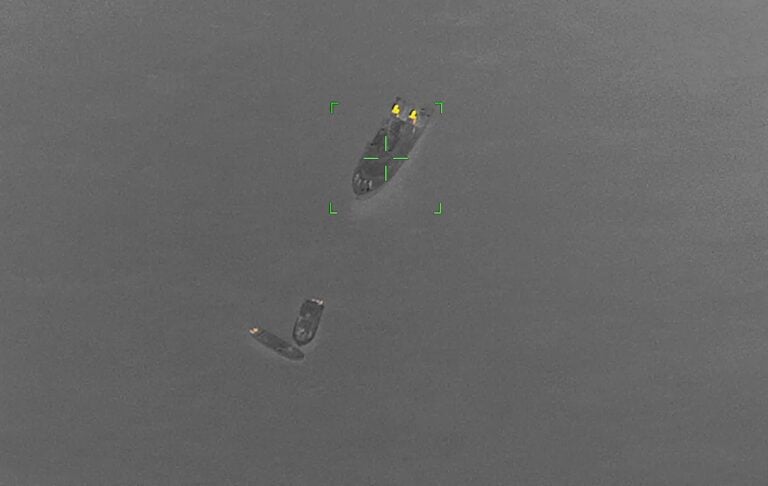
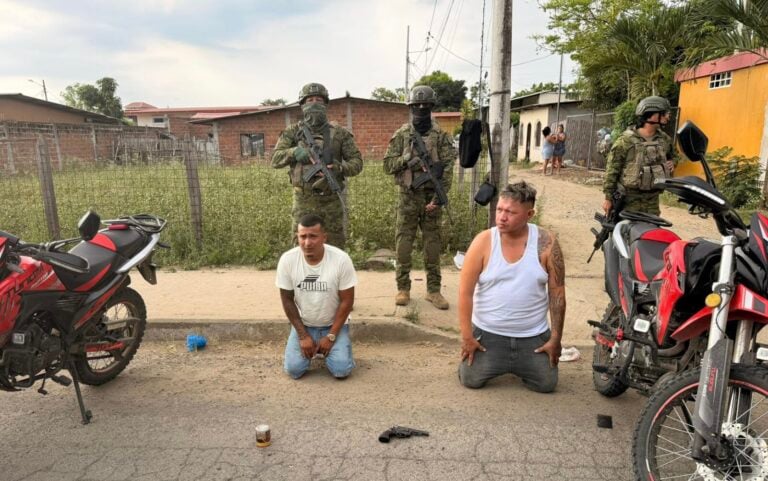
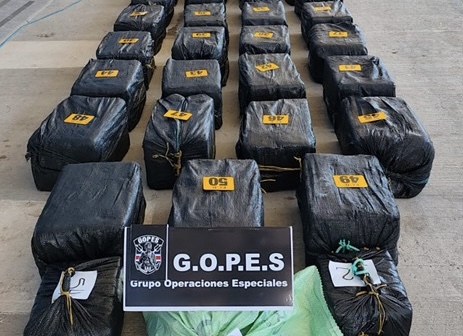
The Costa Rican Ministry of Public Security (Ministerio de Seguridad Pública) took the lead in the most recent operation, conducting tactical seizures, while the U.S. provided logistical and intelligence support. Costa Rican teams skillfully executed multiple interdictions, successfully disrupting numerous narco-terrorist activities, and seizing thousands of kilograms of illegal drugs. In one notable engagement, Costa Rican forces captured over 1,000 kilograms of cocaine in minutes, a feat that underscores their exceptional capability and operational readiness.
Commissioner Juan Carlos Alvarado Quesada, director general of the National Coast Guard of Costa Rica (Servicio Nacional de Guardacostas), detailed the operational tempo of the mission. “Between January 20 and 30, 2026, the National Coast Guard actively participated in Operation Blue Marlin with officers from the Special Operations Group,” Commissioner Alvarado said. “These teams logged 1,920 man-hours and navigated over 1,198 nautical miles utilizing their interceptor vessels.”
The Commissioner highlighted the immediate results achieved during the first 48 hours. “On the first day of operations, crews successfully interdicted a go-fast boat at 101 nautical miles offshore, seizing 3.7 tons of marijuana, apprehending three crew members of Colombian nationality, and securing a 38-foot vessel with three outboard engines. On the second day, a boarding was conducted on a fishing vessel at 218 nautical miles off the coast, where 1.2 tons of cocaine were seized and three crew members were apprehended: two Costa Ricans and one Nicaraguan.”
For Commissioner Alvarado, these results demonstrate the importance of joint efforts between partner nations — a relationship built on trust and the timely exchange of strategic intelligence. “International cooperation enhances Costa Rica’s capability to exert effective control over its maritime interests and to decisively counter the narcotrafficking structures that threaten regional security.”
The significant success of Operation Blue Marlin stands as a testament to the power of integrated planning and real-time intelligence. Enhancements in operational coordination, information sharing, and communication directly led to more effective resource deployment and successful interdictions. As Costa Rica and the United States continue to intensify their efforts against transnational criminal organizations (TCOs), planners are already developing the next phase of targeted operations, capitalizing on the momentum of current regional campaigns against narco-terrorists.
Joint operations by Costa Rica and the United States provide essential support to a broader multinational counternarcotics effort, known as Campaign MARTILLO (Hammer). This expansive detection, monitoring, and interdiction operation coordinated by JIATF-S, unites military and law enforcement agencies from 21 partner nations across North, Central, South America, as well as Europe. With robust support from the U.S. Navy, Coast Guard, federal law enforcement, and U.S. Southern Command (SOUTHCOM), Campaign MARTILLO effectively denies criminal organizations the use of critical maritime and air routes for trafficking narcotics and other illicit goods.
The increasing success of JIATF-S is significantly amplified by the integration of cutting-edge technology. The recent establishment of an Artificial Intelligence and Machine Learning (AI/ML) Joint Operations Center (JOC) has provided a decisive edge, enhancing operational capabilities and bolstering support for partner nations like Costa Rica.
The impact of these technical and collaborative advancements is reflected in record-breaking results. In fiscal year 2025, operations supported by JIATF-S led to the seizure or disruption of 455.8 metric tons of cocaine. The multinational force is on pace to surpass that record in 2026, a success attributed to superior intelligence, improved operational integration, and the enhanced capabilities of partner nations such as Costa Rica.
Captain Javier Moreira, director of Costa Rica’s Air Surveillance Service (Servicio de Vigilancia Aérea de Costa Rica) is a key player in the execution of these types of operations. “The Costa Rican Public Force has made significant strides in its operational tactics, technological modernization, and in the enhanced exchange of strategic intelligence,” Capt. Moreira stated. “Close coordination with U.S. Southern Command has been instrumental in bolstering national capabilities in intelligence analysis, air surveillance, monitoring of illicit routes, and integrated operational planning.”
Capt. Moreira further emphasized the advantages of the alliance. “Access to advanced technology platforms, analytical tools, and secure, real-time information-sharing mechanisms has optimized the detection and tracking of transnational threats. Furthermore, this strategic partnership has strengthened Costa Rica’s regional standing by facilitating the signing of Memorandums of Understanding (MOUs) and cooperation agreements with other nations in the hemisphere, aimed at enhancing interoperability, specialized training, and a joint response to transnational organized crime.”
Costa Rican forces remain resolute in their vigilant campaign against narco-terrorist networks. The significance of these joint operations extends far beyond the impressive quantity of narcotics seized or the number of criminals apprehended. True victory is measured in the enhanced safety and security of every community shielded from the devastating consequences of drug addiction, ecological damage, corruption, and violence that are fueled by the profits of the narcotics trade.