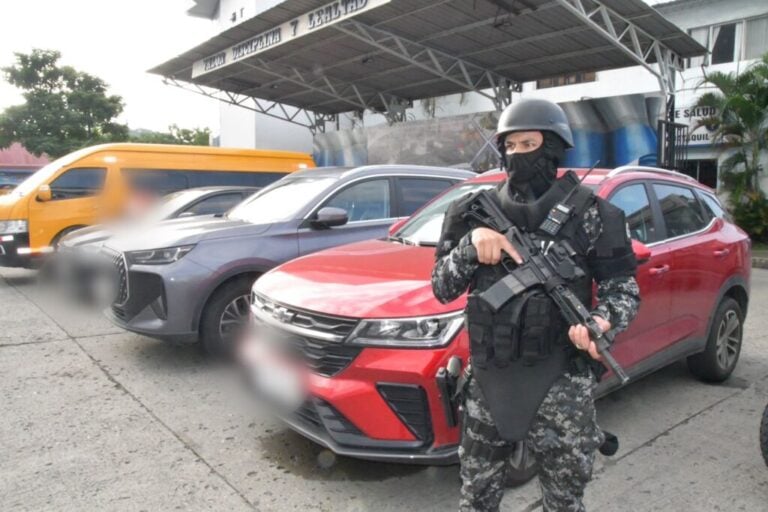

Venezuela’s role in regional efforts to counter transnational criminal organizations (TCOs) may be entering a new phase.
Following the January 2026 arrest of Nicolás Maduro, the country has entered a fluid political transition under interim leadership. At the same time, diplomatic engagement with the United States and neighboring countries has begun to reopen channels that had long been closed. While the situation continues to evolve, these developments are already starting to reshape the conditions under which regional security cooperation can take place. In practice, that shift could influence how criminal networks operate across and within Venezuela, particularly in major urban centers.
For much of the past decade, Venezuela remained largely outside the regional security frameworks designed to counter TCOs. That isolation limited intelligence sharing, constrained joint operations, and created gaps along key trafficking corridors linking the Andes to the Caribbean. As criminal networks adapted and expanded, those gaps became increasingly consequential — not only for regional security dynamics, but for the resilience and reach of the networks themselves.
Reopening channels for cooperation
Recent U.S. actions provide early evidence of institutional re-engagement. The reopening of diplomatic channels, adjustments to sanctions policy, and renewed direct contact with Venezuelan authorities have re-established the basic mechanisms required for cooperation.
Geography makes Venezuela central to that equation. The country sits along critical transit routes for cocaine originating in Colombia, with trafficking flows moving through its territory and coastal waters into the Caribbean before reaching North American and European markets. For years, the absence of sustained cooperation complicated efforts to monitor and disrupt these flows, allowing traffickers to exploit them.
In the maritime domain, where interdiction depends on coordination across jurisdictions, Venezuela’s participation could have an outsized impact. U.S. and partner-nation operations in the Caribbean have expanded in recent years. Venezuela’s geographic position along key coastal and maritime corridors highlights the potential value of broader regional coordination in sustaining that pressure.
The same principle applies to intelligence cooperation. The fight against TCOs in Latin America is increasingly defined by the ability to disrupt networks rather than control territory. Criminal organizations operate through cross-border networks, relying on logistics, financing, and communication nodes distributed across multiple countries. Without mechanisms for timely information sharing, these networks remain resilient.
Early signs of regional re-engagement
The relevance of Venezuela to regional counter-TCO efforts is also reflected in the presence and activity of major criminal and armed groups linked to its territory. The Venezuelan-born Tren de Aragua has evolved into one of the region’s most visible transnational criminal networks — and designated terrorist organization by several countries of the region — operating across Latin America and beyond, engaging in activities ranging from trafficking to extortion. While its expansion has been most visible outside Venezuela, the group’s origins and continued links to the country underscore how domestic and regional dynamics remain interconnected.
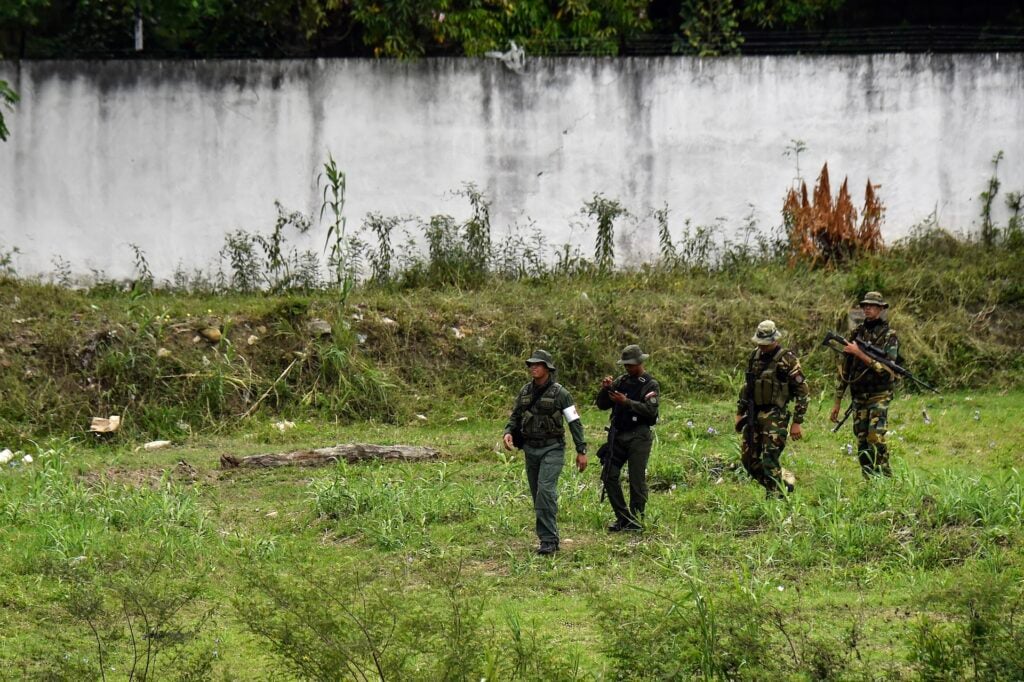
At the same time, Colombia-based groups, including the National Liberation Army (ELN) and dissident factions of the Revolutionary Armed Forces of Colombia (FARC), continue to operate along the Colombia–Venezuela border, where porous terrain and historically limited coordination have allowed criminal economies to persist. These cross-border dynamics have long had spillover effects, particularly in border regions where illicit economies intersect with local communities.
There are, however, early signs that this dynamic may be shifting. In a February 2026 interview with Agence France-Presse, Colombian Defense Minister Pedro Sánchez said Venezuelan operations were beginning to change conditions on the ground.
“The information we have is that they are advancing with operations in border areas, and some members of ELN groups and dissident factions no longer feel safe in that area,” Minister Sánchez said.
Following a February meeting between Colombian President Gustavo Petro and U.S. President Donald Trump focused on strengthening counternarcotics cooperation, Minister Sánchez also indicated that Venezuela had been invited to join a renewed joint effort to target trafficking networks, signaling openness to broader regional coordination.
That momentum carried into March, when senior officials from Venezuela and Colombia met in Caracas to coordinate security efforts along their shared border, emphasizing the need for sustained communication and information exchange to counter drug trafficking.
Venezuelan authorities have also signaled openness to strengthening cooperation on counternarcotics and security issues in recent months, emphasizing coordination with regional partners as a priority. While concrete mechanisms for collaboration are still emerging, the messaging points to a more pragmatic approach to shared threats.
Constraints and conditional progress
Constraints remain. Years of political tension continue to shape how partners approach engagement with Venezuela. At the same time, recent U.S. diplomatic re-engagement has reopened channels for cooperation, with the pace and scope of collaboration likely to depend on practical considerations such as information exchange, sustained coordination, and operational confidence.
Venezuela is not yet integrated into regional counter-TCO frameworks, but the reopening of diplomatic channels with the United States, emerging coordination with Colombia, and renewed domestic enforcement efforts point to a gradual shift away from isolation.
For a region where criminal networks operate across borders and adapt quickly, even incremental improvements in coordination can begin to limit how these groups move, expand, and operate — dynamics that ultimately shape security conditions both along border regions and in major urban centers.