
As Southern Vanguard 2026 approaches, the annual multinational exercise highlights a defining feature of today’s security landscape: complex threats require collective responses.
Sponsored by U.S. Southern Command (SOUTHCOM) and led by U.S. Army South (ARSOUTH) in partnership with regional allies, Southern Vanguard brings together U.S. and partner nation forces to train side by side in challenging operational environments. The exercise is designed to strengthen interoperability, enhance readiness, and build the relationships that underpin effective multinational operations.
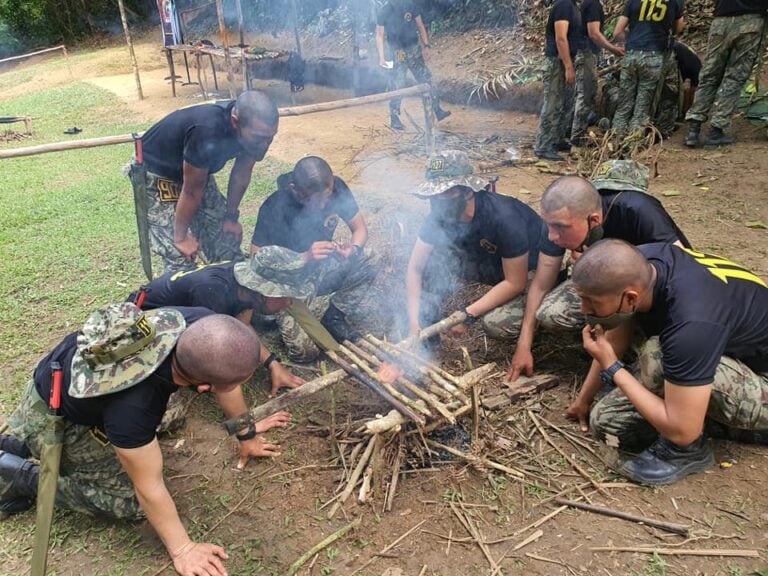
Training takes place in some of the most demanding terrain on the planet, from the Andes Mountains — where troops operate at extreme altitudes, in low temperatures, and with limited oxygen — to the Amazon, characterized by dense jungle, high temperatures, intense humidity, and reduced visibility. By rotating environments, Southern Vanguard ensures that participating forces develop the adaptability required to operate together under a wide range of conditions.
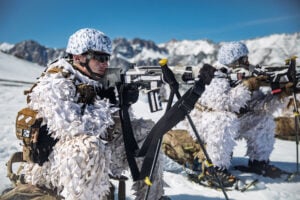
In Southern Vanguard 2026, the scenario will differ significantly from the previous edition, which took place in the Chilean Andes and focused on mountain warfare under extreme winter conditions, including snow and freezing temperatures. During that exercise, Chile hosted participating forces from Argentina, Peru, and the United States, reinforcing the exercise’s multinational character.
Focus on the Amazon rainforest
This year, Southern Vanguard 2026 is expected to start in September and take place in the Peruvian Amazon, at the Peruvian Army Jungle School in Sauce, San Martín region. The exercise will bring together U.S. forces, the Peruvian Army’s 5th Jungle Brigade, specialized units from the Peruvian National Police, and other partner forces yet to be confirmed, continuing a pattern of collaboration central to the exercise.
The training focuses on strengthening interoperability and improving coordination in complex environments. It also reflects the importance of preparing for evolving transnational threats, including organized crime and narco-terrorism, which often exploit remote and difficult terrain.
By training together in these conditions, participating forces not only enhance their operational capabilities, but also deepen cooperation, exchange best practices, and build the trust required for effective multinational responses.
This year’s exercise will test mobility, operational capabilities, and adaptability in an extremely demanding environment. The jungle setting, characterized by limited infrastructure, challenging weather conditions, and dense vegetation, requires forces to operate with a high degree of coordination and resilience.
Strategic context and operational experience
Peruvian security expert specializing in Latin American security affairs Juan Carlos Liendo highlighted to Diálogo the importance of conducting exercises such as Southern Vanguard in environments where security forces already have operational experience.
According to Liendo, regions such as the Apurímac, Ene, and Mantaro Rivers Valley (VRAEM) are strategically important because Peruvian forces have developed expertise in operations against drug trafficking and criminal groups. These types of exercises allow for the evaluation and improvement of capabilities in scenarios where joint operations have already been implemented to control drug trafficking routes, clandestine airstrips, and the presence of armed groups.
He noted that incorporating this operational experience into multinational training contributes to more effective coordination and a better understanding among partner forces.
Challenges of operating in the jungle
Military operations in jungle environments present unique challenges that require significant adjustments in tactics, logistics, and communications. Dense vegetation restricts visibility and limits engagement ranges, while thick foliage and difficult terrain hinder the movement of troops and equipment.
Additionally, the tropical climate adds complexity, with high temperatures, constant humidity, and heavy rains. Limited infrastructure, such as the lack of roads, further complicates the sustainment of prolonged operations.
Liendo emphasized that operating effectively in such environments requires a sustained presence and operational structures adapted to the region’s geographical characteristics. In the northern Amazon, the Peruvian Army deploys jungle infantry battalions across multiple operational areas to protect borders and support internal defense. He noted that the effectiveness of these operations depends on strong coordination between military forces and other state institutions.
Hybrid threats: Drug trafficking and security
The Peruvian Amazon is a key corridor for criminal organizations linked to drug trafficking. According to the United Nations Office on Drugs and Crime (UNODC), the global cocaine trade continues to expand, with Bolivia, Colombia, and Peru remaining key points of origin. In Peru, these dynamics intersect with the presence of remnants of terrorist organizations such as the Shining Path, which operate primarily in the VRAEM and rely on drug trafficking as a source of funding, InSight Crime indicated.
Liendo described this convergence as a “hybrid threat,” in which drug trafficking, illegal mining, and other illicit activities are intertwined with local support networks in areas of operation. He further emphasized that the challenge lies not only in the existence of these illegal economies, but also in their ability to exert influence over local authorities and state structures.
In this context, exercises such as Southern Vanguard play an important role by strengthening cooperation among partner nations and enhancing their ability to respond collectively.
The strategic value of interoperability
Beyond tactical training, exercises such as Southern Vanguard are designed to improve interoperability among allied armed forces. This includes sharing procedures, aligning operational approaches, and enhancing coordination.
Liendo highlighted that one of the main outcomes of cooperation with the U.S. Army for its Peruvian counterpart has been the strengthening of command and control procedures, as well as the modernization of the Peruvian Army’s General Staff through the adoption of technological tools and advanced doctrine. He noted that these improvements are closely linked to joint training and exchanges, which help translate cooperation into practical capabilities.
Previous exercises, such as Challapalca 2025 in Tacna, conducted between the Peruvian and U.S. armies, have facilitated the exchange of tactics and procedures in areas such as artillery, according to the Peruvian Ministry of Defense. These experiences have contributed to strengthening coordination and operational effectiveness.
These efforts demonstrate how sustained training with the United States and regional partners contributes to building more capable, coordinated, and effective forces. This growing level of cooperation is also reflected in Peru’s designation as a Major Non-NATO Ally of the United States in 2026, a status that underscores the strength of bilateral defense ties and facilitates expanded collaboration in areas such as training, equipment, and strategic coordination.
Regional cooperation and stability
Multinational exercises such as Southern Vanguard are part of a broader framework of defense cooperation aimed at strengthening regional security. In parallel, Peru has authorized the presence of U.S. military personnel throughout 2026 to support joint training and cooperation activities, further highlighting the sustained and institutional nature of this partnership. Peru is also set to host UNITAS, the longest-running multinational maritime exercise, later this year, reinforcing its role in regional security cooperation.
According to Liendo, these activities promote the exchange of doctrine, technology, and operational approaches among the armed forces of the hemisphere, reinforcing their ability to respond to transnational threats. He emphasized the importance of continuing to advance toward more integrated, multilateral cooperation frameworks with a regional focus.
While regions such as the VRAEM remain central to national efforts against armed groups linked to drug trafficking, including patrols, infrastructure disruption, and interdiction operations, exercises like Southern Vanguard contribute by strengthening the skills, coordination, and partnerships needed to address these challenges more effectively.
A continued commitment
Southern Vanguard 2026 represents an important opportunity to strengthen military cooperation in one of the world’s most challenging operational environments. Through joint training, partner nations can enhance their collective ability to respond to transnational threats while deepening the partnerships that underpin effective security cooperation.
Ultimately, the exercise highlights a broader principle: that sustained cooperation, built through shared training, collaboration, and trust, remains the most effective way to address common threats and support long-term regional stability.