Drug-related violence in Bolivia is escalating, with executions and score-settling highlighting intensifying competition for international trafficking corridors. These dynamics are increasingly linked to disputes over access to routes and control of cocaine flows, rather than isolated criminal acts. This trend reflects greater coordination among transnational networks, as international cooperation efforts aim to contain its impact on regional security.
“Homicides — murders, ambushes, and contract killings — follow a strategic logic: sending messages and ensuring control over the flow of cocaine to global markets, rather than dominating specific territories,” Armando Rodríguez Luna, a member of Mexican consulting firm Nzaya, which specializes in security, law, and international governance, told Diálogo.
Brazilian, Mexican, and Bolivian criminal groups are competing for access to routes leading to Europe, Asia, and Oceania, reshaping organized crime dynamics in the region. Bolivia, long embedded in South America’s cocaine trafficking system, is increasingly functioning as a key hub within a more competitive and interconnected environment that includes both established and emerging actors. Its geographic position and production capacity allow it to serve as both a source and a transit point connecting Andean production with regional and transatlantic trafficking routes.
Rodríguez Luna noted that “Brazilian groups account for much of the violence, while Mexican networks provide financing, logistics, and capabilities for cocaine production and processing. Over the past decade, the increase in coca cultivation and the expansion of laboratories have boosted capacity, making the country more attractive to transnational networks.”
The most recent data reinforces this trend. According to InSight Crime, more than 1,500 drug-processing sites were detected in 2024 — a 74 percent increase compared to 2023. Bolivia, which shares borders with five South American countries, remains at the center of regional drug trafficking routes, the organization reported.
Bolivian analyst Manuel Morales Álvarez told Bolivian daily El Diario that recent score-settling reflects growing security challenges amid ongoing challenges in preventive policy implementation. “Violence associated with drug trafficking will not be resolved with current measures. Justice within drug trafficking is enforced with bullets.”
Settling of scores and consolidation of criminal networks
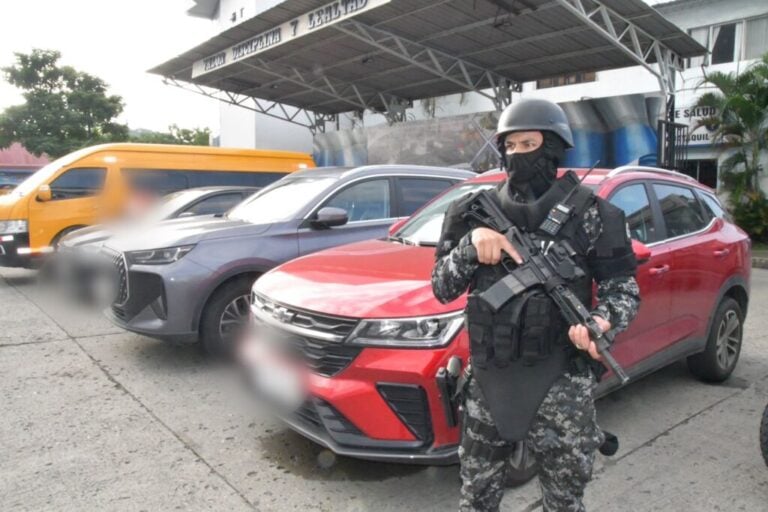
An illustrative case occurred on January 15, 2026, in Urubó, Santa Cruz, where a 26-year-old man was killed after being intercepted in his vehicle by armed individuals. The Prosecutor’s Office points to a possible act of retaliation, a recurring pattern in disputes between criminal networks, Bolivian media outlet El Deber reported. Cases like this are often associated by authorities and analysts with conflicts tied to illicit economies and control of trafficking activities.
The U.S. Department of State’s 2025 International Narcotics Control Strategy Report indicates that Bolivia remains the world’s third-largest source of coca and cocaine, underscoring its long-standing role in regional trafficking dynamics. At the same time, transnational criminal organizations such as Brazil’s First Capital Command (PCC) and Red Command (CV) have expanded their presence in the country, strengthening local ties and operational capacity. These groups are widely understood to play a role in facilitating transportation and distribution along regional corridors, particularly toward neighboring countries that serve as exit points for cocaine shipments. Reports and analysis have also pointed to links with Mexican and Colombian networks.
Morales warned that, without immediate action, Bolivia could follow the trajectory of other countries in the region affected by the expansion of organized crime. “We are on track to follow that same trend,” he said.
Regional anti-drug cooperation
On March 8, 2026, the United States and partners in Latin America and the Caribbean, including Bolivia, announced a new phase of anti-drug cooperation known as Shield of the Americas, aimed at strengthening coordination on extraditions, intelligence sharing, and security planning. The initiative reflects broader efforts to enhance regional collaboration against transnational crime.
Two days later, Bolivia presented its anti-drug policy to the United Nations Commission on Narcotic Drugs. The strategy is structured around five pillars: international cooperation, control of coca cultivation, planning and use of technology for interdiction, prevention and treatment of drug use, and combating the financing of drug trafficking.
Recent developments also reflect a shift toward greater international cooperation. On February 24, Bolivia resumed coordination with the DEA to strengthen investigative information sharing, following 17 years without direct collaboration. Bolivia also maintains ties with European intelligence and law enforcement agencies.
That cooperation yielded a major result with the March 13 capture of Sebastián Marset in Bolivia, leader of the First Uruguayan Cartel, who was expelled to the United States and faces charges of drug trafficking and money laundering. The U.S. Department of State had offered $2 million for information on his whereabouts.
Strengthening operational capabilities remains a challenge. Rodríguez Luna noted that “international cooperation provides key tools, but its effectiveness depends on internal institutional development, a process that takes time.” He added that the DEA plays a significant role in intelligence gathering, particularly in supporting efforts to monitor and disrupt trafficking across critical routes.
Structural violence and risk of escalation
According to the Inter-American Development Bank (IDB), organized crime is linked to roughly half of all homicides in the Americas, with rates far exceeding the global average. This dynamic represents a structural challenge to governance, security, and economic development.
Rodríguez Luna warned that the evolution of conflict in Bolivia will be shaped by regional dynamics. Pressure on criminal organizations in neighboring countries has driven the diversification of routes, which could increasingly shift operations into Bolivian territory.
Currently, the country functions as a logistical and financial hub within the narcotics trade. “However, the potential displacement of criminal groups could shift this dynamic toward territorial control, a scenario associated with higher levels of violence,” Rodríguez Luna added.
Regional pressure and the conflict’s scope
Bolivia’s geographic configuration also influences these dynamics. Its land connections facilitate the movement of drugs toward regional corridors, where internal pressure tends to disperse, Rodríguez Luna noted. In particular, routes to Paraguay, Brazil, Argentina, Chile, and border convergence zones serve as key exit points for drug trafficking. As long as these corridors remain active, pressure within the country remains partially contained, he explained.
“The lack of a strategy focused on these critical points limits the impact of regional efforts,” Rodríguez Luna concluded. Under current conditions, violence in Bolivia is likely to persist in the near term, manifesting in spikes associated with disputes over routes and illicit flows. Addressing these gaps — particularly at key transit corridors — offers an opportunity to reduce volatility and strengthen regional counter-drug strategies.
Bolivia faces a security challenge marked by the growing sophistication of organized crime and sustained pressure from transnational networks. International cooperation and institutional strengthening will be decisive in containing this threat at both the national and regional levels.