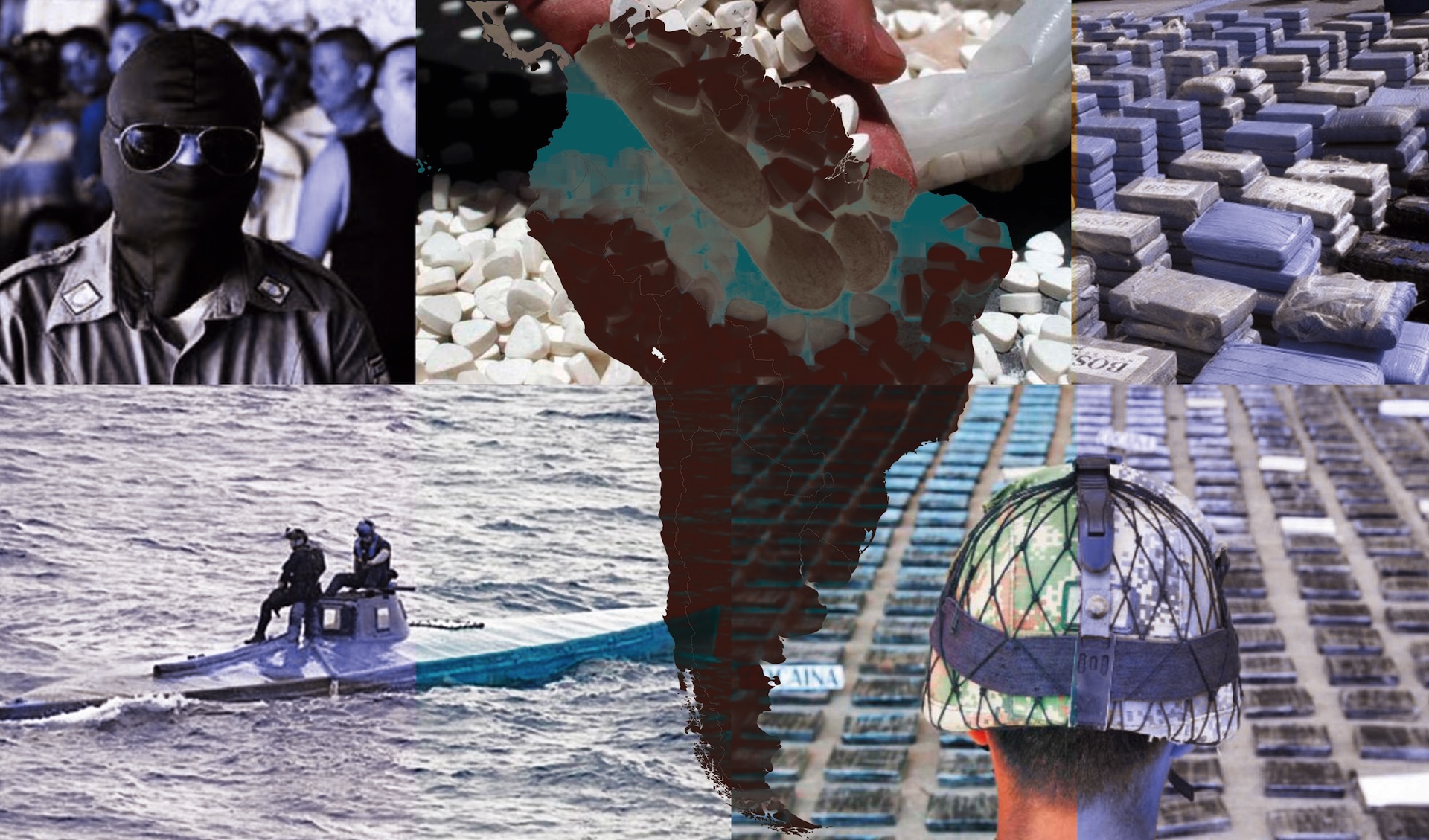
Main criminal syndicates operating across Latin America are demonstrating an unprecedented ability to adapt their logistics and transit routes to reach markets in the United States and Europe. Depending on operational needs, these groups are bypassing major maritime hubs in favor of isolated landing points, using semi-submersibles, or conducting high-seas transfers. Their concealment methods have reached new levels of sophistication — ranging from diluting narcotics into beverage cans to complex chemical bonding.
The high seas
In early January, Spanish authorities executed the largest maritime drug seizure in the country’s history: 10 tons of cocaine concealed within a shipment of salt aboard a 51-year-old freighter. The vessel was loaded in the open ocean off the coast of Fortaleza, Brazil, before charting a course toward West Africa. The plan was to offload the cargo near the Canary Islands and abandon the ship to drift. Reports from La Razón indicate a grim human element to this logistics chain: Seven indigenous people were reportedly forcibly recruited into the crew, while two Serbian nationals were stationed on board as “guarantors” to ensure the interests of both the sellers and buyers.
“The routes and strategies have changed because cocaine trafficking has adapted to globalization, repressive pressure, and, above all, the need to get closer to the most profitable consumer markets,” Ruggero Scaturro, a senior analyst at the Global Initiative Against Transnational Organized Crime (GI-TOC), a Swiss-based network of experts that promotes global dialogue on organized crime, told Diálogo.
Expansion and vertical integration
Many Latin American criminal organizations have begun to establish stable presences directly within consumer countries or in immediate neighboring areas. Beyond the traditional Mexican and Colombian cartels, Brazil’s First Capital Command (PCC) and Venezuela’s Tren de Aragua have expanded their footprints. In November 2025, Spanish authorities dismantled a Tren de Aragua cell operating on the peninsula, arresting 13 of its members.
These groups no longer limit themselves merely to exporting cocaine; they now control storage, shipment protection, container recovery at ports, and direct links with local wholesalers in destination countries. By doing so, they reduce intermediation, increase profit margins, and make trafficking chains more efficient and directly controllable.
Scaturro notes that, “at the same time, transit hubs have emerged in countries with weaker institutions or rapidly expanding ports, such as Ecuador, Brazil, and regions of West Africa, which are used to split, relabel, and reorganize shipments destined for Europe.”
The role of Africa
West Africa and the Sahel have become increasingly central nodes in cocaine routes due to an ideal combination of geographical location and institutional fragility. Logistically, the region is situated precisely along the main sea and air routes connecting Latin America with Europe, making it a natural transit and storage area. Simultaneously, limited port, customs, and territorial control capabilities in many countries facilitate the passage, fragmentation, and reconfiguration of illicit shipments.
“For Latin American groups, Africa allows them to fragment routes, reduce the risk of large seizures, and hide the Latin American origin of cocaine before it enters the European market. In addition, the use of local intermediaries reduces the direct exposure of Latin American organizations,” says Scaturro.
According to GI-TOC data, one-third of the cocaine reaching Europe transits through West Africa. In September 2025, two French ships seized 10 metric tons of cocaine in the Gulf of Guinea, while earlier in 2024, during a stopover in Guinea-Bissau, local authorities seized 2.6 tons of cocaine on board an aircraft arriving from the Venezuelan state of Apure.
The deep roots of trafficking networks in Africa — where large areas are marked by armed conflict and the presence of jihadist groups — fuel a dangerous convergence between organized crime and terrorism, with serious implications for international security.
“In several areas of the Sahel, armed groups offer protection, escort, or territorial control in exchange for payments or a share of the profits from trafficking. This financially strengthens violent actors, contributes to regional instability, and makes routes more resilient to state repression,” Scaturro explains.
Innovation in concealment
Traffickers are employing increasingly technical methods to bypass port security, such as the use of “parasitic” loads. A notable example occurred in November 2025 at the port of Buenaventura, Colombia. During a routine underwater sweep, Colombian Navy divers discovered seven sealed black bags hidden inside a merchant vessel’s sea chest — a water intake area located well below the waterline. By attaching the cargo externally, traffickers can move narcotics without the knowledge of the ship’s crew or captain. In this single operation, authorities retrieved some $10 million worth of cocaine.
Furthermore, cartels in Colombia and Brazil are increasingly using livestock carriers to cloak their cargo, as the overwhelming scent of the animals serves as a natural deterrent to manual inspections and can confuse drug-sniffing dogs. Cases of this type were recorded in Spain in 2023 and, more recently, in Australia. This trend is part of the so-called “waterbed effect,” where increased police repression in traditional hubs causes traffickers to move to smaller ports and create new, alternative routes.
Technological and chemical innovation has also become a power multiplier for these networks, allowing cocaine to be hidden in difficult-to-detect forms by transforming the product itself. A primary example is “black cocaine,” a technique that makes it nearly impossible to identify the substance during standard inspections. In November 2025, 40 kilograms destined for the Australian market were discovered in a warehouse in Manaus, Brazil.
“It’s a mixture in which cocaine is chemically bound to carbon, pigments, or other industrial substances. In this form, it does not react to standard tests and can be shipped as fertilizer, charcoal, or industrial powder, to then be chemically purified at its destination,” explains Scaturro. Similarly, the use of liquid cocaine is on the rise, obtained by dissolving the substance into common liquids like wine or shampoo. Once it reaches its destination, the drug is “recrystallized” in clandestine laboratories, allowing traffickers to circumvent drug-sniffing dogs and rapid tests.
“These techniques make trafficking more resilient because they shift the risk from the moment of transport to that of final transformation, which often takes place close to consumer markets,” Scaturro concluded. “In practice, chemistry allows criminal groups to integrate cocaine into legal trade chains, making traditional controls increasingly ineffective.”
A united front
Despite the evolving deviousness of criminal networks, 2025 has marked a turning point in regional cooperation. Throughout the year, security and military forces across the Americas have demonstrated that when allies stand together, the operational space for criminal organizations shrinks. Significant milestones — such as the record-breaking maritime interdictions in the Caribbean and the successful execution of multinational Orion Naval Campaign that resulted in the seizure of over 2,300 metric tons of narcotics — have proven the power of real-time intelligence sharing and joint naval patrols.
The successes of 2025 underscore a vital truth: Transnational threats require a transnational response. By continuing to strengthen collaboration and deepening port security partnerships with European allies, regional forces are moving beyond reactive measures. This unified stance not only disrupts the immediate flow of narcotics but also dismantles the financial and logistical infrastructure that sustains organized crime, ensuring a safer and more resilient hemisphere for the years to come.