
In the first part of this interview, Leonardo Coutinho, director of the Center for a Secure Free Society (SFS), painted a disturbing picture: Organized crime in Latin America is no longer a marginal phenomenon, but has become a potent political actor capable of disrupting economies, institutions, and regional stability. He highlighted Venezuela as the most extreme case of this transformation, a country where the lines between formal state power and criminal networks have become fully integrated.
In this second part, Coutinho delves into the most invisible — and also most dangerous — dimension of transnational crime, marked by the convergence between mafia states and extra-regional actors operating in the shadows of geopolitics. According to the expert, Venezuela under the Nicolás Maduro regime not only exports cocaine, illegal gold, and violence, but also instability. It does so, he argues, in concert with Iran, Russia, China, and Hezbollah, all of whom have found an ideal platform in the Chavista regime for waging unconventional warfare in the Western Hemisphere.
Diálogo: Investigations have indicated that the Maduro regime maintains links with extra-regional actors such as Hezbollah, alongside the systematic presence and influence of Iran, Russia, and China. What role do these actors play in sustaining “mafia states” or criminal structures? Are we dealing with mainly political alliances or are they also actively involved in illicit economies and internal control apparatuses?
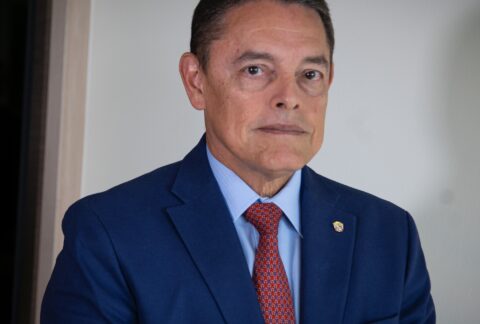
Leonardo Coutinho, executive director of the Center for a Secure Free Society: Here, we are talking about strategic political and military support geared toward unconventional warfare, a new generation of conflict. What sustains Venezuela? Gold and drug trafficking. But the true support comes from China, Russia, and Iran.
They provide weapons, drones, advice, mechanisms to evade sanctions, money laundering, and financial flows. Why? Because they use Venezuela to generate regional instability. The Cartel of the Suns or the Tren the Aragua cannot be understood without viewing them within a broader geopolitical context where extra-regional actors use them as proxies to achieve their geostrategic objectives.
Diálogo: Given that the Chavista criminal structure is a real threat to regional security, sustained in part by extra-regional actors, what is the specific nature of that threat and what challenges does it pose for the hemisphere’s defense and intelligence systems?
Coutinho: Latin America is a strategic platform within a global confrontation, and this is due to several factors. On the one hand, generating conflicts in the region causes democratic instability and direct costs by diminishing resources, energy, and social cohesion. A historical example is how, during the Chávez administration, the flow of cocaine to Central America allowed cartels and gangs to grow as never before in recent years, coinciding with moments of regional conflict. Similarly, when China introduces fentanyl precursors into Mexico, it seeks to destabilize through violence, causing mass migration and generating internal social divisions: This is the logic of a hybrid war aimed at fracturing societies.
On the other hand, Latin America has geostrategic value due to its location. The region offers space for satellite monitoring and control, whether for espionage, missile tracking, or communications. Therefore, the projects that China is promoting in the region are not coincidental: Latin America is becoming part of a global scenario that even ensures the survival of its regime. A clear example is Brazil, which is fundamental to China in terms of agricultural production. The South American country supplies food — meat, soybeans, corn, and other proteins — to the Chinese population, which does not have the capacity to produce them domestically. In addition, this trade involves enormous use of water, an increasingly scarce resource. By exporting food, Brazil is also exporting its water, and China seeks to control these strategic resources, winning over elites and ensuring its long-term access. Replacing this capacity on another continent, such as Africa, is not feasible in the short term.
The third element is logistical. China recognizes the strategic importance of the Panama Canal and knows that it cannot completely control this route. Therefore, it is building alternative routes under the banner of supposed regional integration, such as the promotion of the port of Chancay in Peru. Beyond their commercial interest, these ports have dual potential: they could become Chinese military bases in the future. The strategy is completed by capturing governments in the region through economic incentives: massive purchases, loans, infrastructure projects. All of this allows them to gain influence and advance their strategic and geopolitical objectives.
Taken together, these factors make Latin America an ideal setting for global hybrid warfare: a space where economic, social, political, and strategic conflict intertwine to serve the interests of foreign powers.
Diálogo: What kind of coordinated response should the democracies of the hemisphere articulate to contain the expansion of transnational organized crime and prevent it from irreversibly eroding the security and governance of the continent?
Coutinho: It is essential to implement a better, more robust and coordinated financial control system for the operations of these organizations. Effective integration of financial information is required to cut off the cash flows that sustain criminal structures and weaken them at their roots. It is not enough to combat drug trafficking on the streets; it is essential to attack production at its source. The example of Plan Colombia, which was implemented 25 years ago, is still relevant and should be replicated. We must seek agreements with producer countries and sustained eradication strategies that can achieve real results.
Governments must be willing to make tough decisions, even if they are unpopular, and accept that the fight against these organizations involves risks and strategic losses. At the same time, hemispheric cooperation in surveillance, intelligence, and information sharing on criminals is key. Only with a comprehensive approach, combining financial control, eradication at the source, and international coordination, will it be possible to contain and eventually reverse the expansion of transnational organized crime.