


Recognized as one of Latin America’s most significant special forces exercises, Chilean-led Southern Star, in its 18th edition, is set to kick off May 24. This bilateral, operational-level training, reflecting the longstanding security partnership between Chile and the United States, seeks to strengthen interoperability among special operations units and enhance preparedness for complex scenarios.
Southern Star began in 2007, with the U.S. Army in the lead, as part of a bilateral agreement between Chilean and U.S. special forces. Since then, it has evolved from a bilateral training exercise into a large-scale multinational training.
Organized by the Chilean Joint Chiefs of Staff (EMCO) since 2009, with support from U.S. Special Operations Command South (SOCSOUTH), the event is executed by the Special Operations Command (COPE). Activated in December 2020, COPE is the Chilean Army’s most highly trained and available unit, dedicated to defending sovereignty and responding to emergencies and disasters.
In previous editions, military personnel from Brazil, Colombia, Spain, Mexico, Paraguay, and the United Kingdom, among others, took part in the training. These committed partners regularly train together, enhancing their interoperability to effectively combat common adversaries. In its early days, the exercise focused on basic operations, but has since incorporated advanced technologies, new participating countries, and a more sophisticated approach, in line with evolving common threats.
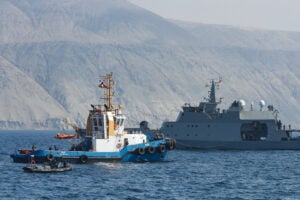
For example, in the 2023 edition, more than 1,700 troops from Chile, the United States, and Spain participated. In a 4,000-kilometer area of operations, troops carried out coastal insertions, high-altitude jumps, and maritime boarding, among other operations, all within the framework of a fictitious United Nations (U.N.) peace enforcement scenario.
In addition, the 2023 edition mobilized 35.4 tons of cargo in nearly 20 operations, and included 150 parachute jumps and 330 flight hours. These numbers reflect the magnitude and complexity of the training.
During the 2023 closing ceremony, Army Colonel Davor Versalovic, who then headed the Chilean planning team, characterized the outcome of the exercise as “absolutely positive.”
“We rolled out our training, developed new capabilities and, most importantly, we are more interoperable and have strengthened our professional ties with partner nations,” he said.
Planning and logistics
In mid-April 2025, Chile and the United States held the Final Planning Conference for Southern Star, finalizing logistics and operational details, SOCSOUTH said via social media.
Previously, in March, the Chilean Army Aviation Brigade and the U.S. Army’s 160th Special Operations Aviation Regiment (Airborne) led a subject matter expert exchange (SMEE), addressing key issues such as airspace control, command relationships, and procedures for rotary-wing aircraft, EMCO said in a statement.
What’s next
The 2025 edition will feature the participation of SOCSOUTH units and their Chilean counterparts, including the Army Special Operations Command, the Lautaro Special Operations Brigade, the Aviation Brigade, and the Intelligence Brigade, as well as logistics support units. Chilean Air Force and Navy personnel will also participate, along with delegations from invited partner countries.
The exercise will take place in different Chilean regions, from the north to the extreme south, including the Metropolitan region, Antofagasta, Rancagua, and Magallanes. These different backdrops will allow for the simulation of operations in deserts, maritime environments, mountains, and urban areas, testing participating forces’ preparedness and capabilities.
Practice versus theory

“In the field of special forces, it’s much more important to have real-world experience than to read 10 theory books,” retired Army General John Griffiths, head of security and defense studies at Chilean think tank AthenaLAB, told Diálogo. “Southern Star is a unique opportunity for our Special Forces to train in a territory as unique and diverse as Chile, and for the invited countries to adapt to these scenarios.”
Griffiths also emphasized the interplay of sophisticated technology and conventional skills. “Chile values the technological deployment of U.S. forces in open spaces such as the Chilean desert. However, this exercise also highlights the importance of maintaining basic skills, such as navigation by the stars, ensuring a balance between technology and essential training.”
For his part, Guillermo Holzmann, a defense analyst and academic at the University of Valparaíso, emphasized the importance of the exercise in the contemporary context. “Southern Star is essential for developing tactical capabilities for precision, speed, and deployment in hostile scenarios,” he told Diálogo. “This includes everything from terrorist threats to organized crime, strengthening the sovereignty of participating countries.”
Holzmann further observed that the exercise facilitates an assessment of how well Chilean military doctrine aligns with the state’s requirements and its cooperative efforts with international partners, referencing global benchmarks, like those of NATO.
Southern Star 2025, an increasingly ambitious and visible exercise, not only enhances the preparedness of Chilean and U.S. Special Forces but also allow them to act as force multipliers by strengthening international cooperation, while positioning Chile as a key player in regional defense collaboration.
The event will be yet another demonstration of Chile, the United States, and their partners’ commitment to security, sovereignty, and peace in the region, highlighting the importance of joint training in the face of contemporary challenges.