

In less than two decades, the new nature of Chinese investment in Brazil has undergone a profound transformation. Moving beyond the footprints of state-owned giants, a new wave of smaller Chinese companies is quietly advancing across the country.
This trend represents a strategic shift toward lower-value, more diversified investments across a wide array of sectors, according to data released in December 2025 by the Estadão portal, based on a study by Araújo Fontes, a leading Brazilian financial advisory firm. The average value of these investment projects confirms the changes: Between 2010 and 2014, the average value was about $507 million; from 2015 to 2019, it dropped to $313 million; and from 2020 to 2024, it fell further to roughly $112 million.
Rather than a few isolated megaprojects, the current strategy favors a dense network of “serial projects” that penetrate different regions and industries. These investments are increasingly focused on “greenfield” initiatives, where financiers allocate resources to build new operations from the ground up rather than merely acquiring existing ones.
Marcos Degaut, former deputy special secretary for Strategic Affairs of the Presidency of the Republic and a former executive secretary of the Brazilian Foreign Trade Chamber (CAMEX), warns that this new pattern could have a more corrosive effect on national industry than the previous era of large-scale acquisitions.
The hidden risks of diversified investment
Degaut argues that while smaller projects may seem less intrusive, they actually create a more complex set of challenges for Brazil’s industrial sovereignty. He notes that the shift toward many smaller investments allows for a pervasive presence that is harder to regulate or counter.
“This is one of the most underestimated effects, but perhaps the most relevant from the point of view of industrial development, of the new standard. Unlike isolated megaprojects, the distribution of investment in various sectors creates asymmetric competition with national companies, progressive occupation of productive niches, technological standardization based on Chinese suppliers. This happens because Chinese companies tend to operate with access to cheaper financing, vertical integration, indirect support from the Chinese state, a smaller worker protection network, and global scale,” Degaut explained.

Strategic hubs and the control of infrastructure
Historically, Brazil served as the primary destination for Chinese capital in Latin America, acting as a regional hub, where companies could test business models before expanding further. However, the current phase involves a much deeper level of integration. Chinese firms are increasingly bringing their own supply chains — including engineering, equipment, and service providers — often backed by direct credit lines from Chinese banks. A prime example is the acquisition of the Brazilian firm Concremat by China Communications Construction Company (CCCC), which fundamentally altered the role of the local company.
This strategy of “platforming” allows Chinese entities to maintain control over crucial stages of Brazilian infrastructure. CCCC has secured major contracts, such as the Salvador-Itaparica bridge in Bahia and various railway projects. Furthermore, through its significant stake in the Portuguese company Mota-Engil — which won the auction for the Santos-Guarujá tunnel in early 2026 — CCCC continues to expand its reach.
“Without smart protection policies on the part of the Brazilian government or the strengthening of local industry, the effect could be the displacement of national companies, a reduction in domestic investment, and the transformation of local producers into mere subordinate suppliers. This translates into something more ‘modern’ than classic economic colonization, as we are now witnessing the gradual replacement of national productive capacity by external economic agents,” Degaut said.
Regional expansion and geopolitical implications
The focus on regional hubs is particularly visible in Bahia, which has become a magnet for Chinese interest due to its capacity in wind and solar power generation. Beyond energy, Chinese firms are targeting the state’s logistics network, specifically export corridors essential for agribusiness and mining.
“Chinese companies are looking at regions with strong renewable energy generation capacity and logistics expansion, and Bahia is on their radar,” Marcio Santiago, a partner at Araújo Fontes, told Bahia Econômica. Projects like Porto Sul in Ilhéus are expected to further cement this presence.
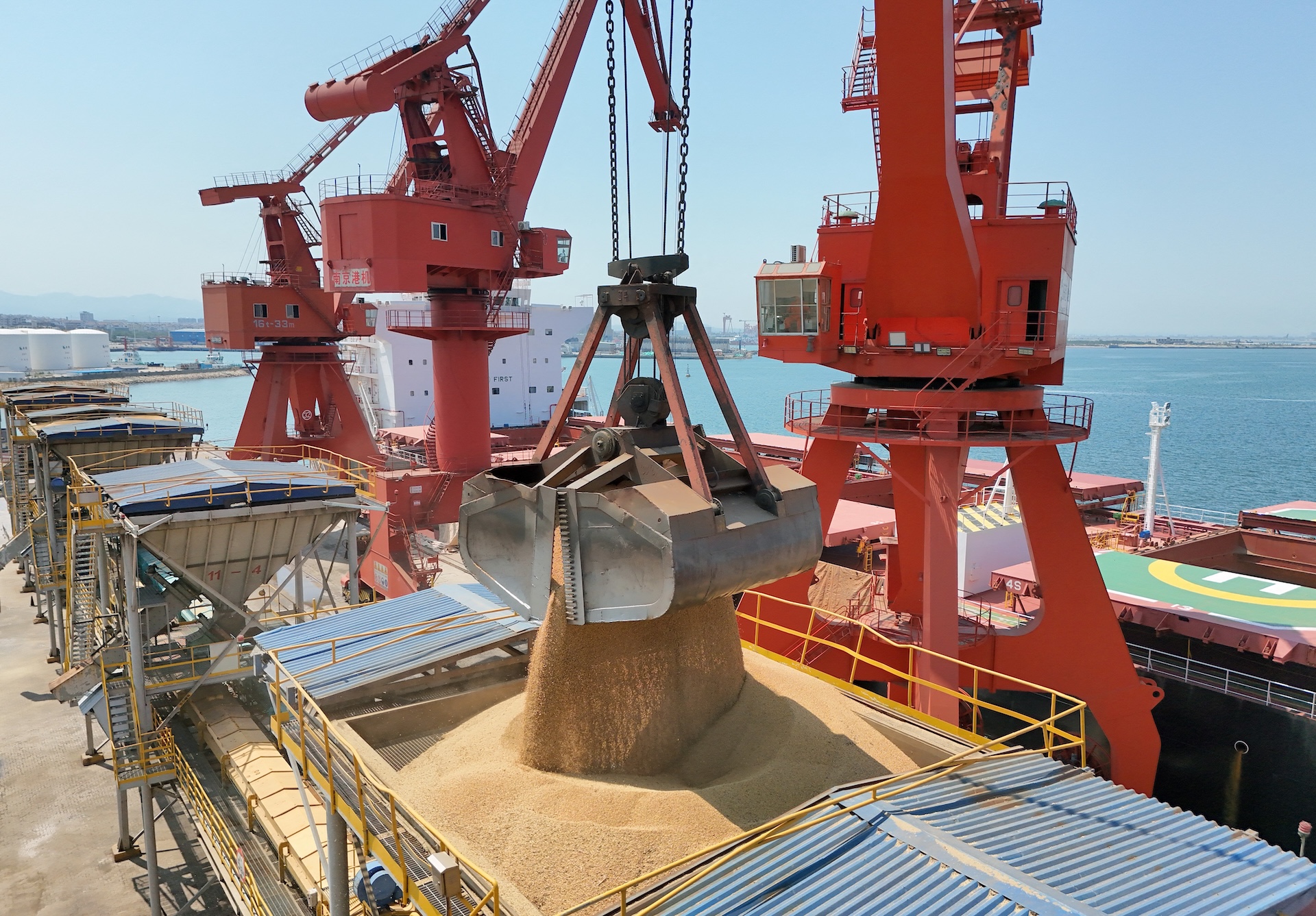
For Degaut, these developments are part of a broader, more worrying economic picture. China currently absorbs nearly 30 percent of all Brazilian exports, primarily commodities like soybeans, iron ore, and oil. He argues that this concentration leaves the Brazilian economy highly vulnerable to external pressures.
“Economic vulnerability, with the fate of almost a third of Brazil’s exportable production depending on a single partner, means that shocks in Chinese demand have a strong impact on Brazilian export performance. Specialization in commodities, with about 80 percent of these exports being low value-added commodities, while Brazil imports higher value-added manufactured goods from China. This reinforces a pattern of dependence that does not drive the diversification and sophistication of the Brazilian economy,” Degault said.
Brazil in the global game
As Chinese companies move into critical infrastructure sectors, they gain the ability to dictate how Brazilian exports reach the global market. Degaut argues that this functional dependence in strategic sectors is a critical issue that must be addressed.
“Chinese companies are also entering critical infrastructure — energy, ports, railways — which conditions how exports are transported and integrated into the global market. This configuration means that Brazilian economic decisions have structural effects, linking directly to the functioning of the Chinese economy, which is not independently neutral,” Degaut said.
This functional dependence in strategic sectors has reached a point where it must be at the center of Brazil’s diplomatic and industrial policy debates, Degaut argues, adding that he views the current trajectory as a fundamental shift in Brazil’s role on the world stage.
“In short,” Degaut concludes, “Brazil is becoming structurally more dependent on China in specific sectors, especially where there is low domestic industrial capacity, a lack of political and technological capacity, and scarce national capital.”