

As Latin America expands the use of radiological materials in hospitals, research centers, agriculture, and energy infrastructure, radiological security is becoming an increasingly important component of the hemisphere’s security architecture.
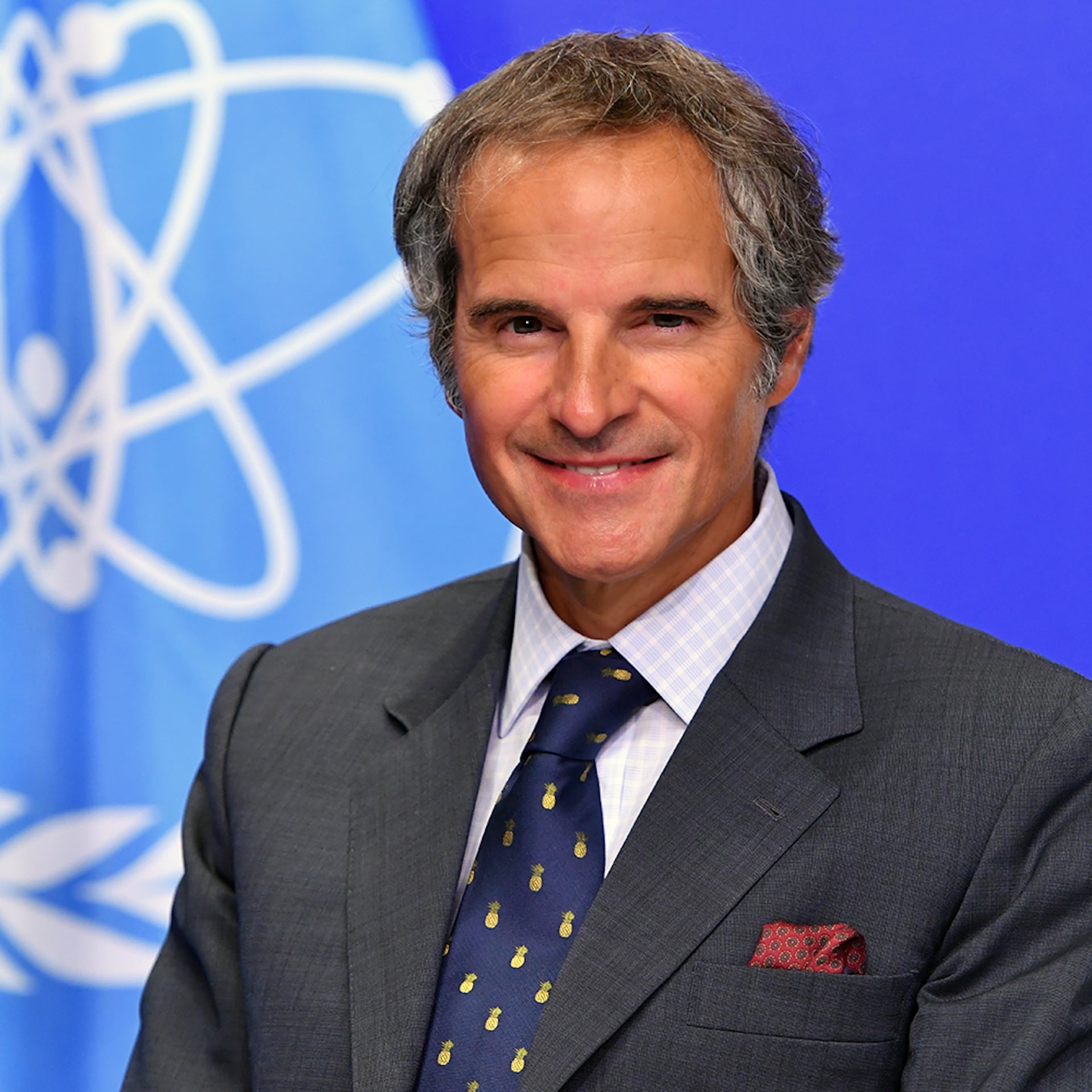
In an exclusive interview with Diálogo, Rafael Grossi, director general of the International Atomic Energy Agency (IAEA), warns that the possible diversion or illicit use of nuclear and radiological materials has become a growing risk to hemispheric security — one that can no longer be treated solely as a technical or regulatory issue. From radioactive materials used in hospitals to substances potentially vulnerable to exploitation by non-state actors, Grossi describes a scenario in which these threats are no longer hypothetical and are gradually becoming part of the region’s strategic security agenda.
The conversation, conducted during Florida International University’s (FIU) Hemispheric Security Conference, May 5–8, highlights the region’s growing vulnerabilities and underscores the urgent need to strengthen coordination among countries across the hemisphere. In that context, Grossi also emphasized international cooperation — particularly with the United States — as a key component in mitigating risks that could even become a “latent threat.”
Diálogo: Across Latin America, the use of radiological materials is expanding in sectors such as health care, industry, and energy. In this context, why has radiological security evolved from a technical and regulatory issue into a growing regional security concern?
Rafael Grossi, director general of the International Atomic Energy Agency: It is a very important issue because our region needs energy, it needs nuclear energy, it needs oncology services, and radiotherapy, as well as nuclear applications for agriculture, water management, and many other areas where nuclear material is present. And the radiological risk, if that nuclear material is not handled properly, is very real.
Therefore, the involvement of nuclear regulatory authorities throughout the region, together with the International Atomic Energy Agency (IAEA), is essential to ensure that all of these applications — which are fundamental to health care, our economies, and security — truly benefit the population across the hemisphere, from North America to the southernmost parts of the Americas.
And of course, this issue also has security implications because of the possibility that non-state actors could use radiological material to spread panic or even carry out acts of nuclear terrorism. Ultimately, we are talking about relatively new phenomena on the international stage that must be prevented and countered.
Diálogo: As the use of radiological materials continues to grow, how has the regional risk landscape evolved, particularly regarding factors such as exposure, geographic dispersion, and the possibility of diversion, misuse, or even illicit trafficking of these materials — including, as you mentioned, the involvement of organized crime?
Grossi: That is precisely where the existence of a strong regulatory and institutional framework becomes indispensable. And in that regard, I refer once again to the IAEA inspection system. All nuclear material in the region must be subject to inspection, control, and monitoring against illicit trafficking because one of the major problems we face in our region is transnational organized crime. That is one of the main challenges confronting the Western Hemisphere today.
Our region, which represents 10 percent of the world’s population, accounts for nearly 40 percent of international crime. That is something that should make us reflect. We have seen extreme cases in El Salvador, Colombia, Venezuela, and even Mexico, including geographic areas outside state control. Haiti is almost the ultimate example of the existence of armed gangs.
All of this is part of the broader internal security problem affecting the region and also requires attention from a nuclear security perspective, because nuclear material, in the wrong hands, can become an ideal tool for terrorism and for spreading panic.
Diálogo: What are currently the main challenges in guaranteeing the physical protection, control, and oversight of radiological sources in hospitals, research centers, and industrial facilities? And in the worst-case scenario, what could be the most serious consequences if those control systems fail?
Grossi: First and foremost, there must be strong domestic regulatory structures. That is the first step, beyond anything that can be done internationally. Every country — and this is no longer only about having nuclear energy capabilities — must understand that even medical material, as you pointed out, is already an element that requires oversight.
For example, there was the well-known radiological accident in Goiânia, Brazil, in the 1980s. Radiological material was simply discarded in a garbage dump and caused damage, many deaths, terror, and panic. Now imagine that nuclear material in the hands of terrorists.
In other words, the existence of strong national regulatory structures is indispensable. Then there is participation in international nuclear security bodies and frameworks, the Convention on the Physical Protection of Nuclear Material, and inspections by the International Atomic Energy Agency. These should be prerequisites in any serious national security agenda.
Diálogo: Given the transnational nature of these risks, how critical are regional coordination and regulatory harmonization? And what vulnerabilities emerge when gaps exist among countries?
Grossi: These problems are indeed transnational. If a radiological crisis occurs, it will not respect borders. It does not distinguish where Chile ends and Argentina begins, or where Uruguay ends and Brazil begins. By definition, these are challenges that transcend any national boundary.
That is why, at the IAEA, we work to create regional regulatory interaction frameworks that allow for a constant flow of information, cooperation, and joint exercises. For example, we are particularly active in supporting the security of major public events such as the FIFA World Cup, papal visits, World Youth Day, and the Olympic Games. All of these major public gatherings — as well as large concerts by popular artists — require a high degree of coordination.
Diálogo: What should be the most urgent priorities for strengthening regional cooperation capabilities?
Grossi: We need more fluid cooperation. It’s not that the cooperation that already exists does not work, but there must be greater awareness among security and military authorities that this issue needs to play a much more prominent role on the hemispheric security agenda.
Diálogo: And in that context, what role does international cooperation play, and specifically, what role do you believe the United States plays in efforts to guarantee regional security?
Grossi: Cooperation with the United States is fundamental. Very important contributions have already been made. A recent example: We had uranium enriched above 20 percent that was practically abandoned in Venezuela. We managed to remove it at the end of April while working together with Venezuela’s new transitional authorities and the U.S. Department of Energy.
That was a latent threat. I would even say it was an extraordinary case. We monitored it and maintained a respectful relationship with Venezuela, verifying that the material remained under control, but there was still significant concern about what could happen.
This type of situation can also be extrapolated to other countries in Central America, where there are concerns about the strength of institutional frameworks. The United States has a very solid vision in this field. There is already close cooperation with the Department of Energy, and I believe there is still additional room to deepen that collaboration.