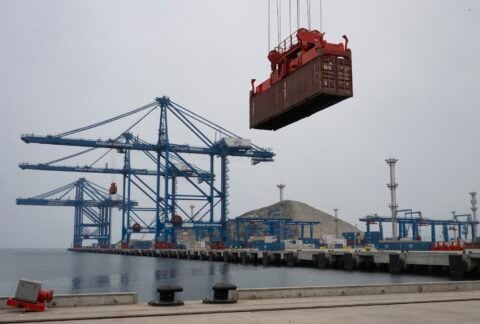


A new emergency decree in Peru requiring foreign vessels to have a satellite tracking system has drastically reduced the presence of China’s deep-sea fishing fleet considered the main culprit of illegal, unreported, and unregulated (IUU) fishing globally. But the fleet’s logistical operations now appear to be shifting south, raising concerns about a potential threat to neighboring Chile’s marine resources and way of life.
Evading the law
The crisis had been brewing since 2020, when a first decree attempted to control the fleets. However, Chinese vessels circumvented the regulations by taking advantage of an exception for “forced arrivals” that were not genuine emergencies, Infobae reported.

“Over the years, this practice of forced arrivals became increasingly frequent,” Daniel Olivares, senior vice president of nongovernmental organization Oceana, told Diálogo. “Starting in 2020, Chinese vessels multiplied their entries into Peruvian ports claiming emergencies, while avoiding adhering to the required tracking systems.”
The issue was exacerbated by the growing ecological and economic damage caused by China’s IUU fishing, including a critical shortage of giant squid in 2024, which heightened tensions between local fishermen and Chinese industrial vessels. The National Society of Artisanal Fisheries of Peru (SONAPESCAL) reports that the illegal activities of these vessels inflict significant economic losses on thousands of fishermen and their families, directly threatening their livelihoods.
The new regulation from Peru’s Ministry of Production requires all foreign vessels to have activated and authorized satellite devices. Since the decree came into force, the presence of Chinese vessels in Peru has been “drastically reduced,” said Alfonso Miranda, president of the Committee for the Sustainable Management of Jumbo Flying Squid. “However, these vessels seem to have shifted their logistical operations to Chilean waters,” he added.
The fleet’s evasion tactics extend beyond Peru’s waters. According to IUU fisheries researcher Milko Schvartzman, Chinese fishing fleets avoid any kind of regulation.
“Despite the decree, Chinese vessels have not begun the process of adapting to the Peruvian system or installing their satellite systems,” Olivares said. “There is no interest on the part of this fishing fleet to comply with the satellite system.”
No limits
The move south presents a new challenge for neighboring countries. Olivares said he has heard that the fleet is heading toward Chile “because there are no such restrictive measures there.”
Schvartzman warned that “it is much more difficult to control an illegal fishing fleet when it enters your waters en masse, as may be starting to happen in Chile.”
The Chinese deep-sea fishing fleet, the largest in the world operates with some 17,000 vessels globally, with 400 to 600 of them traveling annually near the EEZs of Peru, Chile, Ecuador, Argentina, and Uruguay. Schvartzman noted that to evade their true origin, the ships often use “flags of convenience from countries such as Vanuatu and Cameroon.”
The path forward
The implementation of the satellite tracking system offers a practical solution to a complex problem. “The sea is so big and so difficult to patrol that satellite tracking is the most practical way to provide transparency to countries in terms of fishing,” Olivares said.
The Chinese fleet’s decision to shift operations rather than comply with Peru’s new decree reveals its unwillingness to operation transparently and sustainably. This action underscores its intent to continue IUU fishing, highlighting the critical need for an international response.
Peru’s measures offer a roadmap for other nations, like Chile, to implement similar measures and for the international community to take decisive action to protect the oceans from the world’s largest IUU fleet.