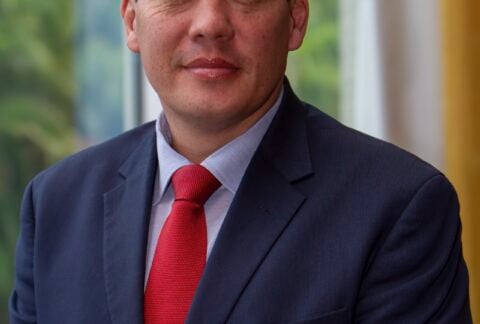


Diálogo spoke briefly with Argentine Army Colonel Pablo Alberto Filippini, Emergency Assistance military director of the Operational Command of the Argentine Armed Forces’ Joint Chiefs of Staff, during his visit to U.S. Southern Command’s (SOUTHCOM) headquarters, as part of the Senior Leader Logistics Symposium, held in the second quarter of 2024. During the conversation, Col. Filippini stressed the importance of cooperation and exchanges in logistics.
Diálogo: What were the most relevant topics that were exchanged on logistics in operational readiness for the Argentine Army as part of the Senior Leader Logistics Symposium in Miami?
Argentine Army Colonel Pablo Alberto Filippini, Emergency Assistance military director of the Operational Command of the Argentine Armed Forces’ Joint Chiefs of Staff: There’s no doubt that we’re living through a time of change, and that opens a lot of doors for our country in terms of cooperation. The proposals for different exchange programs of mutual support and cooperation among partner countries in the region are extremely interesting for our country in this new stage that we’re beginning from all viewpoints.
Diálogo: Climate change and extreme weather events pose an increasing risk to the preparedness and security of the armed forces. How important are SOUTHCOM-sponsored symposiums for multinational preparedness in response to natural disasters?
Col. Filippini: As the Emergency Assistance military director of the Operational Command of the Argentine Armed Forces’ Joint Chiefs of Staff, it is extremely important to me. We’ve been working in a sustainable way in the Argentine Republic. We’ve organized the use and deployment of our armed forces for disaster activities. In fact, we still have people in the sister republic of Brazil carrying out humanitarian assistance tasks in water purification due to the last emergency they had in Rio Grande do Sul, so it’s extremely important. We had a great exchange with the people from the University of Hawaii, who presented us with an innovative product, an application that allows us to be alerted in the event of probable emergencies or climatic or other types of disasters that could affect the population. So, it’s extremely important for us, and we see that it’s extremely productive as well.
Diálogo: In March 2024, the Argentine government launched a plan to combat violence and narcotrafficking groups following a crime wave that affected the city of Rosario in Santa Fe. How does logistics play a role in operations against organized crime?
Col. Filippini: As is well known, our legislation separates very well the responsibilities and the possibility for us to act in security matters as the Ministry of Defense or as the Armed Forces. It is well stipulated in the directive that establishes the organization of the Armed Forces that within the subsidiary capabilities that we conduct, there is the possibility of cooperating with the security forces if needed. So, as established in the Internal Affairs law, the Armed Forces participate with logistics support, which involves control capability, communications, equipment, and vehicles that allow the security forces to conduct the task they need to in order to combat this type of problem that is not specific to the city of Rosario, unlike other places in the world and especially Latin America.