

As Panama prepares to host PANAMAX 2026, national authorities are approaching the multinational exercise through a principle that has become increasingly central to the country’s long-term planning: water comes first.
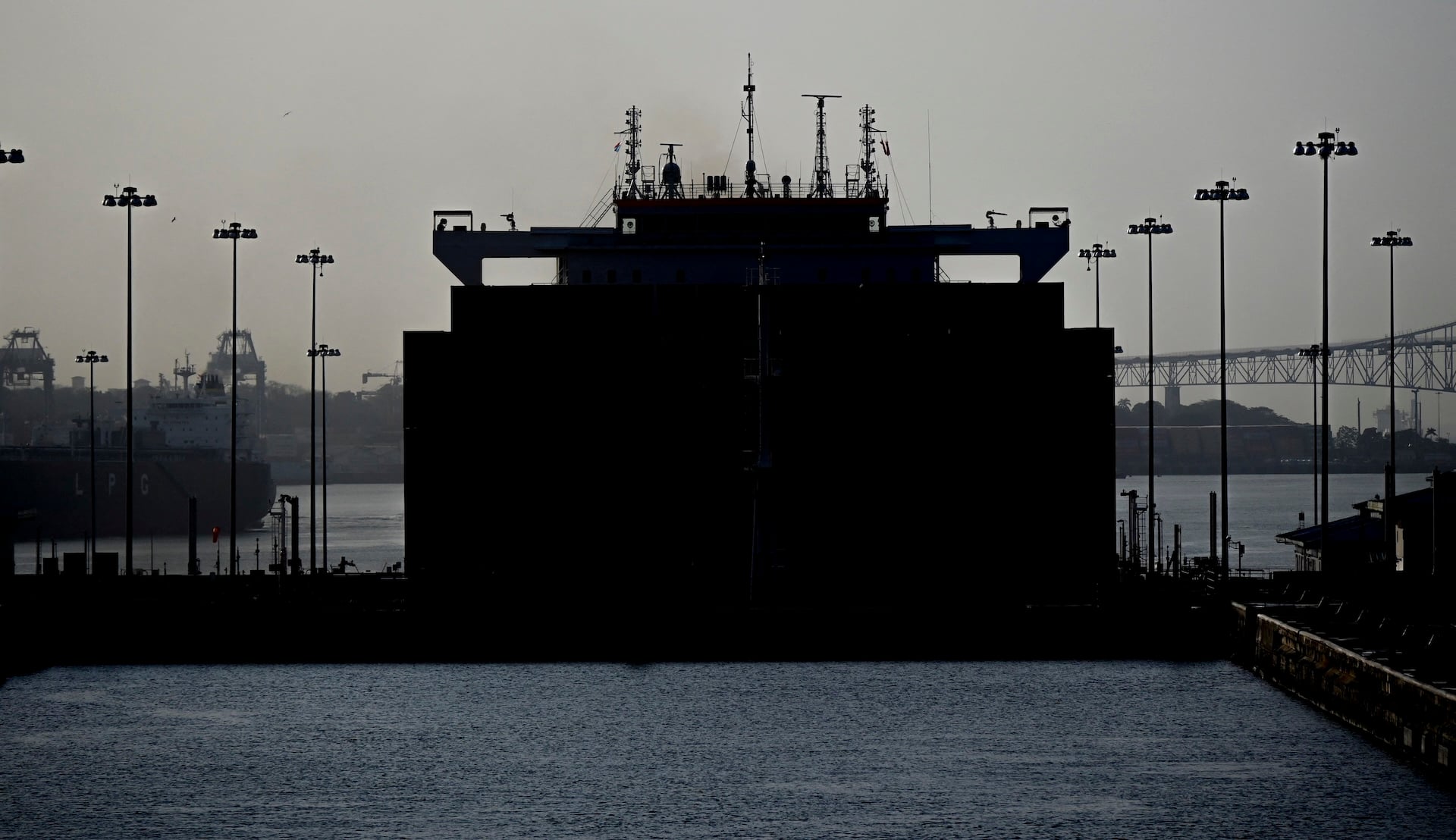
The exercise, which brings together partner nations to strengthen coordination for the protection of the Panama Canal and other strategic infrastructure, will take place within a system where water management is already a national priority. The same watershed that sustains Canal operations — including Gatún and Alhajuela lakes — also supplies drinking water to Panama City, Colón, and surrounding communities, while supporting energy generation and maritime transit, making its protection essential to daily life and national stability.
For Panamanian authorities, the challenge is therefore not simply operational. It is ensuring that security cooperation, Canal protection, and essential services remain aligned under national coordination.
“ACP [Panama Canal Authority] maintains permanent coordination with national authorities to address all aspects related to the Panama Canal Watershed, as well as activities that […] may affect water resources,” an ACP spokesperson told Diálogo.
Lessons learned
The issue carries particular relevance in Panama after the severe drought conditions that affected Canal operations in 2023 and 2024. During that period, reduced rainfall forced the ACP to implement transit restrictions and water-conservation measures as the country navigated one of the most difficult hydrological periods in recent history.
Those experiences reinforced the strategic importance of the Panama Canal Watershed, which today supports not only global maritime trade, but also the daily needs of millions of Panamanians.
Recent reservoir improvements, however, have helped stabilize conditions. In May 2026, Reuters reported that the Canal did not anticipate imposing additional transit restrictions during the year, citing stronger reservoir levels and water-management measures implemented by ACP, even as authorities continued monitoring possible future climate variability.
The upcoming PANAMAX exercise is therefore taking place within an environment where water management remains under constant evaluation and coordination.
Coordinating security and essential services
According to Panamanian officials, PANAMAX is conducted through planning efforts involving security institutions, Canal authorities, environmental agencies, and public-service providers responsible for critical infrastructure and essential services.
“Given that multiple institutions play key roles within the watershed, management of this resource is carried out in a coordinated manner,” the ACP spokesperson said. “In matters related to natural-resource conservation, this coordination takes place through the Interinstitutional Commission for the Panama Canal Watershed, which was created to align efforts, initiatives, and resources for the sustainable management of the watershed.”
PANAMAX has long served as one of the region’s principal multinational security exercises focused on the protection of the Panama Canal and other critical infrastructure. The exercise is designed to strengthen preparedness and interoperability among participating institutions in response to potential threats or disruptions affecting one of the world’s most important maritime trade routes.
That coordination reflects a broader national approach in which security operations, infrastructure protection, environmental management, and essential services are treated as interconnected responsibilities rather than separate priorities.
Protecting the watershed
“Canal-related decisions are not based on current weather conditions but on technical projections that make it possible to anticipate scenarios such as El Niño and activate preventive measures well in advance,” the ACP official said. “At the same time, ACP advances initiatives throughout the watershed and works in coordination with national and international institutions, as well as the communities that live there, recognizing that protecting water is a collective effort.”
Long-term planning has also become an increasingly important part of Panama’s water-security strategy. In recent years, ACP has advanced studies and evaluations aimed at strengthening the sustainability of the watershed and improving the country’s ability to manage future periods of drought and growing demand.
As part of those efforts, the Panama Canal Authority contracted the U.S. Army Corps of Engineers (USACE) to provide technical consulting and advisory support for water-management projects and hydrological evaluations. ACP has described the collaboration, which was formalized in late 2021 and expanded in 2025, as part of broader efforts to assess alternatives, improve modeling capabilities, and strengthen long-term planning for both human consumption and Canal operations.
“USACE is providing technical services and capacity-building support to the ACP to maintain the reliability and sustainability of the Canal over a 50-year planning horizon,” a USACE spokesperson told Diálogo. “These efforts include water resource management, analysis of opportunities to maximize the existing watershed, and current and future projects to enhance infrastructure.”
The collaboration is intended to support ACP-led planning initiatives while strengthening technical capacity related to water-resource management and future infrastructure needs.
“Our role focuses on collaboration, technical assistance, and capacity building, ensuring that local authorities have additional tools and information to support their long-term planning efforts,” the USACE spokesperson said.
A national effort
That broader context helps explain why PANAMAX is framed not simply as a military exercise, but as part of a larger national effort to safeguard critical systems while maintaining continuity of services for the population.
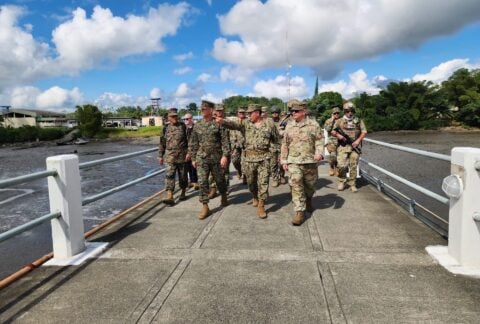
PANAMAX 2026 is expected to bring together more than 12 partner nations and more than 1,500 security personnel in coordinated maritime, air, and land activities focused on the protection of the Panama Canal and other strategic infrastructure.
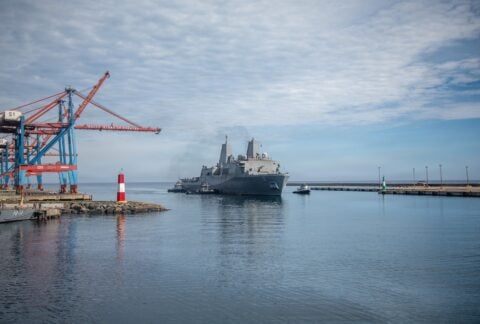
The exercise is also expected to involve naval units, aircraft, and helicopters operating alongside Panamanian institutions in scenarios designed to strengthen interoperability, preparedness, and crisis-response coordination.
The exercise also offers an opportunity for Panama to demonstrate how multinational cooperation can strengthen preparedness and collective response capabilities around the protection of critical national assets.
“This collaborative approach ensures that water management and essential services remain aligned with national priorities, guaranteeing both potable water supply for the population and the sustainability of Canal operations,” the ACP spokesperson said.
As PANAMAX 2026 approaches, Panama’s message is therefore not only about security. It is also about governance, coordination, and national stewardship: ensuring that the protection of the Canal and the strengthening of regional partnerships occur alongside the protection of essential services and the well-being of the population.