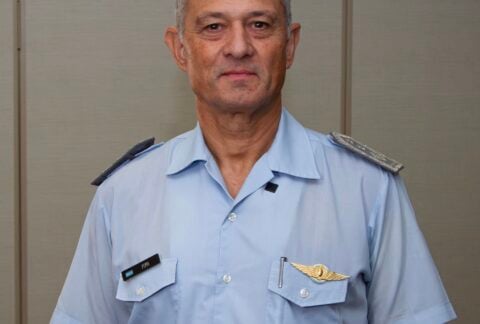



Diálogo had the opportunity to sit down with Major General Hermelindo Choz Soc, chief of the Guatemalan National Defense Staff, who brings more than three decades of military experience to his leadership role.
Maj. Gen. Choz Soc, whose career includes numerous command positions within the Army, including defense attaché at the Guatemalan Embassy in Taiwan and deputy chief of Staff prior to his current appointment, rose steadily through the ranks and gained a deep understanding of Guatemala’s defense operations.
During the interview, Maj. Gen. Choz Soc discussed the challenges of his position, the Guatemalan Armed Forces’ successes in the fight against drug trafficking, and the importance of hosting multinational exercise CENTAM Guardian 2025.
Diálogo: You lead the National Defense Staff since May 2024. What have been your challenges during this first year of leadership, and what are your main objectives to carry out your vision at the helm of the Armed Forces?
Major General Hermelindo Choz Soc, Chief of the Guatemalan National Defense Staff: Strengthening the effectiveness of operations against drug trafficking and drug seizures is not only crucial but has been a challenge from the beginning and continues to be so. So, we began working to exercise sovereignty at the national level in our areas of responsibility — air, land, and sea — and to develop these types of operations with a comprehensive approach, interacting with national and international agencies and prioritizing the use of information and intelligence that allows us to respond effectively to these transnational threats.
The results speak for themselves: In 2024, the Guatemalan government seized 18 tons of cocaine, of which 14.2 tons were thanks to the efforts of the Guatemalan Armed Forces, through the Navy. We’ve also had significant seizures from the eradication of marijuana, coca leaves, and poppies. All this work is the result of our efforts to respond to these threats.
Diálogo: Guatemalan security forces dealt a historic blow to criminal organizations in 2024, propelling the country to the forefront of the fight against drug trafficking. What contributed to these achievements?
Maj. Gen. Choz Soc: These achievements are the result of the commitment of different levels of government: At the strategic political level, led by the Minister of National Defense; at the strategic operational level, led by the Chief of the National Defense Staff; and at the tactical operational level, led by the brigades and all the personnel who make up the Guatemalan Armed Forces.
In addition, interaction with national and international agencies is very important, because all of this is what allows for the development of successful operations and these results.
Transnational threats and drug trafficking are constantly evolving, so achieving these results is a challenge.
Diálogo: In February [2025], Guatemala created the Territorial Control and Border Task Force and deployed hundreds of Army soldiers to the border with El Salvador and Honduras. What are the objectives of this new task force, and what results has it achieved so far?
Maj. Gen. Choz Soc: Guatemala, and in this case the Guatemalan Armed Forces, determined in 2024 that threats affect our borders. We have borders with Mexico, Honduras, El Salvador, and the referendum that is being held between Guatemala and Belize. We implemented a strategic measure, which we dubbed the Ring of Fire plan. This plan is active along Guatemala and neighboring countries’ entire border.
Within this framework, we recently implemented the Territorial Control and Border Task Force in the eastern region where we have borders with Honduras and El Salvador, with an international political boundary of 559 kilometers.
The creation of this task force has allowed us to improve the perception of security, deter and deny territory to all threats moving along the border, including drug trafficking, illegal migration, contraband, and arms trafficking.
All these threats, which affect society and the region, have been limited through the territorial control we have developed through this task force.
Diálogo: Guatemala has been collaborating with the United States, serving as a bridge country to repatriate illegal migrants to their countries of origin. How important is this collaboration with the United States for Guatemala’s security?
Maj. Gen. Choz Soc: Our approach is within the framework of bilateral cooperation. In that sense, we mainly contribute by receiving our fellow citizens, providing space for flights coming and going from the United States. After they arrive at the military ramp, our fellow citizens are received and given every amenity to help them arrive safely to their communities.
This allows us to contribute to the security of the region, because if we do not, our fellow citizens remain very vulnerable and we could suffer the collateral effects of transnational threats, which are encouraged by the precariousness of the situation to carry out activities that are not good for society.
Diálogo: What measures or agreements does Guatemala have with partner countries to combat transnational criminal organizations that engage in drug trafficking and take advantage of migrants, fueling violence and insecurity?
Maj. Gen. Choz Soc: The agreements are based on the concept of bilateral and multilateral support. As such, we participate in various forums and conferences where we can exchange critical information to carry out our operations in different areas.
Let me give you a few examples: We participate in the Conference of the American Armies, where transnational crime is a common theme. We have the Conference of Central American Armed Forces, where security and development in the Central American region are also common topics. Of course, there is the most recent conference, the Central American Security Conference (CENTSEC), and we take part in exercises such as PANAMAX and CENTAM-Guardian, all of which have a common objective.
Diálogo: In late February, the expansion of the Quetzal Port Terminal on the Pacific Ocean was announced with the support of the U.S. Army Corps of Engineers. How important is U.S. cooperation in strategic infrastructure projects, not only for the economy but also for Guatemala’s defense?
Maj. Gen. Choz Soc: This will undoubtedly have financial significance, boosting our economy. From Guatemala’s perspective, it will allow us to manage the commercial flow along the maritime route, given that 90 percent of international trade is conducted by sea. Therefore, the modernization of this port allows us to have those capabilities and contribute to the economy.
From a security and defense standpoint, it will strengthen our ability to exercise maritime authority and sovereignty in national and international waters, which will allow us to respond to the common threat affecting the region and the hemisphere: drug trafficking.
Diálogo: This year [2025], Guatemala is the host of CENTAM Guardian, a multinational exercise in Central America sponsored by U.S. Southern Command (SOUTHCOM) that focuses on humanitarian assistance, disaster response, and security. How have the Guatemalan Armed Forces prepared to host such an exercise?
Maj. Gen. Choz Soc: Planning began in 2024, and we have held three very important meetings, two in Guatemala and one in Miami, Florida. The latter took place in March 2025. We have carried out detailed preparations to be able to conduct this exercise, which, in strategic terms, is about strengthening our capabilities in response to transnational threats and disasters where we can provide humanitarian assistance, as well as strengthening our cyber defense capabilities.
Diálogo: How important is it for Guatemala to host exercise CENTAM Guardian for regional security and to continue improving interoperability among participating nations?
Maj. Gen. Choz Soc: It represents an excellent strategic opportunity that positions us to grow our leadership and thus contribute to regional development in terms of national security, interoperability, and information exchange, which is vital. All of this allows us to continue growing at the regional level and have the opportunity to exercise this leadership. We are very happy, very motivated, and at the same time, we recognize the great responsibility that this commitment entails. We trust in God and in our units, so that everything goes very well, and we can achieve the objective of this exercise.