
Venezuela is facing one of the greatest challenges in its recent history after two earthquakes measuring above magnitude 7 struck just seconds apart. As search-and-rescue operations continue, the disaster is testing not only a nation’s ability to respond to a catastrophe of this scale but also how quickly regional and international partners can mobilize specialized teams, resources, and humanitarian assistance. Yet the emergency will not end once the search for survivors is over. Reconstruction will require years of leadership, coordination, and sustained international cooperation.
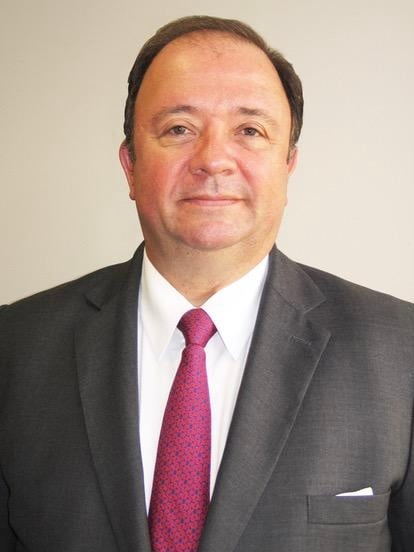
In an exclusive interview with Diálogo, Luis Carlos Villegas, former minister of Defense of Colombia and former chairman of the Board of Directors of the Coffee Region Reconstruction and Social Development Fund (FOREC), the entity created to coordinate the reconstruction of Colombia’s principal coffee-growing region after the devastating 1999 earthquake, reflects on the lessons learned from that experience. He explains why international assistance becomes indispensable when a disaster overwhelms a country’s response capacity, the role the armed forces play in emergency operations, and the challenges countries face during reconstruction—a process that can last for years.
Diálogo: In a catastrophe like the one Venezuela is facing today, the first 72 hours can mean the difference between life and death. How critical is international assistance during that window?
Luis Carlos Villegas, former minister of Defense of Colombia and former chairman of the Board of Directors of the Coffee Region Reconstruction and Social Development Fund (FOREC): In a major earthquake, the first 72 hours are decisive. That is the period when there is the greatest chance of rescuing people alive from beneath the rubble. Every second, every minute, and every hour matters. The longer it takes to deploy specialized rescue teams, the lower the chances of finding survivors.
We must begin with a premise that is often difficult to accept: Any earthquake above magnitude 5 requires an immediate, large-scale response — not only from the affected country but also from the international community, especially neighboring nations. But when an earthquake reaches the magnitude of the one that struck Venezuela, 7.5, that need is no longer optional — it becomes imperative.
It is also important to understand that the earthquake magnitude scale is exponential, not arithmetic. Each increase represents an enormous jump in the amount of energy released and the potential for destruction. In Venezuela’s case, the situation is even more severe because two earthquakes exceeding magnitude 7 struck only seconds apart — one of the most complex scenarios any country can face.
Estimates by the U.S. Geological Survey indicate that an earthquake of this magnitude in a densely populated area could result in between 10,000 and 100,000 fatalities. That projection alone illustrates the scale of the emergency and explains why no country can confront a disaster of this magnitude on its own.
And one final point deserves special emphasis: International assistance does not replace a nation’s own response — it strengthens and multiplies it. It brings search-and-rescue teams, field hospitals, logistics, airlift, engineering assets, communications, and capabilities that become indispensable when time is running out. In an emergency like the one unfolding in Venezuela, international cooperation is not simply an act of solidarity; it is an essential component of the response that helps save the greatest number of lives possible.
The full scale of this tragedy has yet to be determined. Reports speak of tens of thousands of people missing. Hopefully those figures will not be confirmed, but if they are, we would be facing one of the largest humanitarian disasters ever recorded in the region.
Diálogo: You led Colombia’s institutional response to the 1999 earthquake, one of the country’s worst natural disasters in recent history. Based on that experience, how would you compare the international response Colombia received then with the assistance Venezuela is receiving now?
Villegas: I have no doubt that Latin America, the United States, Canada, and Europe remain deeply committed to helping when a disaster of this magnitude occurs. In fact, I would argue that the international community’s ability to mobilize assistance today is even greater than it was two decades ago. That willingness to help has not diminished.
The difference lies not in countries’ willingness to provide assistance, but in the affected state’s ability to receive, coordinate, and make effective use of it. That is the real test during an emergency of this scale.
Coordination means assigning search-and-rescue sectors; preventing duplication of effort; organizing medical care; ensuring the distribution of water, food, and temporary shelter; and prioritizing the most vulnerable populations. When that coordination works, international assistance multiplies a country’s response capacity. When it does not, even a massive influx of resources loses much of its effectiveness.
In Venezuela’s case, we have already seen assistance arrive from the Americas, Europe, Asia, and Africa. We have also seen a rapid response from countries such as the United States and several of Venezuela’s regional neighbors. That demonstrates that the international community remains highly committed to responding to disasters of this kind.
The real challenge, however, is only beginning. Once search and rescue operations conclude, an even larger international effort will be required to finance and coordinate recovery, rebuild critical infrastructure, and restore essential services. Solidarity is indispensable, but it only produces results when there is effective coordination capable of turning assistance into meaningful action.
Diálogo: For years, Latin America invested in joint search and rescue exercises, interoperability protocols, and cooperation mechanisms to prepare for major disasters. When an emergency like the one in Venezuela occurs, how important is that preparation? Is the difference between an effective response and a chaotic one determined before an earthquake happens?
Villegas: Without question. Major disasters cannot be improvised. A country’s ability to respond during the first critical hours depends largely on everything it did before the disaster struck: training together, establishing common protocols, understanding how each institution operates, and building trust among the teams that may one day have to work side by side.
Colombia learned that lesson the hard way — first with the Armero tragedy [the 1985 volcanic disaster in Tolima] and later with the Eje Cafetero earthquake. Those disasters demonstrated that institutional preparedness cannot begin once an emergency occurs; it must be built over many years through training, planning, and joint exercises.
When a disaster reaches the scale Venezuela is experiencing today, something else happens that is often overlooked: local institutions become victims themselves.
That is exactly what happened in Armenia [one of the communities hardest hit by the 1999 earthquake]. The city’s fire station collapsed, several firefighters were killed, and much of the rescue equipment was lost. The mayor was also personally affected. Under those circumstances, the only institution capable of organizing an immediate response was the security forces.
That is when the armed forces assume a decisive role — not because they replace civilian authorities, but because they are often the only institution with the logistics, communications, transportation assets, and nationwide presence needed to sustain the response while the rest of the government struggles to reorganize itself.
But that role requires a fundamentally humanitarian doctrine. Their mission is not to impose authority through force, but to maintain order, facilitate the delivery of assistance, support rescue operations, and become a source of organization and confidence for a population that, within minutes, has lost nearly everything.
That is one of Colombia’s most enduring lessons, and it remains just as relevant today. Preparedness is not simply about having more equipment or more resources; it is about building institutions capable of working together before, during, and after a catastrophe.
Diálogo: Initial coverage of a major earthquake tends to focus on the first72 hours, when attention is focused on finding survivors. However, Colombia’s experience after the earthquake of 1999 showed that this is only the beginning of a much greater challenge once search and rescue operations end. What are a state’s priorities during the recovery phase, and what risks does a country like Venezuela face in the next stage?
Villegas: The first thing to understand is that reconstruction does not begin when search and rescue operations end — it begins while the emergency is still unfolding. During the first and second weeks, several operations take place simultaneously: Rescuers continue searching for survivors, recovering victims, and treating the injured while authorities must also begin restoring supply chains and essential services.
The next major challenge is logistics. I have seen estimates indicating that nearly 6 million people have been affected by this earthquake. That means providing safe drinking water, food, shelter, medical care, sanitation, and transportation every single day for a population equivalent to that of several countries in the region. It is an operation of enormous complexity that no state can sustain on its own.
That is why the combination of national capabilities — particularly the armed forces — and international cooperation once again becomes indispensable. But it is not enough for assistance to arrive; it must be managed with technical expertise, transparency, and coordination. Otherwise, supplies accumulate where they are not needed, spoil, fail to reach people in time, or are diverted through corruption.
Venezuela also faces a particularly complex challenge. Humanitarian assistance will naturally be concentrated in the areas hardest hit by the earthquake, but the rest of the country was already struggling with deep economic and social difficulties. If aid is not distributed in a way that is perceived as fair and legitimate, new tensions and conflicts could emerge.
Recovery, therefore, is not simply about rebuilding homes, roads, or hospitals. It also means restoring the state’s ability to provide essential services, rebuilding public confidence, and reviving the economy. That is usually the longest and most expensive phase and, paradoxically, the one that receives the least international attention — even though it can last for years.
Diálogo: Search and rescue operations last only days, but rebuilding a country can take years, even decades. Based on your experience with the reconstruction of Armenia and the coffee-growing region, what role should the international community play in Venezuela’s long-term recovery?
Villegas: International cooperation will be decisive, but it is important to understand its limits. In virtually every major disaster around the world, foreign assistance plays a critical role in launching the recovery effort, but it rarely finances most of the reconstruction. Typically, it accounts for only about 4 to 5 percent of the total cost. The primary responsibility always falls on the affected state.
That was our experience after the Eje Cafetero earthquake. Colombia received extraordinary support from many countries, but international assistance amounted to roughly $40 million, while reconstruction costs approached $1 billion. The support was essential, but the Colombian state ultimately shouldered the greatest responsibility.
That is where Venezuela faces its greatest challenge today. Unlike Colombia in 1999 — or even Venezuela itself during the Vargas tragedy later that same year — the country is confronting this disaster with far more limited institutional capacity, fewer fiscal resources, and a state that faces enormous challenges in leading a reconstruction effort of this scale.
The experience of the 1999 Vargas tragedy is instructive. Clearing the debris took several years, and more than two decades later, some areas have still never fully recovered. If that happened when Venezuela had greater resources and stronger institutions, today’s challenge is considerably greater.
For that reason, I believe there is a strong case for establishing a temporary multinational international mission to help coordinate the recovery effort. The goal would not be to replace the Venezuelan state but to strengthen its capabilities as it rebuilds its operational capacity. Such a mission could coordinate aid distribution, consolidate registries of displaced and affected populations, support the reconstruction of critical infrastructure, and help ensure that international resources are managed according to technical standards and with full transparency.
In my opinion, the United States is the only country with the financial, logistical, and political capacity to convene and lead an international effort of that magnitude, always in coordination with multilateral organizations and regional partners.
The earthquake has completely transformed the trajectory Venezuela had begun to follow. Reconstruction, therefore, will not simply be about rebuilding homes, hospitals, and highways. It will also require institutional, economic, and social recovery — a process that will demand years of sustained effort and a long-term commitment from the international community.