
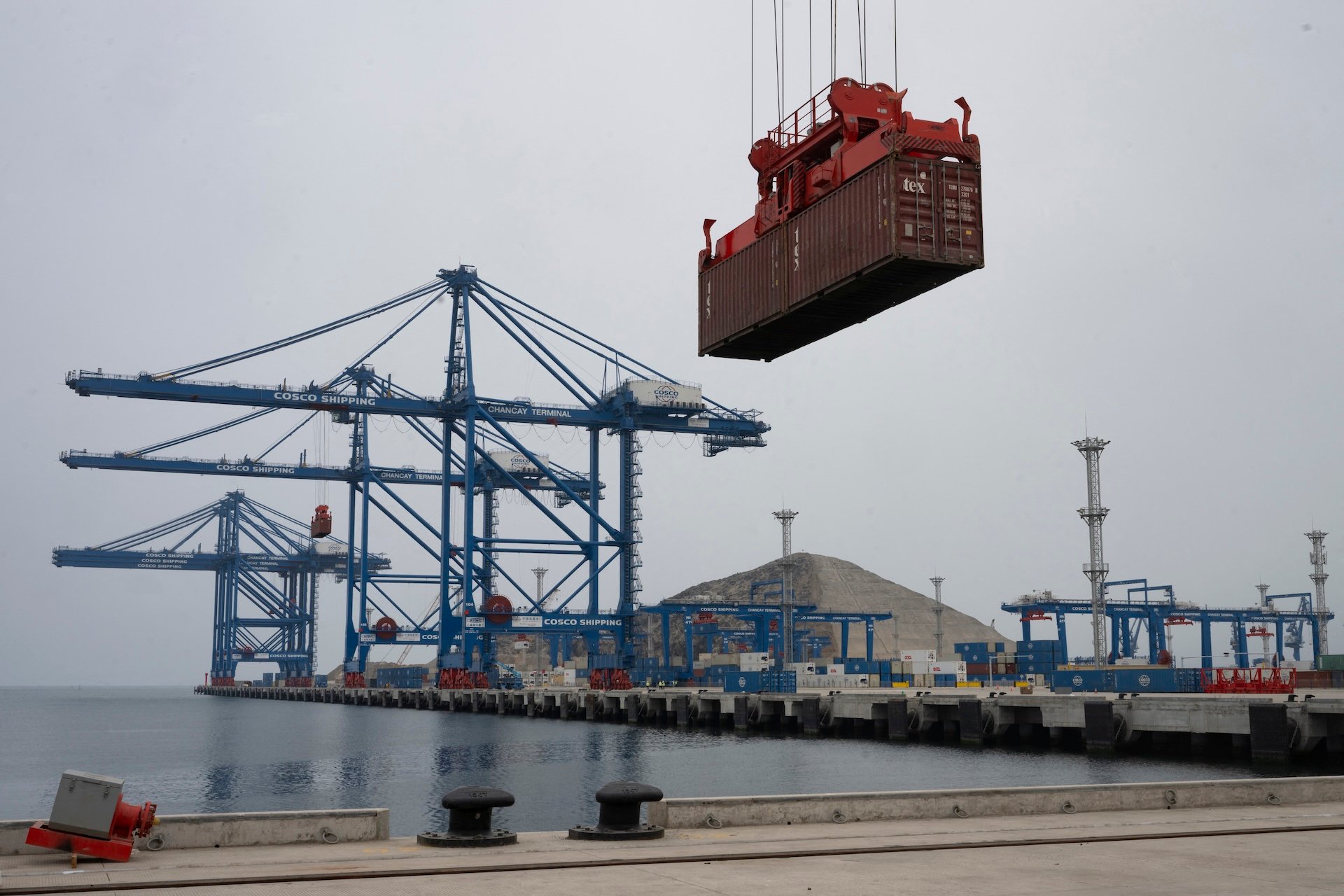
The case of the Port of Chancay, developed by the Chinese state-owned company COSCO Shipping, has sparked legal and political controversy in Peru. Following a court ruling that excludes it from oversight by the Supervisory Agency for Investment in Public Transport Infrastructure (Ositrán), risks to the country’s sovereignty, geopolitical stability, and institutional fragility have come into sharper focus. This conflict, which began in 2024, continues to escalate in 2026 with both national and regional implications.
Strategic infrastructure and the scope of the conflict
Ositrán’s main argument for intervening in the Port of Chancay is that its oversight does not depend on ownership or the existence of a concession contract, but rather on its status as public infrastructure. According to current regulations, any transportation infrastructure that operates nationally and provides services to the public must be subject to state oversight, regardless of its ownership or administration, as noted Peruvian media outlet RPP.
The dispute began in 2024, when COSCO Shipping requested that the port be excluded from Ositrán’s oversight, arguing that it operates entirely with private capital. In February 2026, a court ruling determined that the regulator must refrain from supervising, auditing, or sanctioning the port’s operations. In response, Ositrán appealed the decision.
Academic Juan Liendo, an expert at the Peruvian Army War College, explained to Diálogo that these controversies highlight the country’s “institutional fragility,” making it vulnerable to corruption and inefficiency. According to the expert, “an asset with geopolitical dimensions operating in a weak institutional environment becomes a source of distortion and a risk for the country.”
Social, economic, and operational concerns
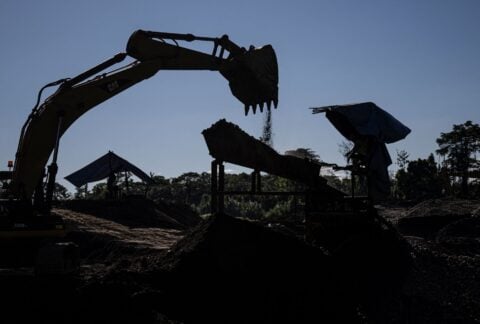
The Port of Chancay, which entered its first operational phase in late 2024 with an investment of roughly $1.3 billion, has already generated controversy at the local level. During construction, incidents in the access tunnel caused structural damage to nearby homes, creating tensions with surrounding communities, with local media documenting both the damage and residents’ protests.
The project has also been questioned due to the exclusive port services granted to COSCO Shipping for a period of 30 years, which effectively concentrates control over tariffs and operations in a single company. The National Port Authority sought to challenge this arrangement, arguing that it limited competition and regulatory oversight. However, Peru later modified its port law to extend the maximum duration of such arrangements to up to 60 years, a move that effectively strengthens existing exclusive arrangements, including those involving Chinese state-owned enterprises such as the Port of Chancay.
Environmental concerns have also been raised, particularly regarding the port’s proximity to the Santa Rosa wetland and the effects of dredging activities on local ecosystems and artisanal fishing. Local communities have denounced a lack of response to these issues, while subsequent reporting indicates that these impacts remain unresolved.
The project’s long-term expansion plan envisions a significantly larger terminal, with up to 15 berths in its final configuration and a total investment projected at more than $3.6 billion. At the same time, broader concerns have emerged about the security of Chinese-built port infrastructure globally, particularly regarding embedded communication systems in equipment such as cranes, which have raised questions about vulnerabilities and misuse of information in critical infrastructure.
Legal and geopolitical tensions in the region
The case of the Port of Chancay is not an isolated one. The LPO Port Terminal in Pucallpa holds a similar classification and has been under Ositrán’s supervision since 2016, according to the regulatory body.
Ositrán President Verónica Zambrano emphasized that oversight does not depend on the operator. “It is not the company’s prerogative to decide who intervenes in the infrastructure; it is a legal mandate that must be complied with,” she told daily Perú21.
Elsewhere in the region, disputes involving Chinese-linked port operations have also generated tensions. In Panama, for example, a court ruling that declared the concession of strategic port infrastructure to a Chinese conglomerate unconstitutional led to diplomatic and commercial repercussions. According to international media reporting, China responded by suspending infrastructure negotiations and increasing inspections of Panamanian ships, affecting logistics and trade flows.
In Peru’s case, President of the Council of Ministers Ernesto Álvarez described it as “unacceptable” that Ositrán does not oversee the Port of Chancay and stated that the government is considering appealing to the Constitutional Court. “The Constitution takes precedence over any agreement,” he said in an official statement.
Future risks and the need for alternatives
The Port of Chancay is emerging as a strategic hub in the Pacific, but also as a potential point of geopolitical leverage. According to Liendo, “the port could be used as a tool for exerting pressure if disputes with Ositrán escalate.” He warned that institutional fragility and corruption create vulnerabilities that foreign actors, such as China, could exploit.
Furthermore, the prospect of decades of operation under Chinese control could set a dangerous precedent for foreign influence over strategic infrastructure on Peruvian territory. For Liendo, the project’s future will determine whether Peru “consolidates its sovereignty” or becomes a “non-player” in the region. Currently, the port does not function as a fully integrated logistics hub due to the lack of complementary infrastructure and a coordinated regulatory framework.
As a way forward, Liendo proposes developing competitive alternatives that attract investment without compromising strategic autonomy. This includes strengthening regulatory institutions, building alternative logistics corridors, and promoting diversified port services that generate economic value without dependence on China.
He also emphasized that Peruvian institutions, such as the Armed Forces Joint Command, have the capacity to oversee operations, but that a lack of political will has limited their ability to act.
The challenge, Liendo concludes, is for future Peruvian governments to take this issue seriously, ensuring that the Port of Chancay does not become a tool of external influence that compromises the country’s stability and sovereignty.