

In recent years, the Caribbean has become a key arena for the rise of transnational criminal organizations (TCOs), a phenomenon fueled in large part by illicit networks linked to the Nicolás Maduro regime. According to an early 2025 report by InSight Crime, Venezuela’s growing dependence on criminal economies has strengthened Caracas’ influence in the region, escalating risks to security and stability throughout the Caribbean.
“It should not be overlooked that the Venezuelan regime has remained in power for more than 25 years. The same thing happened in Colombia between the late 1970s and throughout the 1980s,” Daniel Pontón, dean of the School of Security and Defense at Ecuador’s IAEN University, told Diálogo. “The consolidation of illicit economies, especially drug trafficking, has generated dynamics that have impacted the entire region and contributed to transnational conflicts.”
The expert also highlights the central role of structural corruption under Maduro’s leadership: “This corruption stems from an authoritarian rule that exercises political and territorial control with a militaristic vision.”
According to Pontón, this environment has facilitated the infiltration of drug trafficking into the Venezuelan Armed Forces, giving rise to the Cartel of the Suns (CdS). International partners affirm that Maduro is at the helm of this organization, comprised of high-ranking officers and officials. The regime’s dependence on these illicit economies, Pontón adds, has been key to its permanence in power for more than two decades.
The designation of Venezuelan groups as terrorist organizations reflects a profound change in the region’s security posture. In 2025, several nations of the Americas, including Argentina, Ecuador, and Peru, joined the United States in designating the CdS and the Tren de Aragua (TdA) as terrorist and high threat organizations.
Falcón: Epicenter of new criminal routes
The state of Falcón in Venezuela has established itself as one of the main points of departure for narcotics bound for the Caribbean. InSight Crime notes that local security forces regulate and protect the operations of favored drug trafficking groups, such as the Paraguaná and Sabana Alta cartels, while other organizations, such as the Guajira Cartel, continue their activities under apparent official approval.
Simultaneously, a distinct Venezuelan criminal group named the Lobos — unrelated to the Ecuadorian terrorist organization of the same name — has expanded its trafficking and human smuggling operations to Curaçao and Aruba. In the coastal states of Sucre and Delta Amacuro, near Trinidad and Tobago and Guyana, networks linked to the Venezuelan regime operate, controlling smuggling routes for drugs, weapons, minerals, and people. According to InSight Crime, these groups impose taxes on every ship that sets sail, consolidating a model of territorial and economic control.
Pontón emphasizes that drug traffickers need safe routes, supply points, and safe havens in the Caribbean Sea. “These networks need logistical and strategic spaces, just as pirates of old did when they hid their cargo on islands,” he says. This scheme involves corruption, the buying of favors, and political influence, facilitating the expansion of organized crime from Venezuela to Caribbean islands.
Regional impact: violence and distorted economies
Drug trafficking in the Caribbean is linked to record levels of homicide, corruption, democratic setbacks, and money laundering. These dynamics have fueled gang wars for control of criminal economies, expanded illegal arms trafficking, and exacerbated human trafficking within and outside the region, think tank the Center for Strategic and International Studies (CSIS) indicates.
“For the Caribbean islands, the proximity to a nation that has been subjugated for decades by the Venezuelan regime represents a constant threat. Beyond the political implications, it also opens up economic opportunities for actors linked to power networks and illicit activities, increasing the risks of infiltration and dependence on local economies,” Pontón said.
Seizures and the role of the Venezuelan regime
International drug interdiction efforts are yielding an increasing volume of narcotics traced back to Venezuela. According to InSight Crime, many of these operations involve Venezuelan vessels and crews, often linked to the CdS. In addition, state institutions have been linked to cocaine shipments sent from the state of La Guaira, near Caracas, to international destinations.
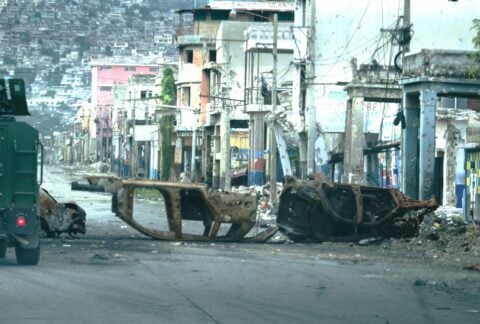
In 2024, the Caribbean recorded record cocaine seizures, reflecting an increase in both production and regional trafficking. Martinique seized 10.5 tons from a single vessel; the Dominican Republic confiscated 9.5 tons, the largest amount in its history; Jamaica and Barbados also set records with 2.6 and 3.5 tons respectively, while Haiti remains mired in a security crisis that hinders control over drug trafficking, InSight Crime highlighted in its report.
“In small Caribbean economies, drug trafficking can seriously distort local indicators,” Pontón said. “A single shipment passing through their waters or leaving illicit income can alter economic stability and encourage corruption, especially in fragile institutional contexts.”
Responses and challenges for Caribbean governments
Faced with this situation, Caribbean countries have adopted autonomous strategies to combat transnational organized crime linked to Venezuelan networks. They have strengthened the capabilities of their security forces, promoted legal reforms, and encouraged intelligence sharing.
Regional cooperation is intensifying through organizations such as CARICOM and the Organisation of Eastern Caribbean States (OECS), which coordinate joint operations and exchange information on drug, arms, and human trafficking, with the aim of strengthening regional security, CSIS indicated.
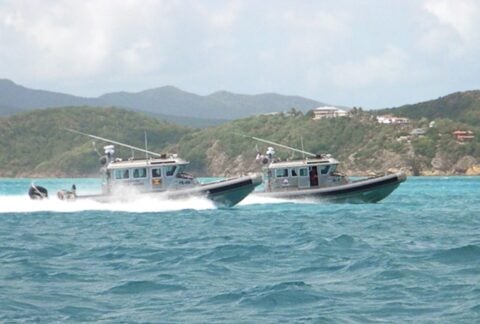
Trinidad and Tobago, for example, has strengthened maritime surveillance and port controls in collaboration with the DEA and the U.S. Coast Guard, participating in exercises such as Tradewinds, sponsored by U.S. Southern Command (SOUTHCOM), to counter transnational threats.
The Dominican Republic has expanded maritime and land patrols, implemented financial analysis programs to track money laundering networks, and maintained agreements with the United States to receive technical and logistical support in the fight against drug trafficking.
The Bahamas, for its part, has strengthened international cooperation against drug trafficking and related crimes, promoting technical assistance, secure intelligence sharing, and best practices among states, according to the OAS Inter-American Drug Abuse Control Commission.
Despite these efforts, Caribbean governments face persistent challenges: their geographic location, which facilitates the transit of drugs and people; the size and structure of their economies; institutional strength; and security and oversight capacity.
Toward a multilateral strategy
Overcoming the expansion of transnational crime in the Caribbean requires a coordinated response. CSIS recommends that the United States and its partners develop a centralized strategy, establish uniform customs protocols, strengthen patrols and interdiction, implement advanced technology in ports, promote intelligence sharing, and actively collaborate with the private sector.
The shadow of the Venezuelan regime extends over the Caribbean, and only collective and decisive action will be able to contain it.